'%3e%3cpath%20d='M34.1406%205.85938C30.3906%202.10547%2025.3047%200%2020%200C14.6953%200%209.60938%202.10547%205.85938%205.85938C2.10938%209.61328%200%2014.6953%200%2020C0%2025.3047%202.10547%2030.3906%205.85938%2034.1406C9.61328%2037.8906%2014.6953%2040%2020%2040C25.3047%2040%2030.3906%2037.8945%2034.1406%2034.1406C37.8906%2030.3906%2040%2025.3047%2040%2020C40%2014.6953%2037.8945%209.60938%2034.1406%205.85938ZM37.0117%2023.543H31.1602V13.5391H27.6328V19.9414C28.1211%2020.6914%2028.3711%2021.582%2028.3711%2022.5625V22.625C28.3711%2023.668%2028.1172%2024.6055%2027.6328%2025.4297V26.6094H36.082C33.4883%2032.9375%2027.2891%2037.3789%2020.0039%2037.3789C10.3711%2037.3789%202.62109%2029.6289%202.62109%2020C2.62109%2010.3711%2010.3711%202.62109%2020%202.62109C29.6289%202.62109%2037.3789%2010.3711%2037.3789%2020C37.3789%2021.1484%2037.2617%2022.2656%2037.0508%2023.3477C37.0391%2023.4141%2037.0234%2023.4766%2037.0117%2023.543Z'%20fill='white'/%3e%3cpath%20d='M22.3086%2018.5352C20.4336%2018.125%2019.9531%2017.8398%2019.9766%2017.1836V17.1406C19.9766%2016.6992%2020.3477%2016.2148%2021.4023%2016.2148C22.582%2016.2148%2023.8867%2016.6797%2025.0781%2017.4766L26.8516%2015.0195C25.4453%2013.8906%2023.707%2013.3398%2021.5547%2013.3398C18.5195%2013.3398%2016.4375%2015%2016.4063%2017.4766V17.5352C16.3633%2020.2617%2018.5859%2020.9805%2021.293%2021.6016C23.0391%2021.9766%2023.5703%2022.3164%2023.5703%2022.9609L23.5469%2022.9766C23.5469%2023.3906%2023.2578%2023.7031%2022.7852%2023.8359C22.5742%2023.9062%2022.1289%2023.9727%2021.5156%2023.9727C20.7617%2023.9727%2019.7539%2023.8633%2018.6328%2023.4844C18.0898%2023.2891%2017.4727%2023.0039%2016.8047%2022.6133L20.1406%2026.625C20.2813%2026.6602%2021.0977%2026.8516%2021.7734%2026.8516C25.0039%2026.8516%2027.0859%2025.2461%2027.1094%2022.6328V22.5703C27.1602%2020.1133%2025.2148%2019.1719%2022.3086%2018.5352Z'%20fill='white'/%3e%3cpath%20d='M5.24219%2013.5664V26.6133H8.75391V23.7578L10.2969%2021.9531L14.2031%2026.6133H18.3867L12.3555%2019.5195L17.4023%2013.5664H13.4531L8.75391%2019.0586V13.5664H5.24219Z'%20fill='white'/%3e%3c/g%3e%3cdefs%3e%3cclipPath%20id='clip0_97_2430'%3e%3crect%20width='40'%20height='40'%20fill='white'/%3e%3c/clipPath%3e%3c/defs%3e%3c/svg%3e)


- Utah beekeepers warn of declining bee habitats amid growing human population.
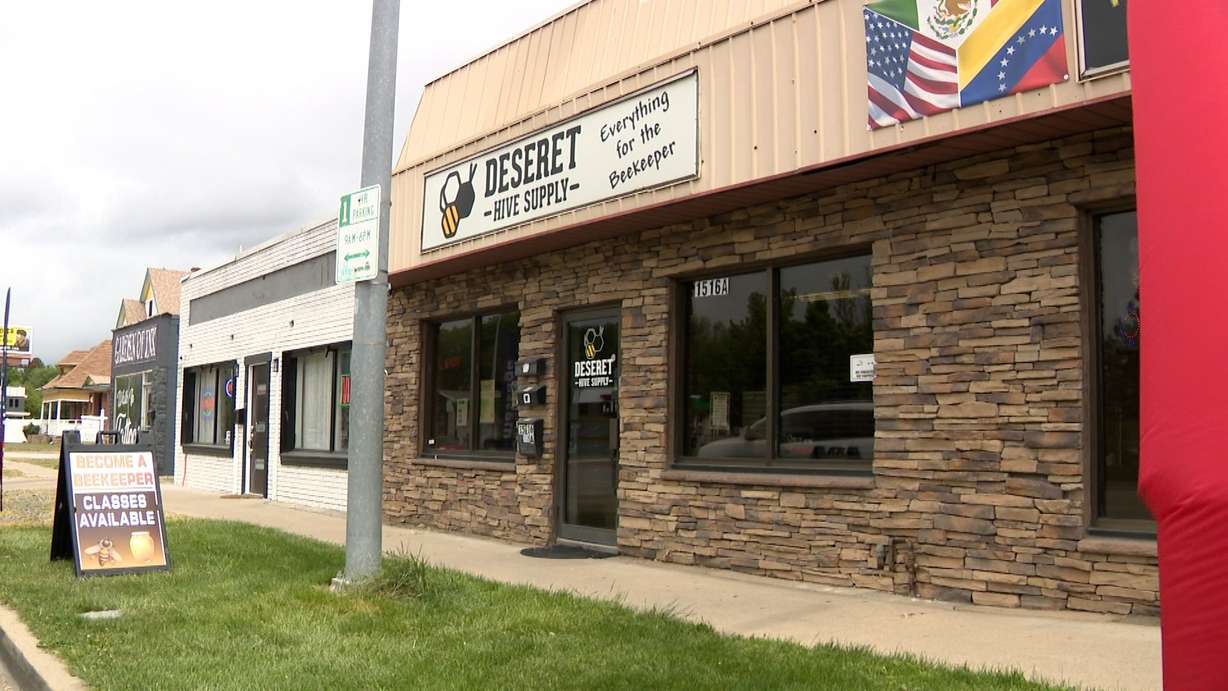
- Amessa Bachman of Deseret Hive Supply urges backyard beekeeping and reduced pesticide use.
- Bachman said education and awareness is also a big part of helping protect bees and their habitats.
OGDEN — Utah beekeepers are using Earth Day to sound the alarm about the future of bees across the state — and what Utahns can do to help protect them.
Utah is considered a major hotspot for native bees and is home to more than 1,100 different species, according to the Utah State University Extension. But as the state's human population grows, bee nesting and feeding habitats are shrinking.
"One in every three bites of food has been pollinated by a bee of some sort," Annessa Bachman, manager and educator at Deseret Hive Supply in Ogden, said. "If we don't have pollinators, then we don't have food."
Beekeepers and educators said there are simple steps people can take at home to help reverse the trend.
Bachman said her wish is for everyone to become a backyard beekeeper, both to appreciate the role bees play and to increase the managed honeybee population. Honeybees must be managed by humans because modern honeybees fall victim to a parasitic mite from Asia without human intervention. For those who can't take that step, Bachman said cutting back on herbicides and pesticides can make a big difference.
"Don't use pesticides and herbicides, especially if you know that you have a colony nearby," she said. "And let your dandelions grow. People don't like to hear that. But let your dandelions grow."
Bachman explained that dandelions are a food source for bees, and if they eat them with pesticides or herbicides on them, they return to their hive sick.
There are signs of progress in protecting bees across the state.
Utah's Pollinator Program began as a pilot program in 2021 and became a permanent program in 2025. It has legislative funding that allows it to provide bee-friendly plants to approved applicants. Last year, Provo became the first Utah city to join Bee City USA, a national initiative that promotes pollinator-friendly education, signage and landscaping policies in public spaces.
Utah State University's Extension also recommends several ways homeowners can make their yards more bee-friendly, including planting native flowers, leaving bare soil or plant stalks for nesting, and avoiding broad-spectrum pesticides. Recommended native flowers include yarrow, penstemon, milkweed, bee plant, columbine, rabbitbrush, sunflower, serviceberry and clove currant.
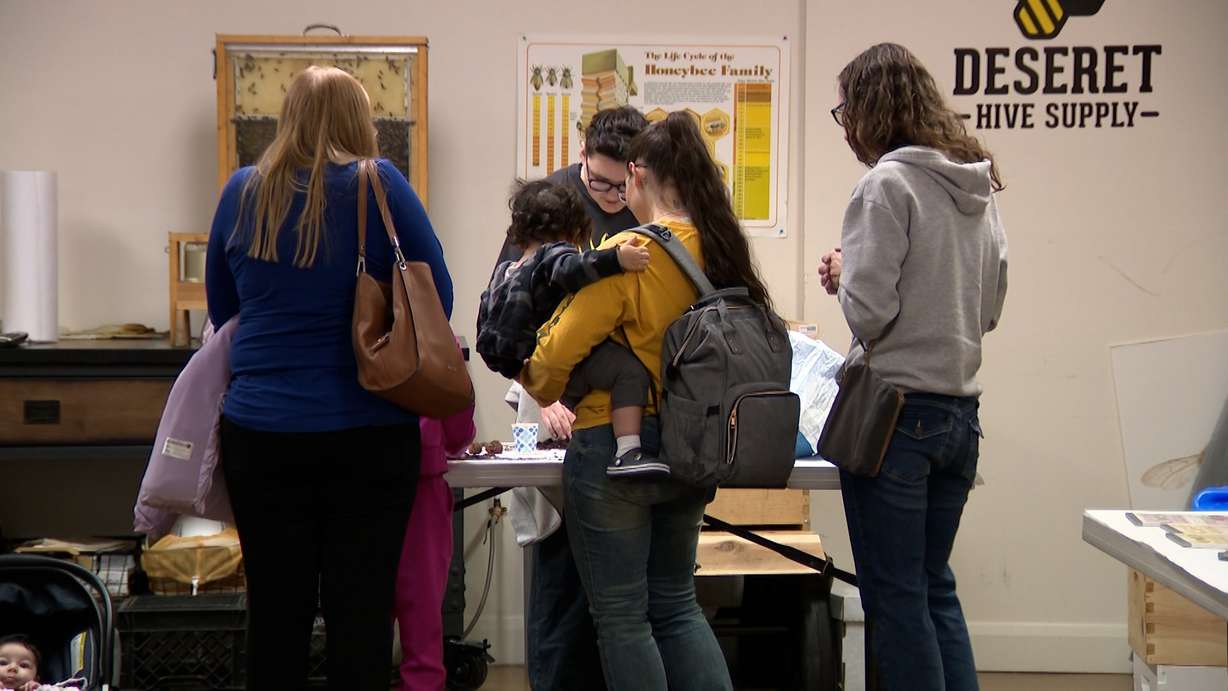
Bachman said education and awareness are also a big part of the battle. Deseret Hive Supply hosted a family "Help The Bees" event on Earth Day with a live observation hive, seed bomb making, wildflower giveaways and honey tasting. They're hoping something educational amidst all the fun will sink in for families in the Beehive State.