- Kevin O'Leary has agreed to cut the Box Elder County data center project area in half, from around 40,000 acres to 20,000 acres.
- Of the remaining 20,000 acres of the project area, around half would be preserved as open space, cutting the developable area to around 10,000 acres.
- The plans have sparked opposition from many, worried about its environmental impacts.
SALT LAKE CITY — Businessman Kevin O'Leary, the force behind the controversial Box Elder County data center proposal, has agreed to cut the project area in half, from around 40,000 acres to around 20,000 acres.
Of the remaining 20,000 acres or so of the project area, around half would remain undeveloped and set aside as agricultural space or for wildlife, reducing the effective area facing development to 10,000 acres.
In a letter Thursday to Utah Senate President Stuart Adams, O'Leary said he'd remove two of the three proposed project areas from the data center initiative, one measuring around 19,430 acres in the Locomotive Springs area, another measuring around 620 acres abutting I-84. That would leave the third, more southeasterly parcel in the Hansel Valley, measuring around 20,000 acres.
"We agreed to remove the 19,000-plus in Locomotive and the 600 or so by the highway," said Paul Palandjian, chief executive officer of O'Leary Digital, chaired by O'Leary and the business entity pursuing the initiative. "I think (that) addresses a lot of people's concerns."
Adams, in response, lauded O'Leary's proposed changes. "O'Leary's concessions in response to the demand letter I sent are a positive step forward. The concerns raised by Utahns are valid, which is why I have pushed for meaningful changes to ensure those issues are addressed before any project can move forward," he said in a statement.
On Monday, Adams called for a dramatic reduction in the project expanse, from 40,000 acres to 10,000 acres. He also called for the use of the latest technology to reduce the project's water consumption and to capture the heat it generates, among the chief concerns of project opponents.
As Palandjian now envisions it, the data center and proposed power-generation facilities serving it would take up around 10,000 acres, with another 10,000 or so acres around it being "preserved" land. Adams' office said the undeveloped 10,000 or so acres of the project area would be focus of a formal accord with state officials to prevent development on it.
"If you want to reconcile it with what President Adams had asked for, it's effectively getting him what he wanted," Palandjian said.
O'Leary told KSL later Thursday that the original project area, 40,000 acres, was so large to accommodate the potential space needed for the varied power-generating operations accompanying the data center, whether solar, wind or some other source.
"The footprint was so large because you don't know what you don't known about the future sources of power," he said. Now, with a smaller project area, he said, O'Leary Digital's options for future power generation are more limited.
As Adams sees it, O'Leary agreed to all the conditions he put forward. He singled out reduction of the project area footprint and steps to earmark more water for the Great Salt Lake.
"Protecting Utah's water, especially the future of the Great Salt Lake, remains one of my highest priorities. As a result of the letter, the project now includes a commitment of water that did not previously exist for the Great Salt Lake — while also reducing the overall effective size of the proposed project area by 75%," Adams said.
An opponent of the project, meantime, expressed skepticism that Thursday's announcement amounts to meaningful change. Brenna Williams, of Box Elder Accountability Referendum, or BEAR, noted prior comments from O'Leary Digital officials saying development wouldn't occur across the entirety of the original 40,000-acre project swath.
"I think this is excellent performance art. I think this was the plan all along," she said. Even before Adams spoke out on Monday, Palandjian told KSL last month that the data center campus, at full buildout, would measure 10,000-13,000 acres, though he didn't clarify if that also included the power-generating elements of the project.
Regardless of size or project expanse, Williams still worries the proposal will have an adverse environmental impact, even if the development is packed into a smaller space
"I don't see any changes, and the truth is, Box Elder County is just too vulnerable for a hyper-scale data center of this size," she said. "No matter what he does given the situation, there is going to be a big impact."
Water to the Great Salt Lake
In his letter, O'Leary committed to using the latest technology to conserve water and working with state environmental regulators, echoing prior comments and promises.
"We commit to industry-leading water-use technology and to dedicating any excess water from the project to the Great Salt Lake. We are prepared to enter into an MOU with the Utah Department of Natural Resources covering wildlife, agriculture and open space. We will commission an independent scientific analyses of thermal load and incorporate heat-capture technology where feasible," he said.
In his interview with KSL, O'Leary said he hopes the Utah facility becomes a model for others given all the back and forth and plan modifications.
"I would like this center, particularly ... to be the example of how to do it right in any state," he said.
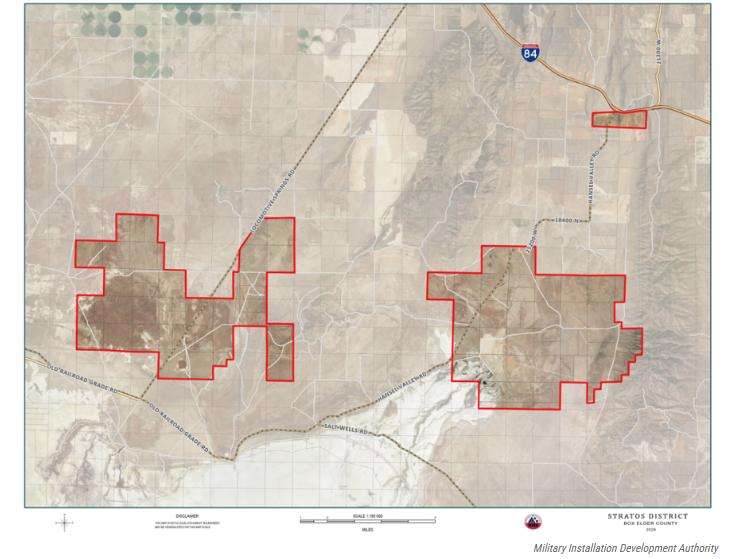
The data center plans are touted by proponents as key to national security and an economic development driver. Over the long haul, the data center facilities — called the Stratos Project Area — would be accompanied by the development of up to 9 gigawatts of power-generation capacity to serve them.
Critics worry the data center operation would adversely impact air quality and tax already dwindling water supplies, placing additional pressure on the Great Salt Lake, already drying. They also say the proposal hasn't received enough study and was rushed.
O'Leary expressed concern that much of the public "alarm" surrounding the long-range project has been based on misconceptions about water use, heat dispersion, air quality and more. He also lauded the back-and-forth discussion with government officials.
"I hope this dialogue can serve as a model for how complex projects are best addressed — through direct, good-faith engagement between developers and elected officials rather than through public narratives that outpace the facts," he said.
Adams, for his part, said public involvement, which spurred him to reach out to O'Leary, paid off.
"The response to the demand letter I sent demonstrates that public engagement matters and that Utahns' concerns are being heard. I will continue working to ensure those concerns lead to meaningful changes, stronger safeguards and greater accountability," he said.
On Wednesday, opponents of the project, Williams' group, BEAR, filed suit to challenge the decision rejecting their efforts to force a vote on the future of two Box Elder County measures allowing the proposal to proceed. Williams said the opponents' efforts will continue unabated.
Box Elder County commissioners approved resolutions 26-11 and 26-12 on May 4, despite the opposition of many, paving the way for the project. The action followed approval on April 24 of four other resolutions and a tax ordinance key to project development by Utah's Military Installation Development Authority, or MIDA, a state entity that's teaming with O'Leary Digital in the initiative.
Contributing: Erin Cox
This story may be updated. To be notified about updates, please click Follow This Story below on the KSL app.

Related stories
Most recent Environment stories
Related topics
 Tim Vandenack