
Estimated read time: 3-4 minutes
This archived news story is available only for your personal, non-commercial use. Information in the story may be outdated or superseded by additional information. Reading or replaying the story in its archived form does not constitute a republication of the story.
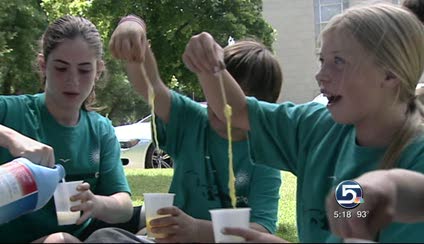
SALT LAKE CITY -- About this time of summer the kids could be getting a little restless for something to do. One option is a day camp at the University of Utah. Not only are they bound to learn something, studies show it could make them happier children.
Youth Education offers a variety of different weekly camps throughout the summer in areas like math, cooking and cultural studies.
With the questionable economy, program coordinators at the University of Utah somewhat expected enrollment in their youth summer programs to go down. But Youth Education Director Claire Turner says the opposite has been true.
"Our enrollment has really just gone up higher than we've ever seen this summer," she says.
Melissa Herman, a counselor at Youth Education, says every week the counselors take kids ranging in age from 3 to 13 and keep them engaged during the summer months.
One of the main goals of these programs is to teach children how to have fun "offline."
"We are always doing things like this just to stretch their minds, not necessarily just sitting playing video games or, you know, sitting in front of the TV and playing the computer," Herman said.
This is a tough adjustment for some kids.
"We're noticing a little bit more of that. But with our day camp, we tell students they can't bring their digital devices to camp. They have to leave those behind," she says.
Turner says some kids go through withdrawals, but it usually last for only a few hours.
A recent Kaiser Family Foundation survey found kids who spent an average of seven-and-a-half hours a day playing video games and such tended to be less happy.
Another study from Iowa State University shows 6- to 12-year-olds who spend more than two hours a day playing video games or watching TV are up to two times more likely to develop attention disorders.
That's not the case here.
"I'm learning a lot of stuff, mostly science and how to build stuff," said day camper William.
Turner says some of the classes have been so popular program leaders had to add new versions of them. For example, they've had to add more LEGO Mania engineering classes.
"What they learn about, it's not just playing with LEGOs," Turner says, "but it's learning about all the concepts that go into mechanical engineering."
The LEGO Mania class was actually suggested to them by a group of parents. Turner says they're always taking suggestions from parents on classes they think should be taught.
The different classes are taught by school teachers, local experts, even college professors. And the kids get to do stuff they would never get to do at home.
"Like tomorrow, we get to dissect a heart tomorrow," said camper Rony Lloyd.
The Gross Anatomy class is always a fan favorite.
"It's described as all the things that adults don't really want to talk about," Turner explains.
It's called Gross Anatomy for a reason. Kids get to talk about the science behind belching, vomit and ear wax.
Costs for these programs vary from $50 to a few hundred dollars, depending on the kinds of materials needed for any specific course. Parents can enroll their children in the courses by logging on to youth.utah.edu.
------
Story compiled with contributions from Paul Nelson and Amanda Butterfield.