- Twenty Delta passengers are suing Delta Air Lines for severe turbulence injuries and other impacts from it.
- The lawsuit claims pilots ignored weather warnings, resulting in 2.5 minutes of chaos.
- Plaintiffs allege negligence and seek damages; NTSB is still investigating incident.
SALT LAKE CITY — Nearly two dozen passengers who were on a Delta Air Lines flight from Salt Lake City to Amsterdam last year are now suing the airline, asserting that pilots "recklessly flew" too close to thunderstorms, resulting in severe turbulence and multiple injuries.
The Aviation Law Group and Mortensen & Milne filed a lawsuit against the airline in Utah's 3rd District Court late last week on behalf of 20 passengers of Delta Flight 56, which flew out of Salt Lake City International Airport for the Netherlands capital on July 30, 2025.
It encountered extreme turbulence that lasted 2 1/2 minutes over Wyoming, resulting in it being diverted to Minnesota, the National Transportation Safety Board wrote in a preliminary report released last year. Delta confirmed that 25 people on board the flight were transported to local hospitals after it landed.
"Turbulence and severe weather are not new phenomena, and this accident could have been prevented," the Aviation Law Group wrote in a statement on Friday.
The turbulence that caught the pilots by surprise, the NTSB wrote, but the plaintiffs, including six from Utah, allege that the National Weather Service issued an advisory warning that turbulent conditions were present in the mountains east of Salt Lake City and that thunderstorms were present along portions of the flight path, the lawsuit states.
Pilots ignored "multiple warnings and briefing packages about the conditions," along with the weather service warning and warnings from Salt Lake City's air traffic controller about the weather, the lawsuit alleges. It adds that air traffic controllers allowed pilots to deviate from their course, but pilots, who "acknowledged that they saw the weather on their aircraft radar and had visual confirmation" of it, ultimately "continued directly into the dangerous conditions."
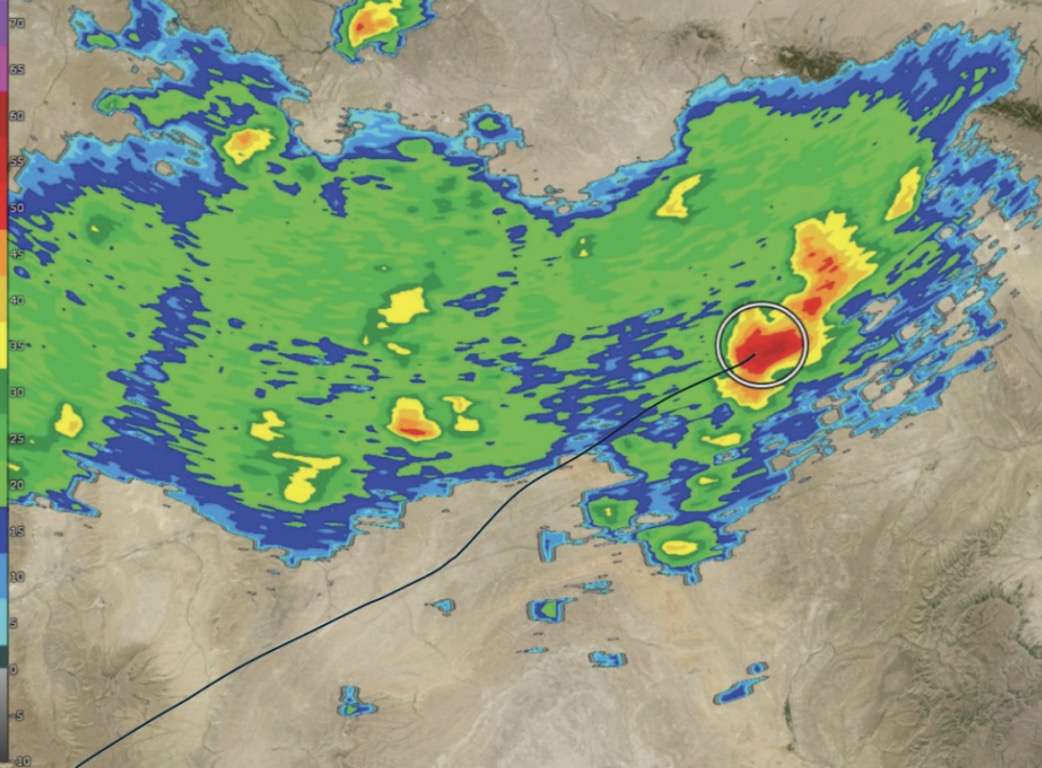
At the same time, the plane encountered turbulence when the flight's seat belt sign had been turned off, the lawsuit adds. It points to flight data that showed the plane quickly moved up and down, while reaching a roll angle of almost 40 degrees with the left wing down.
Many passengers were tossed around, while food, personal items, cell phones and baggage flew around the cabin, striking people, too, the lawsuit states.
"Those who were not restrained were thrown with such force that their bodies crashed into the ceiling and shattered the interior fixtures of the aircraft. Passengers received head injuries, spinal injuries, concussions, lacerations, broken bones, bruises and abrasions across their bodies," plaintiffs wrote, calling it "2.5 minutes of terror."
The lawsuit also alleges that the flight should have been diverted to Salt Lake City or Denver after the incident, but ultimately flew another 90 minutes before landing at Minneapolis-St. Paul International Airport. The plaintiffs wrote that it did so to "save Delta money on the cost of the diversion, required aircraft maintenance, and for rebooking passengers," since the airport is another major Delta hub.
They are seeking an undisclosed amount of money at trial, alleging negligence that resulted in various damages.
Delta declined to comment on the lawsuit, saying it does not comment on active litigation "involving a matter that is currently under NTSB investigation." The airline has yet to respond to the claim in court, but it stated last year that it was cooperating with the NTSB in its investigation.
The agency has yet to issue its final report on the incident.