'%3e%3cpath%20d='M34.1406%205.85938C30.3906%202.10547%2025.3047%200%2020%200C14.6953%200%209.60938%202.10547%205.85938%205.85938C2.10938%209.61328%200%2014.6953%200%2020C0%2025.3047%202.10547%2030.3906%205.85938%2034.1406C9.61328%2037.8906%2014.6953%2040%2020%2040C25.3047%2040%2030.3906%2037.8945%2034.1406%2034.1406C37.8906%2030.3906%2040%2025.3047%2040%2020C40%2014.6953%2037.8945%209.60938%2034.1406%205.85938ZM37.0117%2023.543H31.1602V13.5391H27.6328V19.9414C28.1211%2020.6914%2028.3711%2021.582%2028.3711%2022.5625V22.625C28.3711%2023.668%2028.1172%2024.6055%2027.6328%2025.4297V26.6094H36.082C33.4883%2032.9375%2027.2891%2037.3789%2020.0039%2037.3789C10.3711%2037.3789%202.62109%2029.6289%202.62109%2020C2.62109%2010.3711%2010.3711%202.62109%2020%202.62109C29.6289%202.62109%2037.3789%2010.3711%2037.3789%2020C37.3789%2021.1484%2037.2617%2022.2656%2037.0508%2023.3477C37.0391%2023.4141%2037.0234%2023.4766%2037.0117%2023.543Z'%20fill='white'/%3e%3cpath%20d='M22.3086%2018.5352C20.4336%2018.125%2019.9531%2017.8398%2019.9766%2017.1836V17.1406C19.9766%2016.6992%2020.3477%2016.2148%2021.4023%2016.2148C22.582%2016.2148%2023.8867%2016.6797%2025.0781%2017.4766L26.8516%2015.0195C25.4453%2013.8906%2023.707%2013.3398%2021.5547%2013.3398C18.5195%2013.3398%2016.4375%2015%2016.4063%2017.4766V17.5352C16.3633%2020.2617%2018.5859%2020.9805%2021.293%2021.6016C23.0391%2021.9766%2023.5703%2022.3164%2023.5703%2022.9609L23.5469%2022.9766C23.5469%2023.3906%2023.2578%2023.7031%2022.7852%2023.8359C22.5742%2023.9062%2022.1289%2023.9727%2021.5156%2023.9727C20.7617%2023.9727%2019.7539%2023.8633%2018.6328%2023.4844C18.0898%2023.2891%2017.4727%2023.0039%2016.8047%2022.6133L20.1406%2026.625C20.2813%2026.6602%2021.0977%2026.8516%2021.7734%2026.8516C25.0039%2026.8516%2027.0859%2025.2461%2027.1094%2022.6328V22.5703C27.1602%2020.1133%2025.2148%2019.1719%2022.3086%2018.5352Z'%20fill='white'/%3e%3cpath%20d='M5.24219%2013.5664V26.6133H8.75391V23.7578L10.2969%2021.9531L14.2031%2026.6133H18.3867L12.3555%2019.5195L17.4023%2013.5664H13.4531L8.75391%2019.0586V13.5664H5.24219Z'%20fill='white'/%3e%3c/g%3e%3cdefs%3e%3cclipPath%20id='clip0_97_2430'%3e%3crect%20width='40'%20height='40'%20fill='white'/%3e%3c/clipPath%3e%3c/defs%3e%3c/svg%3e)


Estimated read time: 6-7 minutes
- The controversial Stratos Project led to a stunning rebuke from Utah Republicans on Tuesday.
- The unpopularity of the project led to the notable ouster of Senate President Stuart Adams on primary election night.
- The backlash highlights national skepticism toward data centers and corporate deals, experts say.
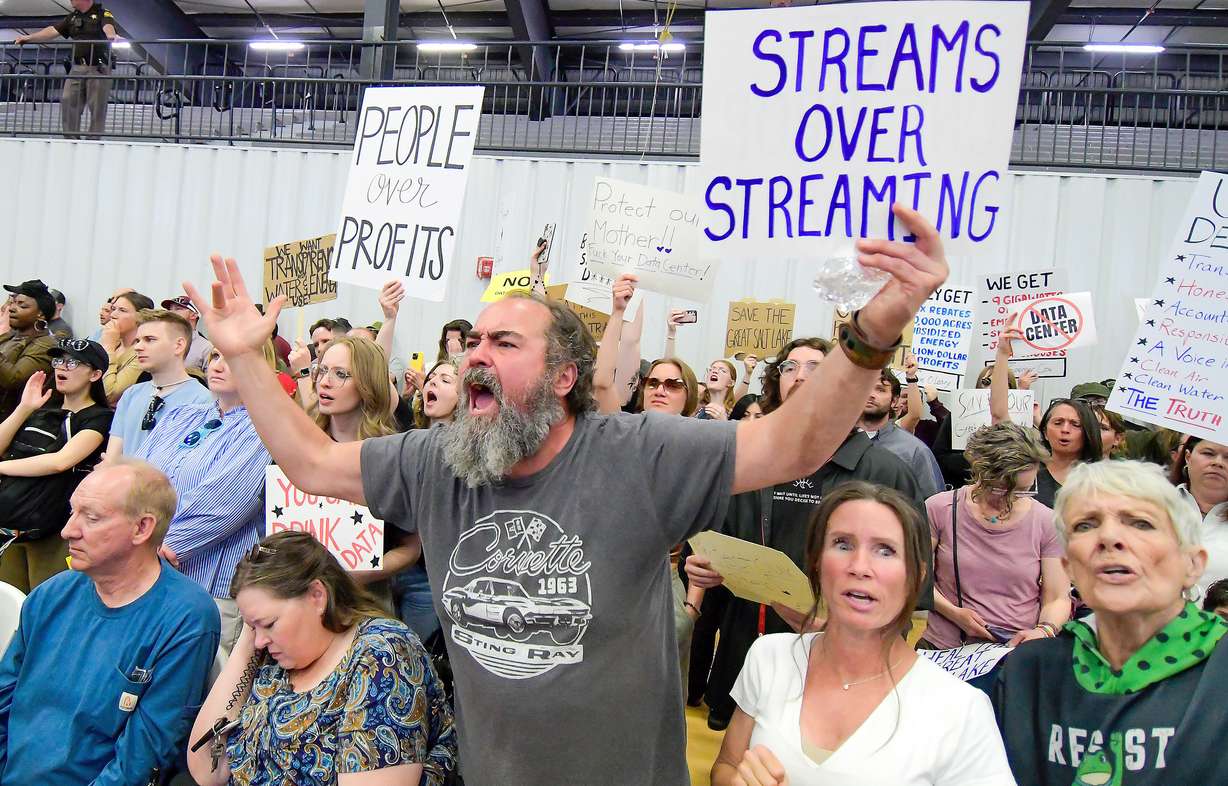
SALT LAKE CITY — Utah Republican voters sent a stunning rebuke to state leaders overseeing the Box Elder County data center on Tuesday, as a Deseret News/Hinckley Institute of Politics poll finds favorability of the project has continued to slide.
Opposition toward the data center proposal rose from 53% of Utah voters in May to 60% in June, driven by a GOP turn against the project that swapped a net positive favorability of 9 percentage points, to a net negative of 10 points.
The swing in support coincided with a massive electoral upset. Voters ousted Utah's longest-serving Senate president, Stuart Adams, R-Layton, after he became the face of the data center's fast-tracked government approval.
Box Elder County commissioners who supported the special zoning arrangement for the "Stratos Project" were also unseated in races dominated by dissatisfaction with the data center, billed as one of the largest in the world.
Utah's political upheaval fits within a national trend of voters making data centers the focus of their anxiety over AI and skepticism with publicly facilitated corporate deals.
What Utahns think of Box Elder data center
The Deseret News/Hinckley Institute poll, conducted by Morning Consult among 850 Utah voters from June 16-22, found 26% of voters strongly or somewhat support the Stratos Project, while 60% strongly or somewhat oppose it, and 15% don't know.
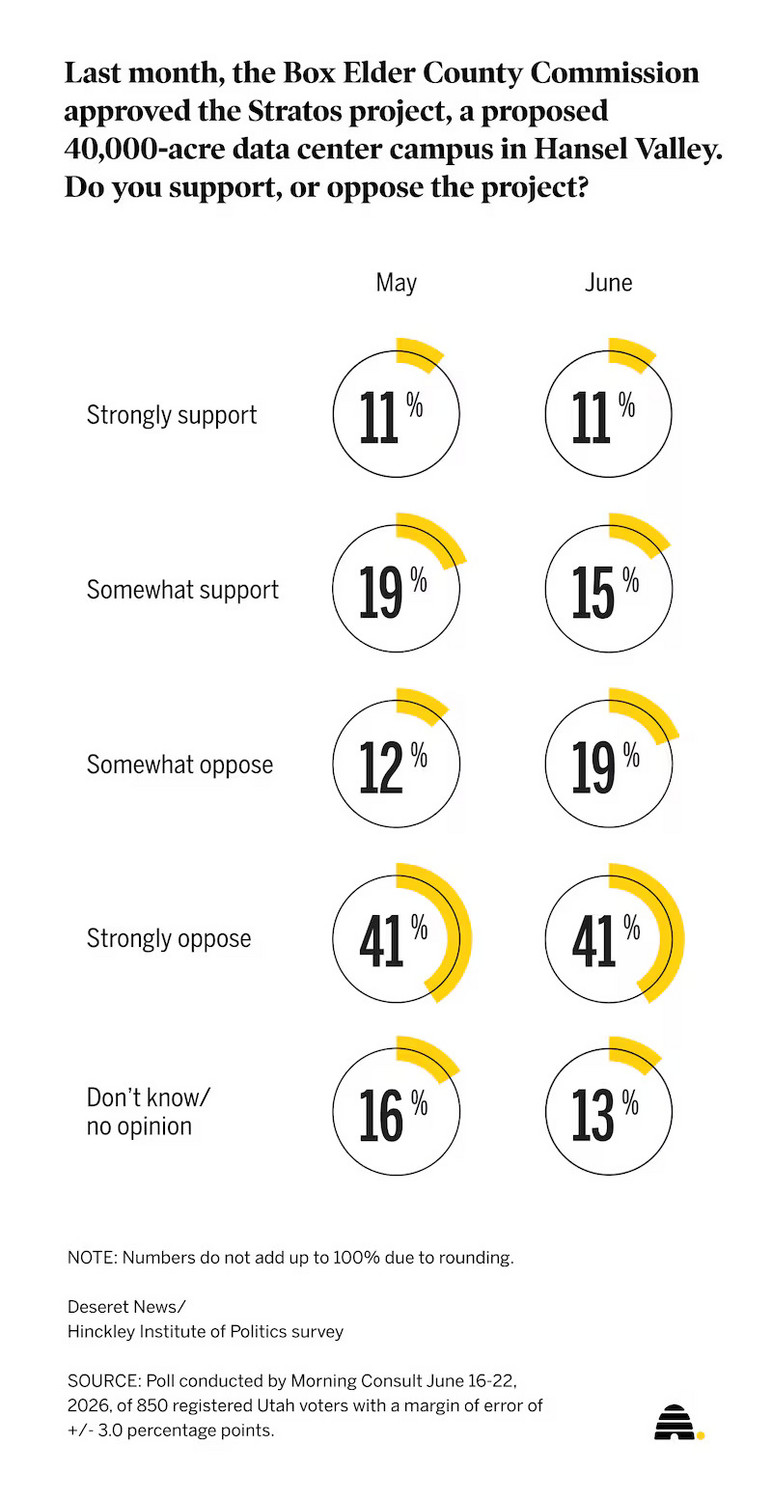
The biggest shift since May was the share who moved from somewhat supportive to somewhat against the project.
While opposition remained constant among Democrats and independents, at 83% and 62%, respectively, it jumped from 36% to 49% among Republican voters as the proportion in support or neutral fell by six to seven points.
This spike in disapproval, accompanied by an anti-incumbent push, has parallels around the country, according to Corey Young, who directs research into local government and data centers at Washington & Jefferson College in Pennsylvania.
"That seems like a very dramatic and direct indictment of data center development broadly," he said. "Not only data centers as a concept, but also it seems like an indictment of the process of attracting them and developing them."
Around the country, including in the state of Maine, Lyon Township in Michigan and Iron County, Utah, local leaders have placed moratoriums on data center proposals while lawmakers craft policies to manage requests.
A temporary pause on data centers may be the best next step to ensure transparency, Young told the Deseret News.
The data center effect on elections
The Stratos Project initially sailed through the state's Military Installation Development Authority pipeline for approval after celebrity investor Kevin O'Leary met with Gov. Spencer Cox and Adams in January.
Soon after the MIDA board, chaired by Adams, authorized the economic development area, complete with 100% property tax relief, it attracted a mountain of criticism for its secrecy, size and proximity to the Great Salt Lake.
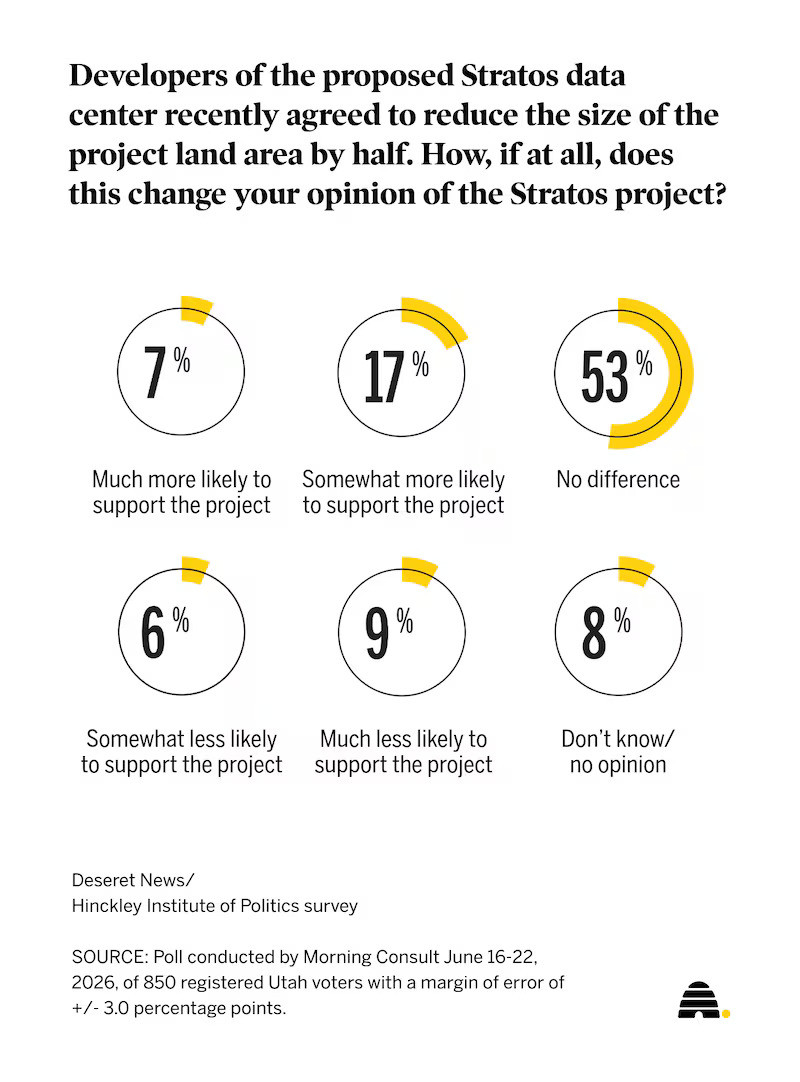
In the final weeks of his seventh reelection bid, Adams recognized the extent of the backlash. He made a show of sending a letter to O'Leary securing a 50% reduction of the project area. But the reversal was too little, too late.
Only 24% of voters said the concession made them more likely to support the data center, the Deseret News/Hinckley Institute poll found. A majority, 53%, said it made no difference; 15% said it made them less likely to support it.
Adams ultimately got 34% in a three-way race, with attorney Stephanie Hollist winning a 43% plurality, toppling the longtime lawmaker.
Many factors fed into Adams' loss, but one was decisive, according to environmental policy expert Brigham Daniels.
"Six weeks ago, it seemed to me that President Adams was untouchable — last night (Tuesday) he conceded an election," Daniels said. "What has happened is people in Utah have had a surprisingly strong reaction against the Stratos Project."
Was the backlash fair?
The noise surrounding the Stratos Project has often verged on alarmist, centering around inaccurate estimations of water consumption, likely exaggerated guesses of heat effects and plain speculation about energy production.
While miscommunication by the developer created an environment of uncertainty, much of these talking points were promoted by coordinated email campaigns or funded by Democratic firms posing as Republican initiatives.
But real questions abound about the community impacts of a project that could use up to 9 gigawatts at full build out.
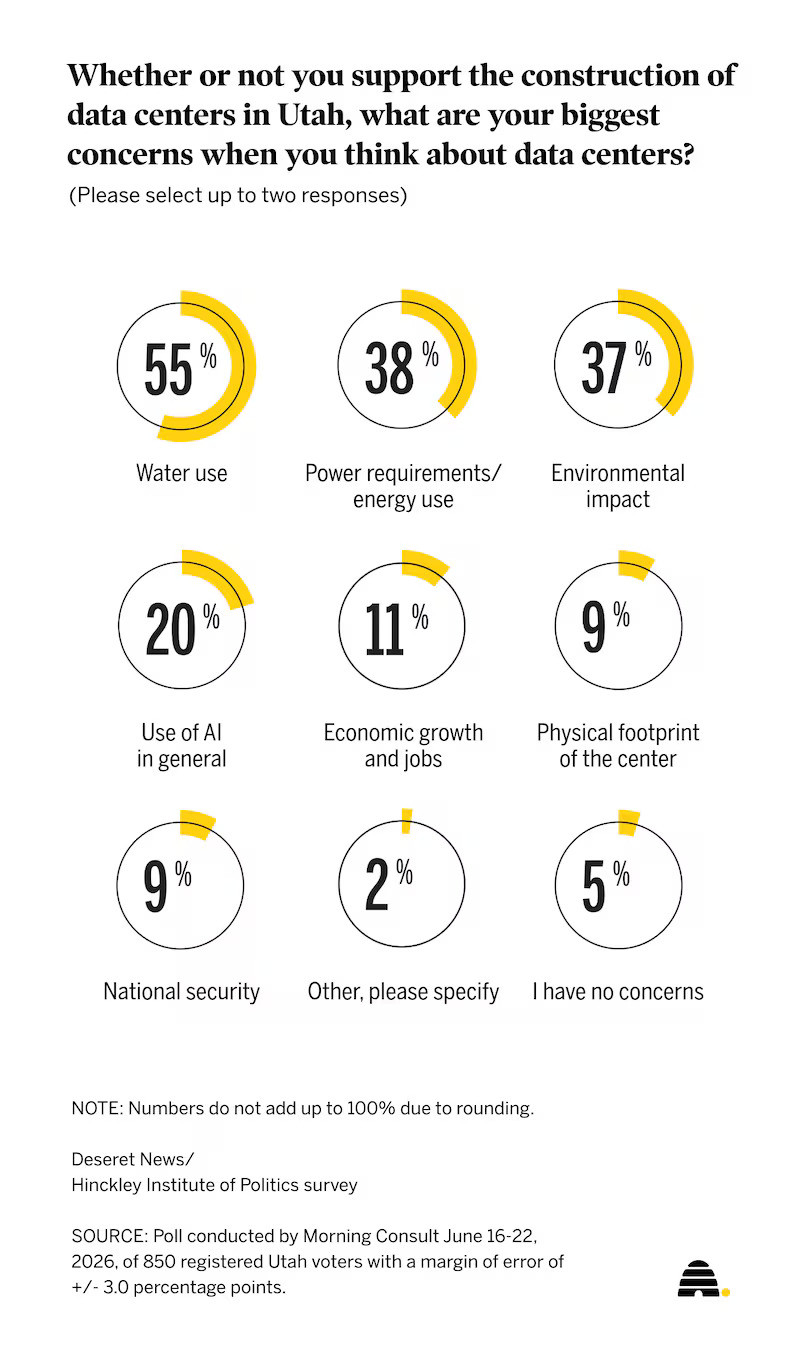
The poll found the most common concern among voters was water use, following by energy use and environment effects.
Rancher Boyd Bingham, who along with former lawmaker Lee Perry, lost his reelection bid for Box Elder County commission on Tuesday, said most of the complaints they received were not pertinent to the project and from outside the county.
The most frustrating aspect for Bingham is that his race became a referendum on a process that excluded him.
By the time it came before the commission, MIDA had already exercised its unique authority and there remained no legal recourse to block a private transaction on previously unzoned land, Bingham told the Deseret News.
"They had an opportunity to get out in front of this, talk about the issues with people. They chose not to do that," he said. "They chose to put pressure on us to get it passed after they had property bought, which put us in a bind."
The future of data center policy
Bingham's replacement, former city planner Vance Smith, sympathized with the position of his opponent. He told the Deseret News commissioners had few options to prevent the project aside from simply being more "disagreeable."
But he said the ouster of Bingham and Perry represents an underlying anxiety about growth, AI and rural quality of life.
Box Elder's anti-incumbent groundswell boiled over into other races: It was the only county where Rep. Blake Moore, who ultimately won his race, ran behind state Rep. Karianne Lisonbee in votes.
This sentiment is understandable, according to House Speaker Mike Schultz. But he faults O'Leary for creating the sense that voters were powerless, a feeling which he said was the primary driver of Adams' defeat.
"Kevin O'Leary spent his time lecturing Utahns instead of answering their questions. And it is a completely wrong approach," Schultz told the Deseret News. "And I do blame Kevin O'Leary for this mess that's out there, in large part."
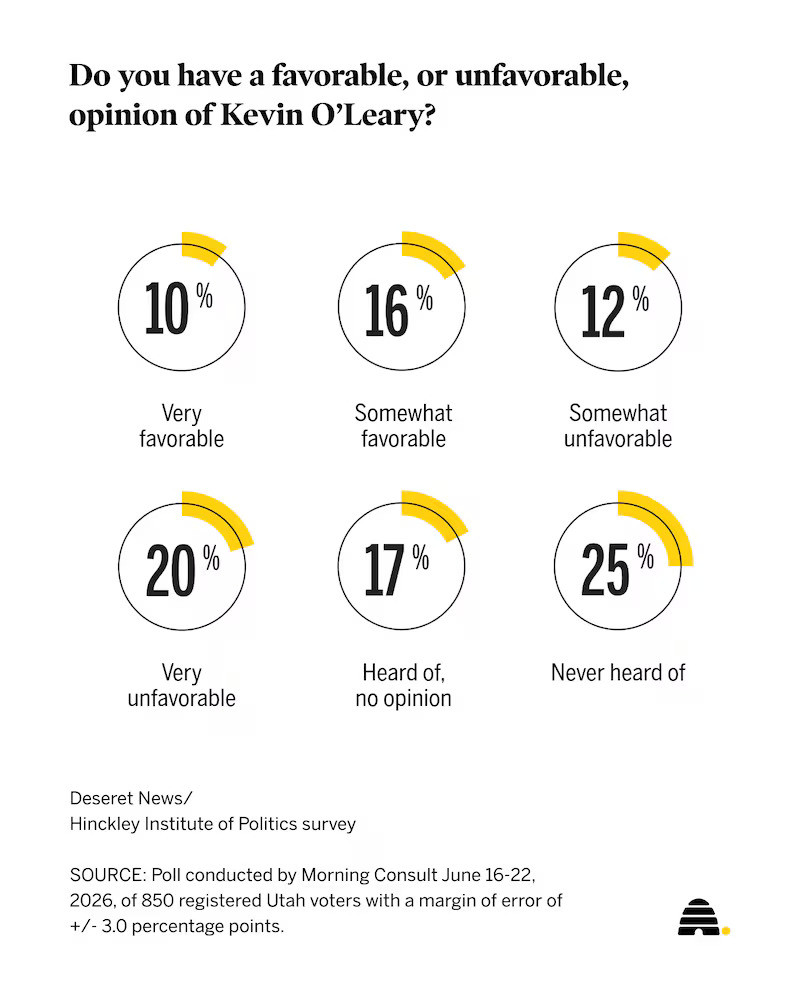
The poll found O'Leary underwater in Utah, with 32% of voters viewing him unfavorably and 26% favorably.
Public outcry hasn't slowed down the Stratos Project. Its MIDA designation was unaffected by Tuesday's election and it will continue to pursue the proper permits, O'Leary Digital CEO Paul Palandjian said in a statement on Wednesday.
"Elections change personnel; they don't change the work in front of us," Palandjian said.
He promised to "listen and learn" from voters, while alleging much of the political rhetoric has been "misinformation."
But voters are not necessarily anti-data center, conservative strategist Dan Hauser told the Deseret News.
What negative survey results — and election outcomes — show is voters are anti-backroom data center deals.
"They were upset with how elected officials did not consult with the public on such an important issue that it looked like the only people who would get ahead were the investors in the project and the officials who approved it," he said.