'%3e%3cpath%20d='M34.1406%205.85938C30.3906%202.10547%2025.3047%200%2020%200C14.6953%200%209.60938%202.10547%205.85938%205.85938C2.10938%209.61328%200%2014.6953%200%2020C0%2025.3047%202.10547%2030.3906%205.85938%2034.1406C9.61328%2037.8906%2014.6953%2040%2020%2040C25.3047%2040%2030.3906%2037.8945%2034.1406%2034.1406C37.8906%2030.3906%2040%2025.3047%2040%2020C40%2014.6953%2037.8945%209.60938%2034.1406%205.85938ZM37.0117%2023.543H31.1602V13.5391H27.6328V19.9414C28.1211%2020.6914%2028.3711%2021.582%2028.3711%2022.5625V22.625C28.3711%2023.668%2028.1172%2024.6055%2027.6328%2025.4297V26.6094H36.082C33.4883%2032.9375%2027.2891%2037.3789%2020.0039%2037.3789C10.3711%2037.3789%202.62109%2029.6289%202.62109%2020C2.62109%2010.3711%2010.3711%202.62109%2020%202.62109C29.6289%202.62109%2037.3789%2010.3711%2037.3789%2020C37.3789%2021.1484%2037.2617%2022.2656%2037.0508%2023.3477C37.0391%2023.4141%2037.0234%2023.4766%2037.0117%2023.543Z'%20fill='white'/%3e%3cpath%20d='M22.3086%2018.5352C20.4336%2018.125%2019.9531%2017.8398%2019.9766%2017.1836V17.1406C19.9766%2016.6992%2020.3477%2016.2148%2021.4023%2016.2148C22.582%2016.2148%2023.8867%2016.6797%2025.0781%2017.4766L26.8516%2015.0195C25.4453%2013.8906%2023.707%2013.3398%2021.5547%2013.3398C18.5195%2013.3398%2016.4375%2015%2016.4063%2017.4766V17.5352C16.3633%2020.2617%2018.5859%2020.9805%2021.293%2021.6016C23.0391%2021.9766%2023.5703%2022.3164%2023.5703%2022.9609L23.5469%2022.9766C23.5469%2023.3906%2023.2578%2023.7031%2022.7852%2023.8359C22.5742%2023.9062%2022.1289%2023.9727%2021.5156%2023.9727C20.7617%2023.9727%2019.7539%2023.8633%2018.6328%2023.4844C18.0898%2023.2891%2017.4727%2023.0039%2016.8047%2022.6133L20.1406%2026.625C20.2813%2026.6602%2021.0977%2026.8516%2021.7734%2026.8516C25.0039%2026.8516%2027.0859%2025.2461%2027.1094%2022.6328V22.5703C27.1602%2020.1133%2025.2148%2019.1719%2022.3086%2018.5352Z'%20fill='white'/%3e%3cpath%20d='M5.24219%2013.5664V26.6133H8.75391V23.7578L10.2969%2021.9531L14.2031%2026.6133H18.3867L12.3555%2019.5195L17.4023%2013.5664H13.4531L8.75391%2019.0586V13.5664H5.24219Z'%20fill='white'/%3e%3c/g%3e%3cdefs%3e%3cclipPath%20id='clip0_97_2430'%3e%3crect%20width='40'%20height='40'%20fill='white'/%3e%3c/clipPath%3e%3c/defs%3e%3c/svg%3e)


- Republicans are divided over a $95 billion spending proposal lacking cost offsets.
- The proposal includes military funding and parts of President Donald Trump's desired election megabill.
- House GOP leaders aim for a vote before the August recess despite internal opposition.
SALT LAKE CITY — Congressional Republicans are split on the new blueprint for a third budget reconciliation bill, with some party members hesitant to back the $95 billion price tag without cost offsets elsewhere.
House GOP leaders unveiled the spending framework on Wednesday morning to provide supplemental funding to the military as well as enacting portions of President Donald Trump's desired proof-of-citizenship and voter ID megabill. But senior Republican aides said there aren't plans for major offsets to pay for the additional funding, raising eyebrows among conservative fiscal hawks on Capitol Hill.
"I think that a no-offset plan was dead on arrival," Rep. Warren Davidson said on Wednesday, predicting enough Republicans would join that position — enough to sink the proposal.
Rep. Chip Roy, who is a vocal fiscal hawk in the House, left a closed-door meeting on Wednesday saying "there's more work to do" on the framework before it can be voted on. GOP leaders hope to put it on the floor next week.
Vice President JD Vance met with House Republicans on Wednesday to lobby for quick passage and quell concerns about the lack of offsets and provisions cracking down on waste, fraud, and abuse. Republican lawmakers have long pushed for the latter in other budget legislation.
"Ultimately, we decided this legislation for a whole host of procedural reasons was not the place in order to codify some of the things that we're doing in the anti-fraud task force," Vance said, referring to the White House task force.
Other Republican leaders said they were not discouraged by the lack of anti-fraud provisions, noting more can be down in future legislation.
"Sometimes you get it on the the bill, sometimes you have to wait till the next one," Rep. August Pfuger, who leads the Republican Study Committee, told the Deseret News. "And I don't think that changes anything in our approach."
What's in the bill
The 47-page resolution was released on Wednesday, offering instructions to four different committees to draft the bill over the coming weeks. Those instructions lay out spending ceilings including $60 billion for House Armed Services; $10 billion for House Administration; $12 billion for House Agriculture; and $13 billion for House Intelligence.
Exact details of how that spending will be used are not yet determined. The instructions released on Wednesday only offer spending maximums for each committee, which will then draft the actual spending legislation in the coming weeks.
The final package is not expected to contain major spending cuts to offset the costs.
The spending bill will go through the budget reconciliation process, which allows the Senate to bypass the 60-vote filibuster and approve the legislation mostly along party lines. It's the third reconciliation bill Republicans will attempt since Trump was elected last January.
The $60 billion for the Armed Services Committee closely mirrors the defense spending supplemental request made by the White House earlier this summer to cover the costs for the Iran war, according to senior House Republican aides.
That spending total is expected to be divided into $55 billion for military programs and roughly $12 billion for classified programs.
Republicans want to include Sen. Mike Lee's election bill
The package will also seek to enact portions of the SAVE America Act, an election reform bill being pushed by Republicans but has been stalled in the Senate due to Democratic opposition.
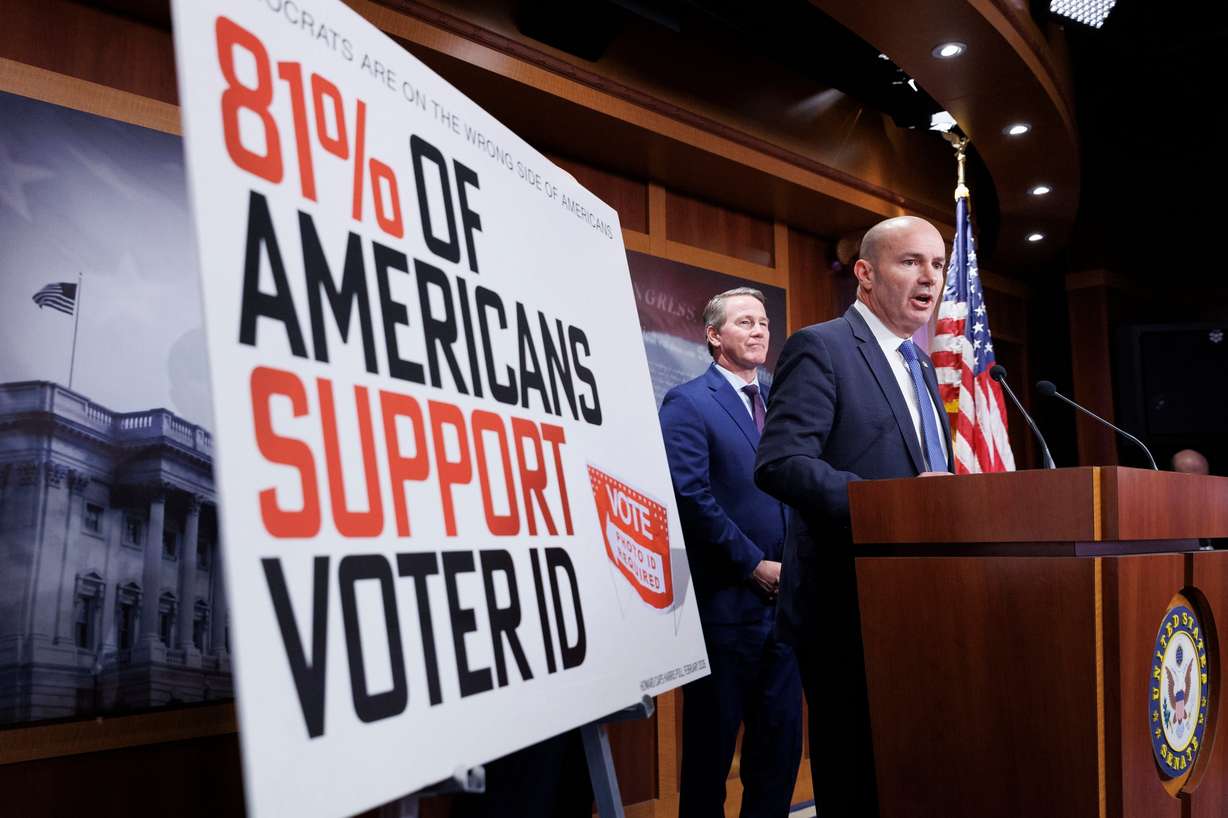
"Safeguarding American elections and strengthening our national defense are the most basic responsibilities of Congress and are supported by an overwhelming majority of Americans," House Speaker Mike Johnson, R-La., said in a statement.
There have been concerns that the SAVE America Act does not adhere to the strict rules of the budget reconciliation process. However, House Republicans hope the budgetary instructions to the House Administration Committee, under which the election bill will be included, will be eligible.
However, Sen. Mike Lee, the main sponsor of the SAVE America Act in the Senate, told the Deseret News it's possible some things could be included — but it would depend on how it's drafted.
"There may be some things they can do to replicate some of the principal benefits of America through reconciliation," Lee said. "The SAVE America act itself could itself never fly through reconciliation because it is policy and non-budgetary. But there are some things that you could fund through reconciliation geared toward facilitating election security, citizenship verification, and possibly voter ID."
Republicans hope for swift passage but timing unclear
The House Budget Committee is scheduled to mark up the framework on Thursday morning, after which House GOP leaders hope to put the proposal on the floor next week before the annual August recess.
It's not yet clear how quickly the Senate will schedule a vote. The framework released on Wednesday does not include instructions for the Senate, which will need to be separately drafted.
The pair of instructions will then need to be negotiated and combined until it is one identical resolution. That could take a few weeks, making it unclear if it can get done before the November elections.
Senate leaders have not yet tapped a new Budget Committee chairman to lead the process after the sudden death of former Sen. Lindsey Graham over the weekend. That could also slow down the process.
Still, Republicans hope to get the package drafted and passed before the midterms, when control of Congress will be up for grabs. Trump has approved the proposed spending levels for the bill, according to GOP aides.