- "The Hunger Games: Sunrise on the Reaping" stands alone as a compelling film.
- Prestigious actors like Jesse Plemons and Glenn Close bring depth to the story.
- The movie explores dystopian themes, highlighting societal inequities and the struggle for change.
SALT LAKE CITY — My daughter, who is 14, has been reading the YA dystopian series "The Hunger Games " by Suzanne Collins. So when the press screening invite for the latest movie installment, "The Hunger Games: Sunrise on the Reaping ," arrived in my inbox, I planned a mother-daughter outing for the two of us to see the movie ahead of its release, which, I figured, would be a badge of honor for my high schooler among her friends. And, more importantly, would make me seem like a cool mom.
I went into the screening expecting to be both lost and bored. I never read the books, and only saw the first "Hunger Games" movie in 2012 before deciding the franchise was not for me. This decision was fueled in part by having had a baby a month prior, making the premise of the story, in which children are forced to kill other children, too upsetting for my new mom mindset.
I asked that same baby, now 14, to briefly explain the plot of "Sunrise on the Reaping" on our drive to the theater. She'd finished the book just hours earlier.
"Did you like it?" I asked.
"Yes," she said with some hesitancy, almost as a question, then added, "It was sadder than I wanted it to be."
She did her best with the plot summary, but I was still pretty confused about who was doing what, where and why.
Those details turned out not to matter. Unlike many prequels and sequels in other franchises, "The Hunger Games: Sunrise on the Reaping" functions perfectly well as a standalone movie. There was clear fan service in certain parts, but not in an obnoxious Marvel or "Star Wars" way. One need not have viewed the entire film catalog of the "Hunger Games" cinematic universe to follow along.

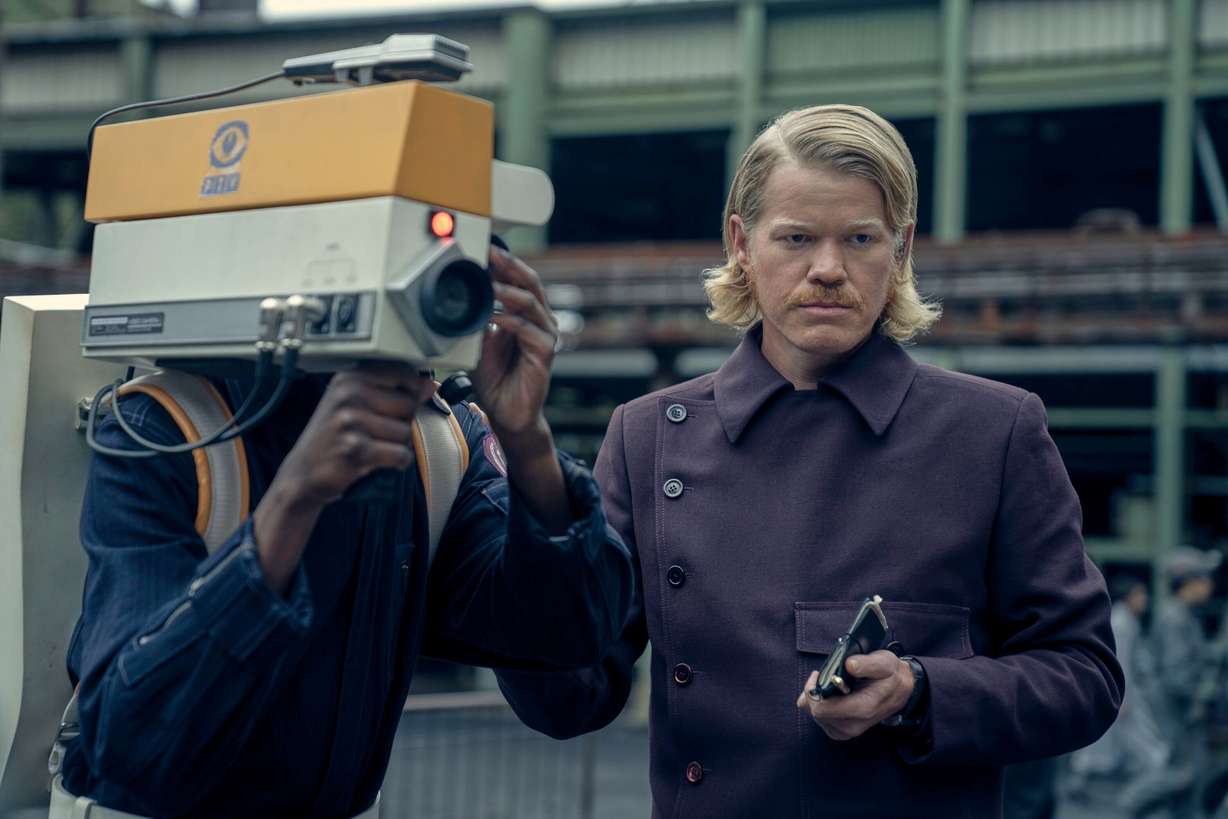
And, to my surprise, I found the "whos" quite compelling. The cast is stacked with some of our best prestige actors, including an Academy Award winner and several nominees. The 21-year-old and rather cherubic-looking Joseph Zada, who plays Haymitch Abernathy, holds his own in the lead role, as do the other young actors cast as tributes. But it's Jesse Plemons as Plutarch Heavensbee, Glenn Close as Drusilla Sickle, Kieran Culkin as Caesar Flickerman, Elle Fanning as Effie Trinket and Ralph Fiennes as President Snow who bring the movie to life in their portrayals of the flamboyant, wealthy aristocracy subjecting children to the cruelty of the games for their own entertainment.
I also found the "what" compelling in the way all good dystopian stories are — disturbing enough to make the reader or viewer uncomfortable, but entertaining enough to keep them reading and watching. I'll never forget reading my first dystopian novel in elementary school. It was "The Giver" by Lois Lowry. I remember rereading chapters that were upsetting in the hopes that I could will the text to reassemble into a story that was safer and more comfortable. I felt that same discomfort watching the child competitors rise up into the Hunger Games arena, stand still through a countdown, then sprint to grab a weapon with which they would need to defend their own lives and take others.
The "where" is masterfully created. The impoverished District 12 of Panem looks and feels primitive, with log cabins and costumes from the mid-19th century. By contrast, the wealthy Capitol is garish, with bright 1970s colorscapes, and its people are made up and dressed in a way that is visually mesmerizing. I would be lying if I said I didn't covet a few of their outfits. The arena, an artificial stretch of nature where tributes from each district compete to survive, presents a stark contrast between breathtaking landscapes and children committing violence against each other. My only visual complaint concerns the CGI animals, which weren't quite realistic enough, a flaw made more apparent when viewed in IMAX.
But it was the "why" that I found most compelling. When my daughter told me the book was sadder than she wanted it to be, I thought she meant it was sad in the way the entire premise of the series is sad. The wealthy subject the poor to a game of extreme cruelty for their own entertainment. The competitors' darkest moments are edited and presented to viewers for laughs. The impoverished districts have to participate to prevent annihilation. It's a bummer.
But at the movie's conclusion, I realized she meant that this specific story is especially sad. Sadder than any of the others. Because it took place a generation before the original series, before any hint at a happy ending, and centers around a failed attempt at a revolution. Then there's the tragic aftermath for the revolutionaries, which makes it the most realistic dystopian story I've experienced.
On our drive home, we talked about how hard it can be to change things. How it often takes much longer than we hope, and how many disappointments line the road of progress. And how many lives remain sad when things don't change. How many lives are lost in pursuit of that change. But we concluded it's always worth trying.
Fourteen years after I found the premise too upsetting for my postpartum sensitivities, I'm grateful for this story that has taught my kid to sit with the discomfort of life's inequities. I had "The Giver." She has "The Hunger Games." Both use fantasy to reveal some of life's hardest truths and teach us the power of trying to change them.