- Utah homebuyers face unexpected taxes due to public infrastructure districts (PIDs).
- Such districts, created in 2019, allow developers to finance infrastructure via municipal bonds.
- State officials express concerns over PID debt surpassing Utah's total state debt.
The following story was reported by the Utah Investigative Journalism Project in partnership with KSL.com.
SALT LAKE CITY — When Don Brown and his wife bought a studio apartment at the exclusive Black Desert resort community outside St. George, they were excited for a smaller place to live that was big on amenities: fine restaurants, a golf course, even a waterpark to take the grandkids when they visited.
But it wasn't until the night before he signed the closing documents that he saw an added property tax he wasn't expecting. For a roughly 1,500-square-foot unit, he expected to pay property taxes of around $2,000 a year. Instead, his bill was over $10,000.
"We went to close on it and discovered the city of Ivins has essentially put a 30-year mortgage on our property, without our consent," Brown said. "If you look at net present value, it's about $250,000 added on." His real estate agent never mentioned it; he had to find it himself in the stack of closing documents.
By that point, Brown had already put 75% of what he thought was the full price down and had waited two years for the unit to be built. His whole family had been excited and waiting.
"When you have that much momentum behind the idea with your whole family, it's really hard to back out," he said. His plan, he says, is to take the issue up with the city when property assessments are made in the fall.
"There's going to be a lot of people saying, 'Wait a minute, you are assessing our unit on a per- square foot basis, double what someone pays that lives across the street?'" Brown said.
It may be a rude awakening for many more Utahns across the entire state. The sticker shock Brown got came because the development he bought into is a public infrastructure district.
It's a special kind of finance tool that was created by the Legislature in 2019 to make it easier for developers to pay for infrastructure like roads, sewer, and electrical systems for new communities. The legislation allowed local governments to create public infrastructure districts or PIDs that would be run by private developers, who could then access municipal bonds.
Lawmakers in the 2026 legislative session did pass a bill to address the disclosure of public infrastructure district assessments. Under HB507, a homebuyer now has to be shown the cost of public infrastructure district assessments "at or before closing."
"Right now you can buy a house and have no idea what the PID bond fee will be," said Rep. Calvin Roberts, R-Draper, who sponsored legislation reforming public infrastructure districts.
Learning about such fees at closing, however, still means eleventh-hour disclosures are perfectly legal.
"It was like the 11th hour and 59th minute," Brown said of his situation.
Hundreds of public infrastructure district developments have sprung up since 2019. In total, they carry more than three times the debt of the entire state of Utah.
At the end of 2025, the state's total debt obligation was $1.1 billion, but public infrastructure districts were carrying $3.8 billion in debt obligations from bonds issued.
Utah State Auditor Tina Cannon says her office has been trying to wrangle public infrastructure districts across the state. As the auditor, she has oversight over every government entity in the state. But public infrastructure districts can be slippery. Many are formed and don't give the office notice or cannot provide accurate details about the bonds they've issued. At one point last year, as many as four a week were being formed in Utah.
"They really hate it when I say this," Cannon said. "But for a developer, this is a gift."
Rise of the public infrastructure districts
Previously, developers had to take out loans from a bank to pay for infrastructure for their housing projects, such as curbs and sewer lines. Then, they had to wait to sell off all the homes to pay off the loan and see a profit. That's an anxious time period in what Cannon describes as a "highly speculative business."
Now, public infrastructure districts can access lucrative municipal bonds that are easier to get than traditional bank loans and they don't have to sell off the homes to make a profit.
"You just have to sell the bond and then you can take a gain," Cannon said.
Another selling point, a public infrastructure district home could be cheaper or just look cheaper than a traditional home.
Previously, Cannon said that when a homebuyer closed on a home, they paid for everything. That included the infrastructure that the developer had to get a bank loan to cover.
"You'd usually pay the cost of all of that infrastructure as the cost of that lot," Cannon said. "Now, the developer is able to pass that cost on in 30 to 40 years of additional tax payments."
State Treasurer Marlo Oaks says his office has also been closely watching public infrastructure districts. He's clear that the office is not opposed to the tool and says it can help Utah grow and, ideally, lower up-front costs for new homeowners.
He says that if a home costs $450,000 but public infrastructure district taxes would add $50,000 over a period of decades, then the homeowner should get a discount on those future taxes. That way, at closing, they pay $450,000 knowing they also have annual payments that, over 20 or 30 years, will tack on that extra $50,000.
"So theoretically, if these are operating as they should, that would lead to lower home costs," Oaks said.
But that also depends on homeowners having that information well in advance to expect the future discount. It's also very possible that homes in public infrastructure districts might have closing costs similar to a home across the street that has its infrastructure costs baked into the final price.
While new legislation gives homebuyers more warning, Cannon says it's not enough.
"I would prefer that it's way before interest money goes down and you're in the emotional decision mode at closing," Cannon said. "Most people are not financially astute enough to do the time value of money," she adds, especially at closing when you're not expecting to find a secret second mortgage hidden in a stack of documents to sign.
Given the explosive rise of public infrastructure districts in the state, there's also another theoretical concern nagging the treasurer and the auditor's office.
While PID debt is more than three times the state's debt, in theory, public infrastructure district debt should not have an impact on the state and its triple-A credit rating, which helps keep Utah's economy juiced and attractive for business growth and investment.
But that theory hasn't truly been tested.
PIDpocalypse
According to the 2025 debt affordability study, Utah has been killing it when it comes to its credit rating. Utah has a triple-A credit rating, the best rating possible and is only one of 15 states in the nation with that rating.
A better rating means better deals. It's just like for an average Joe, if you have a better credit score, you get better loans, pay less interest and get rewarded for your penny pinching. With states, it's the same: better score, better borrowing, better savings for taxpayers. Businesses find comfort in setting up shop in a stable economic environment.
According to the 2025 Debt Affordability study, if Utah were not triple-A-rated but just the next level down, it would mean $26.5 million in additional interest costs over the life of the bonds, to be paid by the taxpayer.
While public infrastructure district debt is more than triple the state's debt in bonds, does that mean the state shouldn't be worried?
Oaks is cautiously pessimistic.
"The state was ultimately the one that approved this structure," Oaks said. "And the state is known as a very well-managed state for good reason, right? And if this kind of structure ends up in some kind of extreme economic downturn — you just don't know how markets are going to react, you don't know what the impact could be to credit ratings or the view of the state's credit quality."
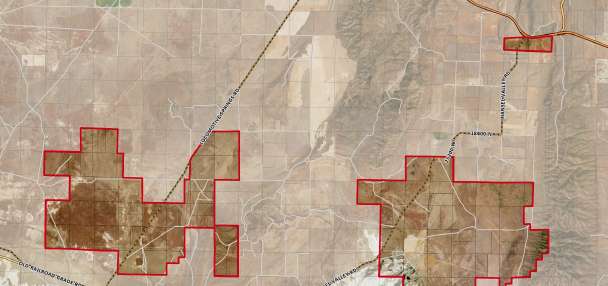
One prominent public infrastructure district, the Wohali golf resort in Coalville, has declared bankruptcy. That case is sinking into a legal quagmire, according to Cannon. The city is suing the developer and the developer has to pay off its public infrastructure district before other lenders.
It's even more complex, she says, because even in bankruptcy, the developer can "take out the additional principal from the (PID) bond to pay the current interest."
The bond allows it to outperform typical free-market behavior "because the bond keeps paying its own interest."
"This isn't a good way to go because if a project wasn't viable with its current debt load, to increase the load is not going to make it more viable," Cannon said.
Utah Office of the State Auditor
Matt Ence is an attorney and shareholder at Snow Jensen and Reece, a firm that serves as legal counsel to numerous public infrastructure districts across the state.
He says the billions in public infrastructure debt should be seen as a boost to the state economy rather than a drag. He argues it increases capital to projects that developers would struggle to get otherwise.
"Many developers have increased costs because the land that's available to develop is on the periphery of cities, so it takes more capital to run infrastructure to the property, and this capital is often difficult for traditional banks to finance," he said.
He notes that this tool is already in use in states like Colorado, Texas, Florida and other locations.
"It's new for Utah but has been around for decades across the country," Ence said.
Cannon said it's still important for cities and counties to consider how much money is tied up in these projects and what could happen if an economic downturn starts tumbling the dominoes over.
"What happens if you have $4 billion in projects and you have 3% fail or 10% fail?" she asked. "God forbid we have a correction like 2008 and you have a large percentage fail. The question over 'what happens then?' is one that should always be in the mind of (local governments) when they approve these projects."