Estimated read time: 6-7 minutes
A long-debated change to the Triple Crown calendar could be on the verge of happening, and it still may fall short of the desired goal.
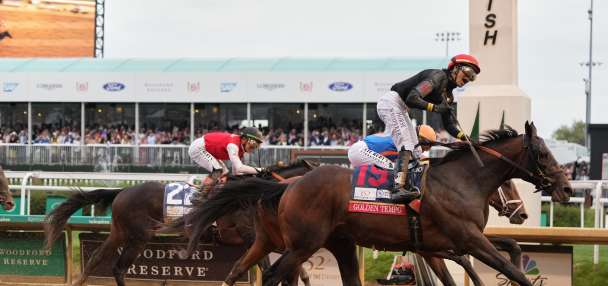
Golden Tempo is the third Kentucky Derby winner over the past five years not in the Preakness Stakes, which for the sixth time in eight years will run without a Triple Crown contender.
While no decisions have been made, Maryland officials are considering shifting the Preakness from two weeks to three after the Derby, which always runs the first Saturday in May with the Belmont Stakes on the first Saturday in June — a five-week span that has been a mainstay since 1969, except for the 2020 pandemic when they were run out of order.
It's almost unheard of for elite thoroughbreds now to race that frequently. While momentum is building toward a change worthy of upending tradition, many at the height of the sport wonder if one additional week would even make a difference.
"It's not enough, no," trainer Brad Cox said. "A lot of the trainers that have the success at the top level with these 3-year-olds would tell you that you would like more than three weeks."
Anything more would require a massive undertaking involving stakeholders in multiple jurisdictions and media companies.
American Pharoah in 2015 and Justify in 2018 became the 12th and 13th horses to sweep all three races. The 2015 win ended a 37-year Triple Crown drought that was the longest in history.
The concern is less about whether a 3-year-old is good enough to win the Kentucky Derby, Preakness and Belmont and more about them not even getting the opportunity. Typically, the best horses go a month or more between races, including a grueling road just to get to Churchill Downs for the Derby.
"It's pretty obvious that the horses benefit from more time in between races," Chad Brown, five-time Eclipse Award-winner as trainer of the year, said. "They run a lot less than they used to over the course of time, when you study the history, and I guess we have to take a step back and look at what's best — even if it's an uncomfortable change."
Brown, who has won the Preakness twice, agrees with Cox that three weeks is not enough but also said a small shift should come first.
The Maryland Jockey Club, which is taking over control of the Preakness from 1/ST Racing beginning next year, must first complete a media rights agreement that could play a big role in when the race is held. 1/ST Racing in 2023 broached the possibility of moving the Preakness back by two weeks, and while that never happened, new people in charge now have that control.
"We do have that luxury of just starting over and listening to all viewpoints, and ultimately we're going to try to make the best decision we can for obviously the event and horse racing and the state of Maryland," Maryland Jockey Club president and general manager Bill Knauf told The Associated Press this week. "We obviously recognize the history. We know what obviously has happened recently in terms of some of the Derby winners not being able to make it because of the timing. So, everything is going to be considered."
Watching the developments keenly are officials in charge of the Belmont, which would likely need to shift in some way to avoid the same dilemma of another short turnaround. That decision is up to the New York Racing Association, and pushing the final Crown race back to, say, the July Fourth weekend is unlikely given the lack of fan interest in sports during the holiday.
NYRA spokesman Pat McKenna said: "We are always willing to engage with Churchill Downs and the Maryland Jockey Club to ensure the continued success of the Triple Crown."
It's not typically the fear of injury but rather performance concerns that keep owners and trainers from wanting to risk a two- or three-week turnaround.
"It's not that the horses can't do it," said trainer Whit Beckman, who entered Ocelli in the Preakness after he finished third in the Derby. "These are very durable, resilient animals when they're fit, when they're happy, when they're healthy, so it's not necessarily a matter of they can't do it. It's just a matter of the opportunities nowadays just don't seem to arise like this."
Like Bill Mott with Derby champion Sovereignty last year, Cherie DeVaux is bypassing the Preakness with Golden Tempo to focus on the Belmont on June 6. The five-week gap paid off for Sovereignty, who won the Belmont, the Jim Dandy and the Travers Stakes at Saratoga Race Course in upstate New York and is back racing as a 4-year-old.
"They obviously skipped the Preakness because it's kind of tough for trainers and owners," Cox said. "We sometimes get bashed about not having horses stay around at the age of 4, but you've got to manage them properly and manage them right in order to get some longevity out of them. And running them back in two weeks, demanding races, oftentimes that's not going to lead to longevity."
Sovereignty earned nearly $6 million, and his success will be worth even more in breeding.
Brown, whose opinion has evolved to embracing change, wants horse racing to figure out the reasons the race should get moved: based on more Derby horses in the Preakness, long-term health coming out of it and viewership.
"Are you looking for a little bit of all of it?" Brown said. "The industry needs to clearly define what their main objectives are before you move it and work backwards from there to see what date of this race is going to achieve those. "
More Derby winners and horses in general going to the Preakness could restore the luster of the race and perhaps boost viewership and attendance, which last year was down 60% from pre-pandemic levels.
Television exposure is crucial, and Knauf expects resolution on a new media rights deal soon. Whether NBC Sports retains the rights or Fox Sports takes over, as it has the Belmont, could affect negotiations over spacing.
"There are a lot of factors, and certainly the media rights and broadcast partner, dependent on whatever events they already are showcasing on those weekends come in," Knauf said. "We are trying to do the best that we can to obviously communicate with all of them, communicate eventually with partners in NYRA and Churchill as part of the Triple Crown."
Knauf expects whatever strategy Maryland comes up with to be implemented as soon as 2027, when the Preakness returns to Pimlico Race Course in Baltimore after a one-year stint at Laurel Park. That would be the start of a shift in racing that Brown considers inevitable.
"It's not sustainable," Brown said. "You can't ignore the trend, and you can't ignore the fact that horses in all different categories and class levels seem to appreciate more time in between their races, for whatever the reasons are. So, that's the way we're headed."
___
AP horse racing: https://apnews.com/hub/horse-racing