'%3e%3cpath%20d='M34.1406%205.85938C30.3906%202.10547%2025.3047%200%2020%200C14.6953%200%209.60938%202.10547%205.85938%205.85938C2.10938%209.61328%200%2014.6953%200%2020C0%2025.3047%202.10547%2030.3906%205.85938%2034.1406C9.61328%2037.8906%2014.6953%2040%2020%2040C25.3047%2040%2030.3906%2037.8945%2034.1406%2034.1406C37.8906%2030.3906%2040%2025.3047%2040%2020C40%2014.6953%2037.8945%209.60938%2034.1406%205.85938ZM37.0117%2023.543H31.1602V13.5391H27.6328V19.9414C28.1211%2020.6914%2028.3711%2021.582%2028.3711%2022.5625V22.625C28.3711%2023.668%2028.1172%2024.6055%2027.6328%2025.4297V26.6094H36.082C33.4883%2032.9375%2027.2891%2037.3789%2020.0039%2037.3789C10.3711%2037.3789%202.62109%2029.6289%202.62109%2020C2.62109%2010.3711%2010.3711%202.62109%2020%202.62109C29.6289%202.62109%2037.3789%2010.3711%2037.3789%2020C37.3789%2021.1484%2037.2617%2022.2656%2037.0508%2023.3477C37.0391%2023.4141%2037.0234%2023.4766%2037.0117%2023.543Z'%20fill='white'/%3e%3cpath%20d='M22.3086%2018.5352C20.4336%2018.125%2019.9531%2017.8398%2019.9766%2017.1836V17.1406C19.9766%2016.6992%2020.3477%2016.2148%2021.4023%2016.2148C22.582%2016.2148%2023.8867%2016.6797%2025.0781%2017.4766L26.8516%2015.0195C25.4453%2013.8906%2023.707%2013.3398%2021.5547%2013.3398C18.5195%2013.3398%2016.4375%2015%2016.4063%2017.4766V17.5352C16.3633%2020.2617%2018.5859%2020.9805%2021.293%2021.6016C23.0391%2021.9766%2023.5703%2022.3164%2023.5703%2022.9609L23.5469%2022.9766C23.5469%2023.3906%2023.2578%2023.7031%2022.7852%2023.8359C22.5742%2023.9062%2022.1289%2023.9727%2021.5156%2023.9727C20.7617%2023.9727%2019.7539%2023.8633%2018.6328%2023.4844C18.0898%2023.2891%2017.4727%2023.0039%2016.8047%2022.6133L20.1406%2026.625C20.2813%2026.6602%2021.0977%2026.8516%2021.7734%2026.8516C25.0039%2026.8516%2027.0859%2025.2461%2027.1094%2022.6328V22.5703C27.1602%2020.1133%2025.2148%2019.1719%2022.3086%2018.5352Z'%20fill='white'/%3e%3cpath%20d='M5.24219%2013.5664V26.6133H8.75391V23.7578L10.2969%2021.9531L14.2031%2026.6133H18.3867L12.3555%2019.5195L17.4023%2013.5664H13.4531L8.75391%2019.0586V13.5664H5.24219Z'%20fill='white'/%3e%3c/g%3e%3cdefs%3e%3cclipPath%20id='clip0_97_2430'%3e%3crect%20width='40'%20height='40'%20fill='white'/%3e%3c/clipPath%3e%3c/defs%3e%3c/svg%3e)



Estimated read time: 9-10 minutes
- Gov. Spencer Cox has yet to decide on the divisive teacher discipline bill, SB312.
- SB312 aims to clarify disciplinary actions, but faces opposition from Utah's teachers' union.
- The bill's outcome could impact educator licensing and due process protections in Utah.
SALT LAKE CITY — Utah Gov. Spencer Cox has already signed off on several high-profile K-12 education bills — including new laws on early literacy, managing classroom tech and keeping cellphones out of school.
But an education bill addressing teacher discipline — SB312 – remains on the governor's desk. As of Tuesday, Cox had yet to sign or veto the so-called "Educator License Amendments" bill.
Perhaps it's little surprise the governor has been deliberate in acting on SB312.
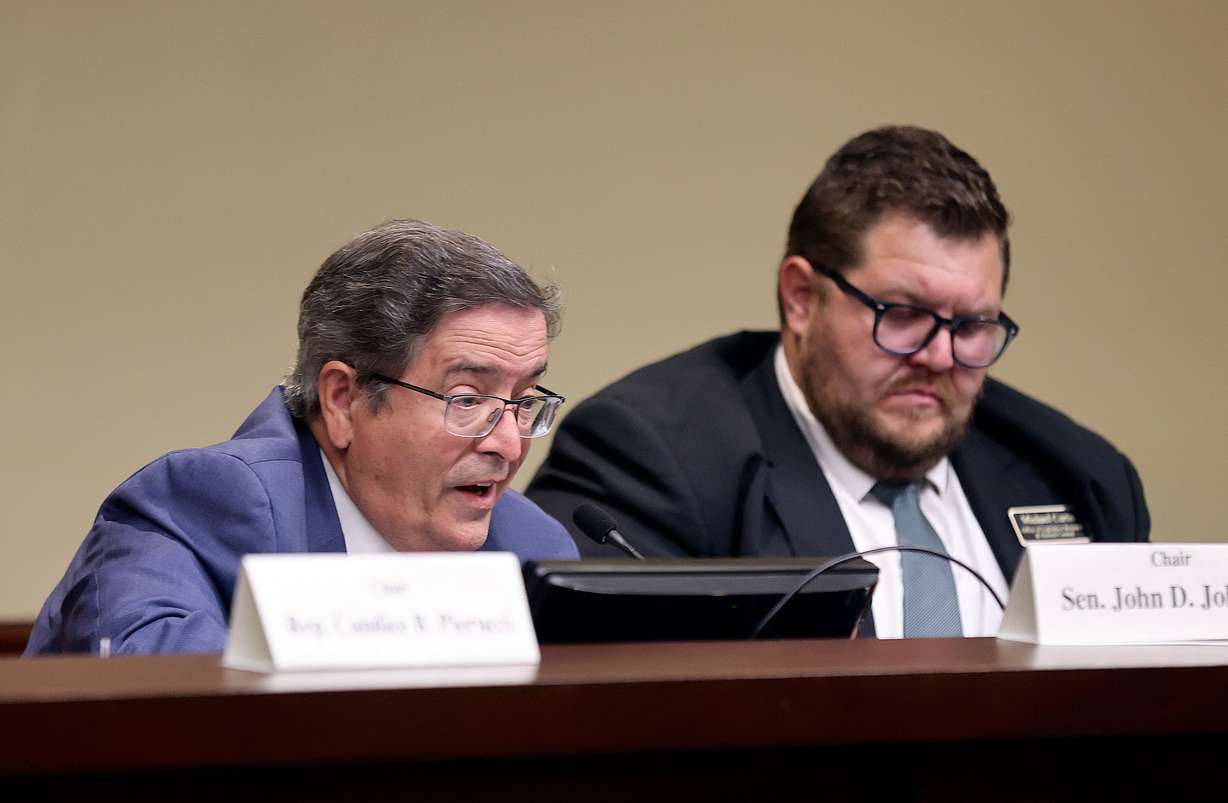
Sponsored by Sen. John Johnson, R-North Ogden, the bill proved divisive during committee hearings and floor time. It ultimately passed through both chambers, but there was sizable opposition from lawmakers in both parties.
Meanwhile, the state's largest teachers' union — the Utah Education Association — and some state board of education members have spoken out against the bill.
During the recent legislative session, Johnson said SB312 aims to clarify how "employment restrictions" are applied after the Utah State Board of Education has taken disciplinary action against a public K-12 teacher.
"The bill establishes a tiered framework — so consequences are proportional to the conduct involved," said Johnson during committee testimony.
The bill, he added, establishes two categories: first, "qualifying serious misconduct."
And second, "other conduct" that would include technical violations.
Such categorization, Johnson argued, would ensure licensing restrictions placed on a teacher are proportional, well-articulated and evidence-based.
If the state board suspends or revokes a teacher's license for a "qualifying serious misconduct," then public schools would not employ that teacher — or allow the teacher to volunteer at a school during his or her license suspension or revocation period.
"Serious misconduct," said Johnson, is defined as actions that "causes actual harm to a child" or creates a risk of harm.
Such harmful actions include sexual misconduct, grooming or boundary violations or any other "endangerment" that demonstrates an ongoing threat to student safety.
And such actions, emphasized Johnson, would automatically keep a disciplined teacher from being in contact with students once the license action takes effect.
But what about other forms of misconduct — those actions, or maybe inactions, that might include unprofessional conduct or poor job performance but don't pose harm or risk to kids?
In such "no harm to children" circumstances, explained Johnson, "restrictions on school employment or volunteer service apply only if the state board issues written findings.
"Those findings must identify a specific and articulable risk to students or the school environment — and explain why a lesser restriction would be insufficient."
Absent such findings, a disciplined educator may work in a role that does not require a license, including volunteer work.
"This protects educators from disproportionate consequences for minor administrative issues," said Johnson.
Currently, the Utah Professional Practices Advisory Commission is charged with maintaining professional and ethical teacher conduct. The commission serves as a USBE advisory — investigating teacher misconduct and then making licensing and disciplinary recommendations to the board.
During his bill presentation, Johnson said SB312 does not reduce the commission's authority, investigative powers and processes.
"What this bill does is expand teacher due process protections," he said. "Today, an educator can face broad employment consequences, even when the issue is a technical or administrative violation unrelated to student safety."
SB312's structure, added Johnson, is simple: Serious misconduct brings strong consequences. Technical violations receive stronger due process protections. "(Utah Professional Practices Advisory Commission) authority remains intact. Teachers' rights are strengthened. Student safety remains paramount."
Sen. Johnson: A 'fairness' bill for educators
In a statement provided to the Deseret News, Johnson noted that SB312 is defined by "fairness."
It's about punishments fitting the "crimes."
The bill establishes a tiered framework — so consequences are proportional to the conduct involved.
–Sen. John Johnson, R-North Ogden
No one, added Johnson, questions barring someone from schools who risks student safety. But alleged educator infractions "that amount to bureaucratic infighting or errors" are in a category where no students are involved.
"It is unfair to label someone who either made an error or otherwise got on the wrong side of district leadership in some mundane, bureaucratic matter the same as someone who either harmed or sought to harm children," wrote Johnson.
"The two things are not equal. In these cases, there is no reason that they should be banned from presence at school."
The bill sponsor said he knows of a veteran public educator with an "impeccable record" who was accused of intentionally making a misstatement in an employment hearing.
The educator, who denies the accusation, was given a two-year suspension by the commission.
"Now, she cannot even volunteer at her grandson's school," wrote Johnson. "That is ridiculous. Whether she was right or wrong, she certainly poses no danger to anyone in the school."
Pushback from Utah's teachers' union
The Utah Education Association — the state's largest teachers' union — opposes SB312, arguing it could weaken consequences for educator misconduct.
"UEA believes the bill undermines the credibility and effectiveness of (the Utah Professional Practices Advisory Commission)'s process by diminishing the significance of a suspension," according to a Feb. 25, 2026, association release.
"Currently, less serious infractions result in a letter of warning or a letter of reprimand. More serious infractions can result in a license suspension."
The association, the release added, opposes legislation that would allow an educator whose license has been suspended by the commission to return to the classroom.
"You wouldn't want a driver with a suspended license on the road," said association President Renée Pinkney. "Why should an educator with a suspended license go back to a classroom?"
The union added that complaints alleging educator misconduct are "thoroughly investigated" and reviewed by the commission — which then makes recommendations to the state board.
The board then retains authority to approve license suspensions or impose other alternative disciplines.
Bonnie Billings, the Utah Education Association's director of campaigns and elections, suggested that the provisions called for in SB312 are unnecessary.
"The bill would create exemptions in certain suspension cases. However, a suspension is a suspension, regardless of the violation, because it is based on the severity of the misconduct.
"If an infraction were not serious misconduct, it would not result in a suspension."
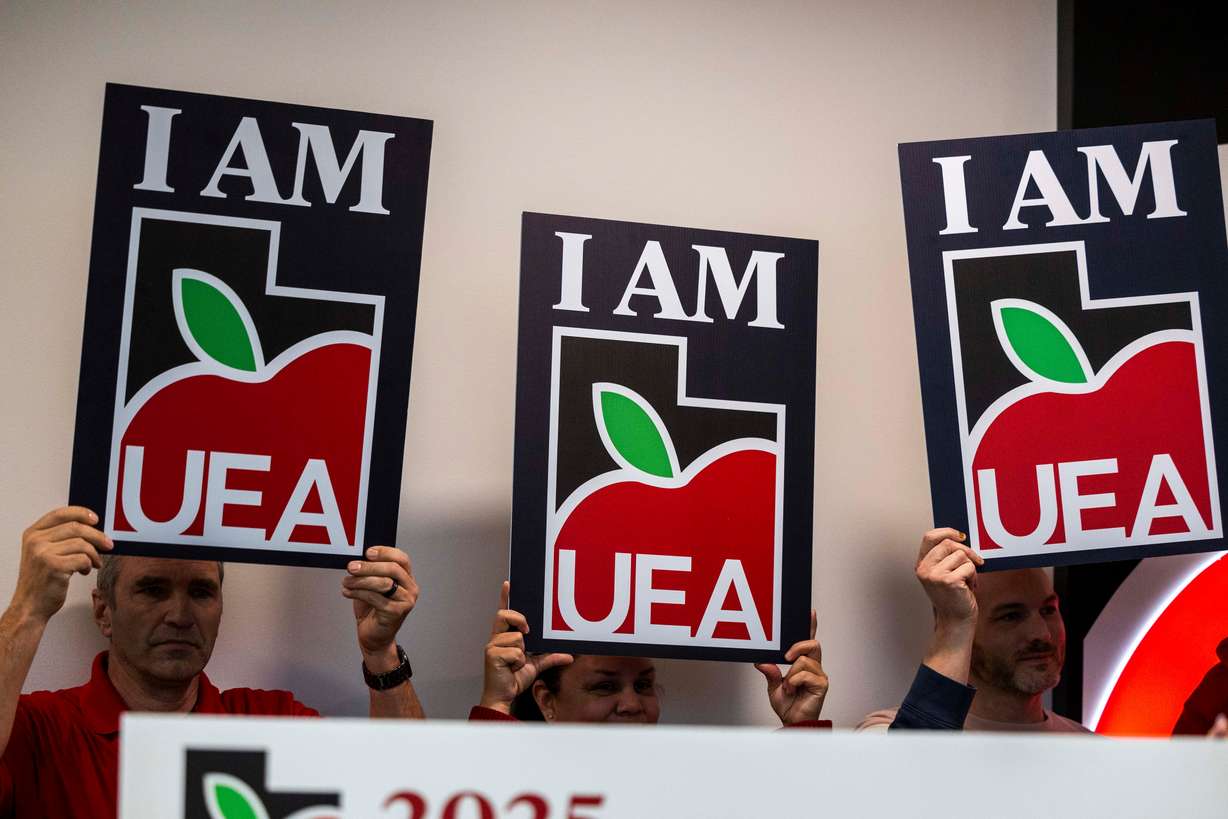
The current process, added Billings, "is fair, works as intended, and prioritizes student safety. SB312 risks undermining that by blurring the meaning and consequences of a suspension."
Sara Jones, the association's director of government relations, policy and research, added during legislative testimony that only the "most serious misconduct" results in an educator's suspension or revocation.
"Technical violations don't result in a revocation," said Jones. "If an infraction isn't serious, it results in a letter of warning or a letter of reprimand, not a suspension, and certainly not a revocation of a license.
"Exempting certain cases of suspension is not good for educators or students."
Bill cosponsor seeks consistency, transparency
Rep. Doug Welton, R-Payson, is both the SB312's cosponsor and a Utah high school teacher.
Given his profession, he admits to being "in an odd place" standing in opposition to the Utah Education Association, but said the bill prompts improvements in Utah's educator licensing and discipline process, providing clarification and guidance.
"I'm supporting this bill because there is a lack of clear guidance regarding certain situations. There is not fair proportionality on some of the instances where an educator might lose their license," he said.
The bill's mission, he added, is simple: "We want to protect students, ensure due process for educators, and make sure the disciplinary system is more consistent and transparent."
Welton said he wouldn't run any legislation that places students in danger. Instead, he said, SB312 "creates a process whereby those small infractions that don't cause harm to a student will allow them to still work in non-licensed areas of the school.
Divided response to teacher discipline bill
No surprise, the debate over SB312 stretches beyond lawmakers, teachers unions and the governor's eventual "veto/no veto" decision.
During public comment during the recent legislative session, Sandra Buendia said she was a public educator for almost four decades. She added that she had faced no disciplinary action until 2024 when she unknowingly provided inaccurate testimony at an employment hearing.
"My one unintentional error resulted in my termination and a referral to UPPAC," said Buendia. "They opened an investigation and flagged my professional license, making it impossible for me to find employment, effectively presuming me guilty."
Buendia said she was forced to sign a "consent to discipline" and concede guilt, adding she's now prohibited from working or volunteering in a Utah public education setting in any capacity.
You wouldn't want a driver with a suspended license on the road. Why should an educator with a suspended license go back to a classroom?
–Renee Pinkney, Utah Education Association president
Jenny Johnson challenged statements that only "serious misconduct" results in suspensions.
"Those who oppose this bill are arguing from a flawed premise," said Johnson. "They would like you to believe that UPPAC only recommends suspension when a teacher has engaged in serious misconduct, but that is not true."
Johnson added USBE is quick to rubber stamp commission recommendations without properly reviewing facts and evidence.
State school board member Carol Lear is the former Utah State Board of Education law and licensing committee chair and a former high school teacher who has practiced education law for over 40 years.
Lear argued the bill lacks sufficient legal definitions, adding she hoped policymakers would wait to take action until more defined data is available via an ongoing audit of the process.
Teacher Rebecca Kirkman also opposes SB312, telling lawmakers she has witnessed the consequences of "the wrong person in the classroom."
"It's so important that we keep our safety net strong," said Kirkman. "I think due process is already in the hearings with (Utah Professional Practices Advisory Commission), and teachers already have the right to appeal."
Retired Utah principal Pam Pedersen is throwing her support behind SB312, saying it promotes broader visibility of the commission's disciplinary process.
"(Utah Professional Practices Advisory Commission) decisions carry significant consequences," said Pedersen. "An educator license represents a person's career, livelihood and professional reputation. So clear, proportional and transparent standards help strengthen confidence in this system."
Expect commission debate to continue
For now, the fate of SB312 is likely in the governor's hands.
Jamie Renda is the founder of the conservative Path Forward Utah organization and a critic of commission operations and processes.
"I don't understand the opposition to SB312, but this is the first of many changes that need to be made in ensuring our educators have due process — and that we fix the broken system that exists at (Utah Professional Practices Advisory Commission)."
Regardless of Cox's final decision regarding the bill, Renda said her calls for change won't be changing.
"It's one of those systems that will continue to be broken unless it's brought to the forefront."