'%3e%3cpath%20d='M34.1406%205.85938C30.3906%202.10547%2025.3047%200%2020%200C14.6953%200%209.60938%202.10547%205.85938%205.85938C2.10938%209.61328%200%2014.6953%200%2020C0%2025.3047%202.10547%2030.3906%205.85938%2034.1406C9.61328%2037.8906%2014.6953%2040%2020%2040C25.3047%2040%2030.3906%2037.8945%2034.1406%2034.1406C37.8906%2030.3906%2040%2025.3047%2040%2020C40%2014.6953%2037.8945%209.60938%2034.1406%205.85938ZM37.0117%2023.543H31.1602V13.5391H27.6328V19.9414C28.1211%2020.6914%2028.3711%2021.582%2028.3711%2022.5625V22.625C28.3711%2023.668%2028.1172%2024.6055%2027.6328%2025.4297V26.6094H36.082C33.4883%2032.9375%2027.2891%2037.3789%2020.0039%2037.3789C10.3711%2037.3789%202.62109%2029.6289%202.62109%2020C2.62109%2010.3711%2010.3711%202.62109%2020%202.62109C29.6289%202.62109%2037.3789%2010.3711%2037.3789%2020C37.3789%2021.1484%2037.2617%2022.2656%2037.0508%2023.3477C37.0391%2023.4141%2037.0234%2023.4766%2037.0117%2023.543Z'%20fill='white'/%3e%3cpath%20d='M22.3086%2018.5352C20.4336%2018.125%2019.9531%2017.8398%2019.9766%2017.1836V17.1406C19.9766%2016.6992%2020.3477%2016.2148%2021.4023%2016.2148C22.582%2016.2148%2023.8867%2016.6797%2025.0781%2017.4766L26.8516%2015.0195C25.4453%2013.8906%2023.707%2013.3398%2021.5547%2013.3398C18.5195%2013.3398%2016.4375%2015%2016.4063%2017.4766V17.5352C16.3633%2020.2617%2018.5859%2020.9805%2021.293%2021.6016C23.0391%2021.9766%2023.5703%2022.3164%2023.5703%2022.9609L23.5469%2022.9766C23.5469%2023.3906%2023.2578%2023.7031%2022.7852%2023.8359C22.5742%2023.9062%2022.1289%2023.9727%2021.5156%2023.9727C20.7617%2023.9727%2019.7539%2023.8633%2018.6328%2023.4844C18.0898%2023.2891%2017.4727%2023.0039%2016.8047%2022.6133L20.1406%2026.625C20.2813%2026.6602%2021.0977%2026.8516%2021.7734%2026.8516C25.0039%2026.8516%2027.0859%2025.2461%2027.1094%2022.6328V22.5703C27.1602%2020.1133%2025.2148%2019.1719%2022.3086%2018.5352Z'%20fill='white'/%3e%3cpath%20d='M5.24219%2013.5664V26.6133H8.75391V23.7578L10.2969%2021.9531L14.2031%2026.6133H18.3867L12.3555%2019.5195L17.4023%2013.5664H13.4531L8.75391%2019.0586V13.5664H5.24219Z'%20fill='white'/%3e%3c/g%3e%3cdefs%3e%3cclipPath%20id='clip0_97_2430'%3e%3crect%20width='40'%20height='40'%20fill='white'/%3e%3c/clipPath%3e%3c/defs%3e%3c/svg%3e)


- Arizona's size overwhelmed Utah State in a 78-66 NCAA Tournament loss.
- The Aggies struggled against larger teams, highlighting a size and funding gap.
- Utah State aims to compete at a higher level by increasing its NIL budget.
LOGAN — Entering Utah State's second-round matchup with Arizona, there was one thing top of mind for former head coach Jerrod Calhoun and the Aggies.
"Every team has different challenges. The challenge with these guys is their size. … They've got size at every position," Calhoun said. "I would say the only other team right now in today's college basketball is (the) University of Michigan that looks anything like them, with their size."
Utah State has struggled against bigger teams all season, and Arizona's roster, packed with positional size and a 7-foot-2 center, presented the biggest challenge of the year.
"They're a very big and physical team," Aggie forward Zach Keller said. "Our job is to match that."
The size and length of the Wildcats shone through in their 78-66 win in the second round of the NCAA tournament on Sunday, causing Utah State problems across the board.
Arizona outrebounded the Aggies 54-26, tallied five blocks and held a 39-11 advantage on free throw attempts, primarily coming on fouls on the interior.
"You can't simulate the size," Calhoun said postgame. "That's the difference. That's the difference in the game is their physicality and their size."
The current college basketball landscape proves that physicality and size weren't just the difference in Utah State's season-ending loss, but are one of the biggest differences between high-major programs like Arizona and mid-majors such as Utah State.
This season, Calhoun has frequently pounded the table on the need for additional NIL and revenue sharing for the program if they're to compete with top-tier programs for high-level post players.
Seven-foot forwards and centers are frequently valued at $1 million per year and up, making it difficult for a program such as Utah State, which spent $2.4 million on its entire roster, to compete for those players.
"What you're seeing in college basketball is the size discrepancy for mid-major pluses to Power Fours," Calhoun said. "Not only the size, but you're seeing the spending. You're seeing the amount of dollars that are spent on these guys, their bodies, their size."
The Aggies were able to get two forwards in the transfer portal, Keller and Garry Clark, to complement returner Karson Templin, but missed on plenty of others.
One of the most notable being 6-foot-11 Draper, Utah native Carter Welling, who Utah State reportedly recruited heavily, but was ultimately outbid by the Clemson Tigers from the ACC after he left UVU a year ago.
Welling went on to average 21 minutes and 10 points in 32 games this season for the Tigers, who finished the season fifth in the ACC and earned an eight seed in the NCAA Tournament.
On Sunday, Arizona's Motiejus Krivas and Koa Peat pulled down 24 rebounds between the two of them, only two less than Utah State's 26 total rebounds.
"Garry's probably 6-foot-7 – he's battling a 7-foot-3 guy. It's a difficult task, and I thought he just went after every rebound. He set good screens, and he just never gave up," Calhoun said. "To get outrebounded by 28, I've never been a part of that."
Utah State finished the season with a 29-7 record, one win short of tying the program record. In those seven losses, opposing size on the interior was a major factor each time.
From UNLV's Tyrin Jones to Grand Canyon's Efe Demirel and San Diego State's Magoon Gwath, each wreaked havoc against smaller Aggie forwards and guards. Each of those programs was in a position to compensate those players more than the Aggies could.
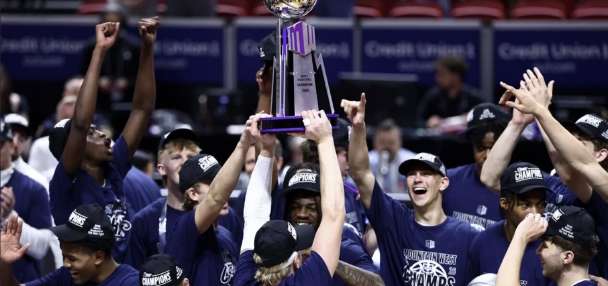
Utah State increased its NIL budget from $880,000 in the 2024-25 season to $2.4M for the 2025-26 season. The result was a jump from a third-place finish in the Mountain West and a 10-seed in the NCAA Tournament last season to a Mountain West championship and a nine-seed in the Big Dance this year.
The lowest NIL budget of current Sweet 16 teams is rumored to be nine-seed Iowa out of the Big Ten at over $6 million. That's a far cry from the value of Utah State's 15-man roster that made the round of 32.
Strong guard play and points from the perimeter can be found at all levels of college basketball. What's becoming increasingly difficult to see at the low- and mid-major level is strong post players that can compete with high-major forwards standing at over seven feet.
The Aggies themselves saw this in the form of Great Osobor, who went from Montana State to making over $1 million at Washington in just two years, stopping at Utah State for one year along the way.
Utah State has made it clear with its jump to the Pac-12 that it hopes to be regarded as more than a mid-major basketball program and compete at a higher level. In addition to now finding yet another head coach, the biggest obstruction to that goal is finding the size to compete at that level, and the possibly even taller task of coming up with the funds to pay for it.