- Signature gatherers allegedly misleading Utah voters about Proposition 4 has sparked legal concerns.
- Legal expert Greg Skordas says proving intent in such cases is difficult.
- Some petition signatures flagged as forgeries are under criminal investigation by the Utah County clerk.
HYDE PARK, UTAH — It was a chilly day in January when a doorbell camera captured a signature gatherer knocking on an Utah man's door.
The woman identified herself as a representative of the "Utah Ballot Board" – which is not a real organization – and asked if the homeowner wanted to sign the petition to put a repeal of Proposition 4, Utah's anti-gerrymandering law, on the November ballot.
The exchange is frustrating for the man's son, Stanton Allen, and Stanton's wife, Julie Allen, to watch.
The video shows Stanton's father told the canvasser, "I don't want it left up to the Legislature to do it, I think they should be following …"
"The constitution?" the woman asked.
"Well, the judge that ruled on it," said the homeowner.
"Yeah well, if you don't want it to happen, I would suggest signing," the woman said, handing over the clipboard.
Utah voters narrowly passed Proposition 4 in 2018. The initiative created an independent redistricting commission to recommend new political boundaries, with standards meant to prevent partisan gerrymandering. But after the GOP-controlled Legislature weakened the commission and adopted its own maps, voter groups sued.
Third District Judge Dianne Gibson threw out the maps — including a revised version — saying they unfairly favored Republicans. In November, Gibson adopted a map submitted by the plaintiffs that created a Democratic leaning district in Salt Lake County.
"It kind of misrepresented what the petition is all about," Stanton Allen said, reviewing the interaction caught on camera.
"She's lying to get a signature," Julie Allen said after watching the video. "It's infuriating."
Related:
'I felt tricked': KSL investigates some misleading claims from those working to repeal Prop 4
Some paid signature gatherers working to place a repeal of Proposition 4 on the ballot have misled or withheld info from voters about what the initiative would do, a KSL investigation shows.The exchange is one several concerned citizens have shared with the KSL Investigators, sparking questions about whether there is any legal recourse when voters are misled.
Stanton Allen said his own name also appeared on the petition after he was approached by a signature gatherer while shopping.
"He said, 'Hey, we're getting petitions signed to increase minimum wage,'" Stanton Allen said. "The thing that bothered me the most is I felt like they were misrepresenting what I was signing."
Stanton Allen and his father are now among more than 8,000 Utahns who have requested their names be removed from the petition.
KSL legal analyst and longtime Utah attorney Greg Skordas said while some of the messaging may be misleading, there are few legal consequences.
"Let's be honest. They're saying things that are not honest," Skordas said. "But what are you going to do about it? No prosecutor's going to take that case up."
Skordas said proving intent would be difficult, particularly when those making the statements can claim they believed them to be true in the moment.
"The people that are making those misleading statements are just going to say, 'Well, that's what I thought at the time,'" he said.
The KSL Investigators have also received complaints about messaging sent out by supporters of Proposition 4 encouraging people to remove their names from the petition.
One woman, who did not agree to an interview, wrote, "I can tell you that in addition to the letter, I have received two text messages as well as a man coming to my door telling me that he knew my name was on the proposition, that I had been lied to and that I should remove my name. This seems so wrong to me."
"I think there's an argument to be made that there's been some level of misinformation from both sides," Skordas said. "And I say that with all respect to both sides."
While the answer may be unsatisfying, Skordas said the responsibility ultimately falls on voters to understand what they are signing.
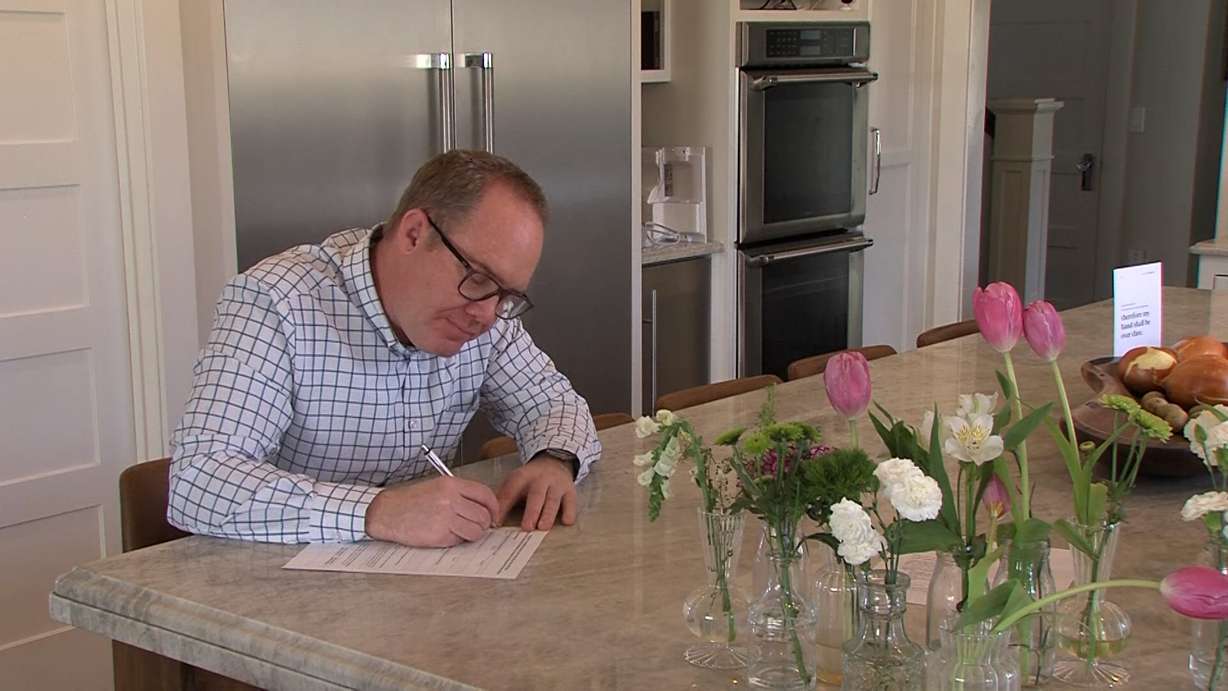
"People in this day and age need to be aware of what they're signing and understand that not everything you're hearing is exactly true," he said.
"That's just the way it works," Skordas added. "That's politics."
While there's little that can be done about misleading interactions, KSL has reported some signature packets turned in were flagged by the Utah County clerk as containing forgeries, and those are under criminal investigation.
Petition sponsor and Utah Republican Party chairman Rob Axson did not comment on this report. Previously, he told KSL that reports of signature gatherers sharing misinformation were few and far between and not representative of the more than 2,000 people who gathered signatures.
Better Boundaries, which is now engaged in a signature removal campaign, wrote in a statement to KSL: "Utah voters made their voices clear in 2018 when they created the independent redistricting commission. The process of drawing fair maps should not be controlled by politicians with a stake in the outcome. We remain focused on helping those tricked or misled to remove their signatures."