'%3e%3cpath%20d='M34.1406%205.85938C30.3906%202.10547%2025.3047%200%2020%200C14.6953%200%209.60938%202.10547%205.85938%205.85938C2.10938%209.61328%200%2014.6953%200%2020C0%2025.3047%202.10547%2030.3906%205.85938%2034.1406C9.61328%2037.8906%2014.6953%2040%2020%2040C25.3047%2040%2030.3906%2037.8945%2034.1406%2034.1406C37.8906%2030.3906%2040%2025.3047%2040%2020C40%2014.6953%2037.8945%209.60938%2034.1406%205.85938ZM37.0117%2023.543H31.1602V13.5391H27.6328V19.9414C28.1211%2020.6914%2028.3711%2021.582%2028.3711%2022.5625V22.625C28.3711%2023.668%2028.1172%2024.6055%2027.6328%2025.4297V26.6094H36.082C33.4883%2032.9375%2027.2891%2037.3789%2020.0039%2037.3789C10.3711%2037.3789%202.62109%2029.6289%202.62109%2020C2.62109%2010.3711%2010.3711%202.62109%2020%202.62109C29.6289%202.62109%2037.3789%2010.3711%2037.3789%2020C37.3789%2021.1484%2037.2617%2022.2656%2037.0508%2023.3477C37.0391%2023.4141%2037.0234%2023.4766%2037.0117%2023.543Z'%20fill='white'/%3e%3cpath%20d='M22.3086%2018.5352C20.4336%2018.125%2019.9531%2017.8398%2019.9766%2017.1836V17.1406C19.9766%2016.6992%2020.3477%2016.2148%2021.4023%2016.2148C22.582%2016.2148%2023.8867%2016.6797%2025.0781%2017.4766L26.8516%2015.0195C25.4453%2013.8906%2023.707%2013.3398%2021.5547%2013.3398C18.5195%2013.3398%2016.4375%2015%2016.4063%2017.4766V17.5352C16.3633%2020.2617%2018.5859%2020.9805%2021.293%2021.6016C23.0391%2021.9766%2023.5703%2022.3164%2023.5703%2022.9609L23.5469%2022.9766C23.5469%2023.3906%2023.2578%2023.7031%2022.7852%2023.8359C22.5742%2023.9062%2022.1289%2023.9727%2021.5156%2023.9727C20.7617%2023.9727%2019.7539%2023.8633%2018.6328%2023.4844C18.0898%2023.2891%2017.4727%2023.0039%2016.8047%2022.6133L20.1406%2026.625C20.2813%2026.6602%2021.0977%2026.8516%2021.7734%2026.8516C25.0039%2026.8516%2027.0859%2025.2461%2027.1094%2022.6328V22.5703C27.1602%2020.1133%2025.2148%2019.1719%2022.3086%2018.5352Z'%20fill='white'/%3e%3cpath%20d='M5.24219%2013.5664V26.6133H8.75391V23.7578L10.2969%2021.9531L14.2031%2026.6133H18.3867L12.3555%2019.5195L17.4023%2013.5664H13.4531L8.75391%2019.0586V13.5664H5.24219Z'%20fill='white'/%3e%3c/g%3e%3cdefs%3e%3cclipPath%20id='clip0_97_2430'%3e%3crect%20width='40'%20height='40'%20fill='white'/%3e%3c/clipPath%3e%3c/defs%3e%3c/svg%3e)



Estimated read time: 4-5 minutes
- Salt Lake City Council hesitates on a rezoning request for a 180-foot hotel project.
- City planners argue the proposal disrupts neighborhood transitions and utility needs.
- Council members express concern over housing needs versus hotel development benefits.
SALT LAKE CITY — Shawn Wade contends that his family has looked at every option possible since the historic apartment buildings that once stood just east of downtown burned down in 1991.
His father, who owned the property, wanted to rebuild but was met with "many roadblocks," Wade explained. The space became a parking lot as a temporary solution that has unintentionally lasted for decades. Now that he and his siblings oversee the land, they believe there are better uses for the space at 256 E. 300 South, but they see why it's taken so long to develop anything.
After struggling to find a development concept that made financial sense, the family finds itself facing an uphill battle with a proposed hotel in Central City. Salt Lake City leaders expressed their unwillingness to support a rezone of the lot, following negative recommendations from both city planners and the Salt Lake City Planning Commission.
The debate highlights which types of buildings Utah's capital city might consider as it continues to grow.
Filling in the lot
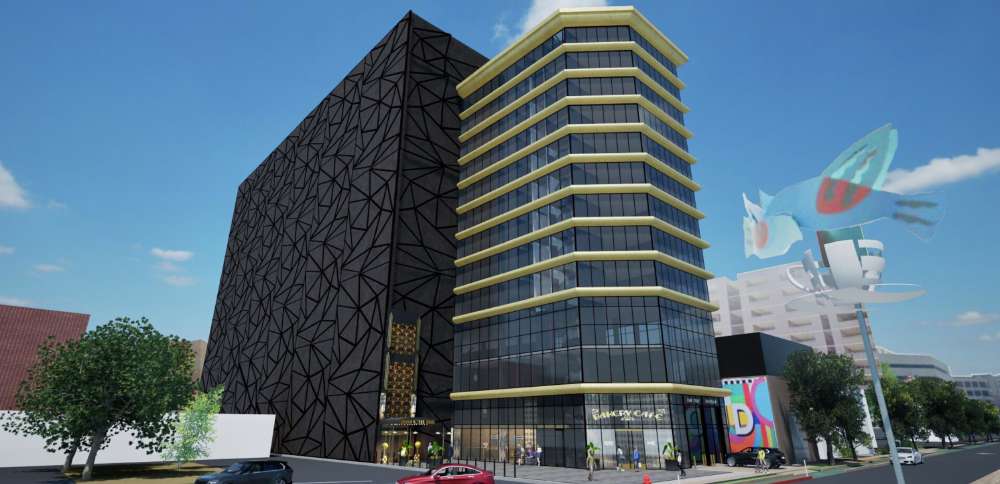
Wade's family is seeking rezoning of the lot from form-based mixed-use 8 (MU-8) — capping new buildings at 90 feet in height — to central business district (D-1) for a 180- to 225-foot hotel, depending on utility needs that could affect the building's height during engineering. After hearing positive feedback from three hotel chains, Wade says the family is confident that they can deliver an "upper, upscale, luxury-tier hotel" from a major globally recognized brand.
The services would benefit the community, he added. These include new retail shops and a small fresh grocery store, as well as an art gallery, bars and restaurants, and more. A parking garage would expand the area's existing parking capacity, and a 24-hour operation could improve security in the neighborhood.
"We've been trying for 30 years to put something here that Salt Lake City accepts. ... But we have something that we feel that's a win-win for the city that will be beneficial to the community," he told the Salt Lake City Council last week.

However, city planners argue that the proposal doesn't comply with most of the city's general plans for the area. Downtown's eastern boundary ends near 200 East, and building height begins to slope downward from there, said Aaron Barlow, senior planner for the city.
Barlow also pointed out that the block would need utility upgrades because the neighborhood's existing utilities don't support D-1 development.
"It disrupts the transition from the central business district to smaller neighborhoods," he said. "It dilutes downtown's visual interests, (and) that 100-foot minimum height really impacts the neighborhood, especially with those historic buildings to the east."
While the proposed building would be shorter than the 335-foot Worthington apartment complex about a half-block away, it would be tucked between a pair of smaller commercial and residential buildings. That led to issues during a 2024 planning commission meeting, as well, especially from residents of the historic Sampson and Altadena condominiums, directly to the east of the lot.
The planning commission recommended a similar building height two blocks north of the lot last year, which Wade said shows some "inconsistencies" in how the proposed hotel has been treated.
Handling density
That debate trickled into the City Council, which held an informational meeting before potentially weighing in on the measure. Members of the council were concerned about elements of the proposal, but also the idea of doubling the allowable height for a project that doesn't address the city's and the state's housing shortage — a possible difference in the way the city sees the proposed Central City projects.
"We're trying to meet housing needs," said Salt Lake City Councilwoman Eva Lopez Chavez, whose district includes downtown and Central City, acknowledging this conversation is popping up in other parts of the city.
"Hotel spaces — although they can bring amenities for visitors — those are not shared public spaces," she continued. "It doesn't meet the housing density that we need for residents."
Salt Lake City Councilman Chris Wharton agreed, saying he'd like to see the lot developed, but there are other options.
Wade said his family first explored apartments, but they couldn't find investors willing to look at any type of housing, largely due to higher vacancy rates in the area after recent projects wrapped up. The city would also need to lower property taxes "quite a bit" to even consider affordable housing, he added.
"We have looked at apartments, commercial, office buildings, condominiums, and the hotel proposed makes the most financial sense. I mean, we're not looking for the most bang for the buck; we're looking for it to just pencil."
While she understood the long wait to turn the lot around, Lopez Chavez said she'd like to see a different zoning or use before she'd be comfortable allowing for any upzoning. She said she'd be willing to work with Wade to come up with a solution for the space.
The City Council was tentatively slated to vote on the request as early as April, but it's unclear if the proposal will move forward as is.