'%3e%3cpath%20d='M34.1406%205.85938C30.3906%202.10547%2025.3047%200%2020%200C14.6953%200%209.60938%202.10547%205.85938%205.85938C2.10938%209.61328%200%2014.6953%200%2020C0%2025.3047%202.10547%2030.3906%205.85938%2034.1406C9.61328%2037.8906%2014.6953%2040%2020%2040C25.3047%2040%2030.3906%2037.8945%2034.1406%2034.1406C37.8906%2030.3906%2040%2025.3047%2040%2020C40%2014.6953%2037.8945%209.60938%2034.1406%205.85938ZM37.0117%2023.543H31.1602V13.5391H27.6328V19.9414C28.1211%2020.6914%2028.3711%2021.582%2028.3711%2022.5625V22.625C28.3711%2023.668%2028.1172%2024.6055%2027.6328%2025.4297V26.6094H36.082C33.4883%2032.9375%2027.2891%2037.3789%2020.0039%2037.3789C10.3711%2037.3789%202.62109%2029.6289%202.62109%2020C2.62109%2010.3711%2010.3711%202.62109%2020%202.62109C29.6289%202.62109%2037.3789%2010.3711%2037.3789%2020C37.3789%2021.1484%2037.2617%2022.2656%2037.0508%2023.3477C37.0391%2023.4141%2037.0234%2023.4766%2037.0117%2023.543Z'%20fill='white'/%3e%3cpath%20d='M22.3086%2018.5352C20.4336%2018.125%2019.9531%2017.8398%2019.9766%2017.1836V17.1406C19.9766%2016.6992%2020.3477%2016.2148%2021.4023%2016.2148C22.582%2016.2148%2023.8867%2016.6797%2025.0781%2017.4766L26.8516%2015.0195C25.4453%2013.8906%2023.707%2013.3398%2021.5547%2013.3398C18.5195%2013.3398%2016.4375%2015%2016.4063%2017.4766V17.5352C16.3633%2020.2617%2018.5859%2020.9805%2021.293%2021.6016C23.0391%2021.9766%2023.5703%2022.3164%2023.5703%2022.9609L23.5469%2022.9766C23.5469%2023.3906%2023.2578%2023.7031%2022.7852%2023.8359C22.5742%2023.9062%2022.1289%2023.9727%2021.5156%2023.9727C20.7617%2023.9727%2019.7539%2023.8633%2018.6328%2023.4844C18.0898%2023.2891%2017.4727%2023.0039%2016.8047%2022.6133L20.1406%2026.625C20.2813%2026.6602%2021.0977%2026.8516%2021.7734%2026.8516C25.0039%2026.8516%2027.0859%2025.2461%2027.1094%2022.6328V22.5703C27.1602%2020.1133%2025.2148%2019.1719%2022.3086%2018.5352Z'%20fill='white'/%3e%3cpath%20d='M5.24219%2013.5664V26.6133H8.75391V23.7578L10.2969%2021.9531L14.2031%2026.6133H18.3867L12.3555%2019.5195L17.4023%2013.5664H13.4531L8.75391%2019.0586V13.5664H5.24219Z'%20fill='white'/%3e%3c/g%3e%3cdefs%3e%3cclipPath%20id='clip0_97_2430'%3e%3crect%20width='40'%20height='40'%20fill='white'/%3e%3c/clipPath%3e%3c/defs%3e%3c/svg%3e)


Estimated read time: 6-7 minutes
Hosting the 2002 Winter Games remains one of Utah's defining milestones. In just eight years, Salt Lake City will welcome the world again for the 2034 Games — but before that happens, it's worth looking back at what made the first games such a remarkable success.
From thousands of volunteers to world-class venues still in use today, the 2002 event transformed how Utah sees itself — and how the world sees Utah. Here are some important facts to remember about those historic Games.
Utah's Winter Games journey was decades in the making
Long before June 16, 1995 — the day the International Olympic Committee officially chose Salt Lake City to host the 2002 Winter Games — people in Utah had been trying to bring the Games here for many years.
As a recent Deseret News article explains, leaders first began seriously trying to host in the 1960s. They worked to be the U.S. candidate for 1972 as a way to draw attention to Utah's skiing and winter sports opportunities. Those early efforts didn't win, and Utah also lost bids for later games before finally being selected for 2002.
The persistence paid off and Utah will be one of the few places in the world to welcome the Games twice.
The Games took place shortly after 9/11
The 2002 Winter Games were the first held after the Sept. 11, 2001, terrorist attacks. That meant that security was tighter than ever — but the impact went far beyond safety measures.
For many Americans, the Games carried a deeper meaning. They became a moment to come together, heal and show strength on a global stage. According to the International Olympic Committee, the Salt Lake City Games became "a symbol of resilience and fortitude" for people in the U.S.
These were the new sports and events at the time
The 2002 Winter Games introduced exciting additions to the program. For the first time, women's bobsledding was included, giving female athletes a chance to compete at the highest level in the sport. Skeleton also made a comeback, returning to the Games for the first time since 1948, thrilling fans with its fast-paced, head-first sled racing.
It was a record-smashing Games for Team U.S.A.
Before 2002, the U.S. team had never won more than 13 medals at a single winter games. That changed in Salt Lake City. Team USA more than doubled its previous record, finishing the Games with 34 total medals, the most the country had ever won at a winter games.
Utahns played a big supporting role
Part of the reason why the U.S. athletes were so successful is the overwhelming support from home. The International Olympic Committee reported Utahns bought 40% of tickets and nearly every event was sold out.
The Games relied heavily on volunteers
Ticket sales were just one way locals supported the 2002 Winter Olympics. About 26,000 volunteers helped keep everything running, from transportation to athlete services to events and guest support.
In a 2023 KSL editorial, former Utah's Morning News host Tim Hughes recalled, "That was a number so great and filled with so much spirit that I remember Jacques Rogge, the then president of the International Olympic Committee, saying post-Games that if there was ever a place that could be the permanent home of the Winter Olympics it was Salt Lake."
These countries won the most medals
Even with a record-setting 34 medals, Team USA didn't lead the overall medal count at the 2002 Winter Games. That honor went to Germany, which finished with 36 total medals, including 12 gold.
Norway won the most gold medals with 13 and placed third overall with 25 total medals. Team USA ranked third in gold medals, earning 10 during the games.
There were many memorable firsts
The 2002 extravaganza delivered no shortage of unforgettable moments. Several athletes also made history in ways that still stand out today.
Germany's Georg Hackl became the first athlete to win a medal in the same individual winter games event five times in a row, earning silver in men's singles luge. Vonetta Flowers of Team USA made history as the first Black athlete to win a gold medal in bobsled. Jarome Iginla also reached a milestone, becoming the first Black male athlete to win winter gold as a member of Canada's men's hockey team.
The economic impact was outstanding
The 2002 Winter Games delivered big results for Utah's economy. State estimates show the games generated more than $5 billion in economic impact statewide.
According to the International Olympic Committee, from 1996 to 2003, the Games brought in a net $76 million in tax revenue for state and local governments. They also created the equivalent of 45,700 job-years of employment, supporting workers and businesses across Utah.
The legacy continues far beyond the 2002 Games
The impact of the 2002 Winter Games didn't end with the closing ceremony. Beyond the economic boost and a unifying moment for a nation in recovery, the Games created a lasting legacy across Utah.
Today, the Utah Olympic Oval, Utah Olympic Park and Soldier Hollow Nordic Center stay busy year-round. They welcome youth of all ages and abilities and help build a true "sport for all" culture. According to the International Olympic Committee, these venues now see four times more use than they did during the 2002 Games, inspiring the next generation of athletes.
Lack of snow was a worry
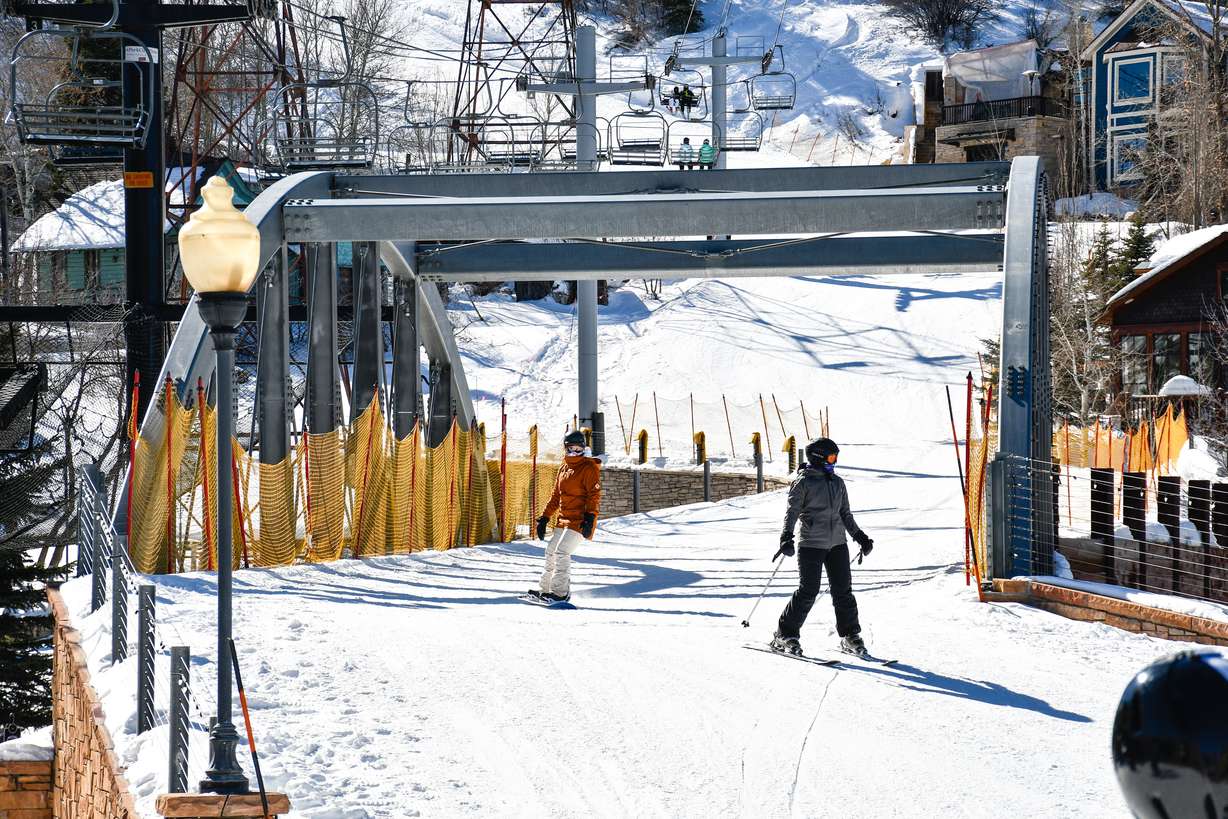
In Utah, the 2002 winter marked the third consecutive year of below-normal precipitation and most of the state was in severe to extreme drought, according to the U.S. Geological Survey annual report.
A warm winter in 2000, prompted an article in Ski magazine that "raised concerns there won't be enough snow in the Wasatch Mountains when the Winter Olympics are held Feb. 8-24, 2002."
Salt Lake City snowfall was just 22 inches that winter according to the National Weather Service, well below the normal of 61 inches. Fortunately, a few well-timed storms from Dec. 23 until the start of the Games meant there was no need for drastic actions like trucking snow to event locations.
There's more to come in 2034
Utahns now have the rare chance to experience the Winter Games at home again — or for the first time. If you missed volunteering in 2002 or have always wondered what it would be like, 2034 is your moment.
Get involved, support the Games and be part of Utah's proud history in winter sports. Opportunities like this don't come around often — so don't let it pass you by!

Where are all of Utah's new residents coming from?
When you look at all that Utah has to offer, the growth isn't surprising. It's full of wide open spaces, family-friendly communities, a great business environment and unmatched outdoor recreation. No wonder so many people want to call the Beehive State their home. The logical question is: Where are these new residents coming from? And what is there to know about the people who are choosing to build their lives here?Siegfried & Jensen
Since 1990, Siegfried & Jensen have been helping the people of Utah and surrounding states who have suffered needless injuries and death caused by car accidents, truck accidents, medical malpractice, defective drugs, dog bites, wrongful death, and other types of personal injury.
The firm is committed to keeping Utah families and communities safe by ensuring wrongdoers are held accountable. While a lawsuit isn't always the answer when it is needed, having someone on your side can mean the difference between declaring bankruptcy and rebuilding your life and moving forward, especially when you're up against an insurance company or a hospital.
Siegfried & Jensen has represented more than 35,000 clients and recovered over $1.2 billion for them.