'%3e%3cpath%20d='M34.1406%205.85938C30.3906%202.10547%2025.3047%200%2020%200C14.6953%200%209.60938%202.10547%205.85938%205.85938C2.10938%209.61328%200%2014.6953%200%2020C0%2025.3047%202.10547%2030.3906%205.85938%2034.1406C9.61328%2037.8906%2014.6953%2040%2020%2040C25.3047%2040%2030.3906%2037.8945%2034.1406%2034.1406C37.8906%2030.3906%2040%2025.3047%2040%2020C40%2014.6953%2037.8945%209.60938%2034.1406%205.85938ZM37.0117%2023.543H31.1602V13.5391H27.6328V19.9414C28.1211%2020.6914%2028.3711%2021.582%2028.3711%2022.5625V22.625C28.3711%2023.668%2028.1172%2024.6055%2027.6328%2025.4297V26.6094H36.082C33.4883%2032.9375%2027.2891%2037.3789%2020.0039%2037.3789C10.3711%2037.3789%202.62109%2029.6289%202.62109%2020C2.62109%2010.3711%2010.3711%202.62109%2020%202.62109C29.6289%202.62109%2037.3789%2010.3711%2037.3789%2020C37.3789%2021.1484%2037.2617%2022.2656%2037.0508%2023.3477C37.0391%2023.4141%2037.0234%2023.4766%2037.0117%2023.543Z'%20fill='white'/%3e%3cpath%20d='M22.3086%2018.5352C20.4336%2018.125%2019.9531%2017.8398%2019.9766%2017.1836V17.1406C19.9766%2016.6992%2020.3477%2016.2148%2021.4023%2016.2148C22.582%2016.2148%2023.8867%2016.6797%2025.0781%2017.4766L26.8516%2015.0195C25.4453%2013.8906%2023.707%2013.3398%2021.5547%2013.3398C18.5195%2013.3398%2016.4375%2015%2016.4063%2017.4766V17.5352C16.3633%2020.2617%2018.5859%2020.9805%2021.293%2021.6016C23.0391%2021.9766%2023.5703%2022.3164%2023.5703%2022.9609L23.5469%2022.9766C23.5469%2023.3906%2023.2578%2023.7031%2022.7852%2023.8359C22.5742%2023.9062%2022.1289%2023.9727%2021.5156%2023.9727C20.7617%2023.9727%2019.7539%2023.8633%2018.6328%2023.4844C18.0898%2023.2891%2017.4727%2023.0039%2016.8047%2022.6133L20.1406%2026.625C20.2813%2026.6602%2021.0977%2026.8516%2021.7734%2026.8516C25.0039%2026.8516%2027.0859%2025.2461%2027.1094%2022.6328V22.5703C27.1602%2020.1133%2025.2148%2019.1719%2022.3086%2018.5352Z'%20fill='white'/%3e%3cpath%20d='M5.24219%2013.5664V26.6133H8.75391V23.7578L10.2969%2021.9531L14.2031%2026.6133H18.3867L12.3555%2019.5195L17.4023%2013.5664H13.4531L8.75391%2019.0586V13.5664H5.24219Z'%20fill='white'/%3e%3c/g%3e%3cdefs%3e%3cclipPath%20id='clip0_97_2430'%3e%3crect%20width='40'%20height='40'%20fill='white'/%3e%3c/clipPath%3e%3c/defs%3e%3c/svg%3e)


Estimated read time: 7-8 minutes
Car accidents can happen quickly and without warning.
In 2023, Utah's Department of Public Safety documented more than 60,000 crashes. Many things can factor into an accident — bright lights, bad weather, construction, wild animals, and more. Whether you didn't see the stop sign or the black ice left you spinning, car accidents happen.
When you're involved in an accident, it's easy to lose concentration and become frazzled, not knowing what to do next. But pausing to remember the important steps to take immediately after an accident can help make the process go much smoother.
Here are important things to know if you've been in a car accident in Utah.
Get to safety and check for injuries
The first thing to remember when you've been in an accident is getting to safety. Right after the collision, wait until it's safe to drive your car off the roadway (if it's in a condition to drive safely). Put the car in park and turn it off.
If you can't move your car out of the way (and you're unharmed), wait until it's safe to leave your car and then move to the side of the road, such as the shoulder or sidewalk.
Once your car is safely out of the way, check yourself and your passengers for any injuries before getting out. If you or anyone involved in the accident is injured, call 911 immediately.
Never leave the scene of an accident.
Always exchange information and document the scene
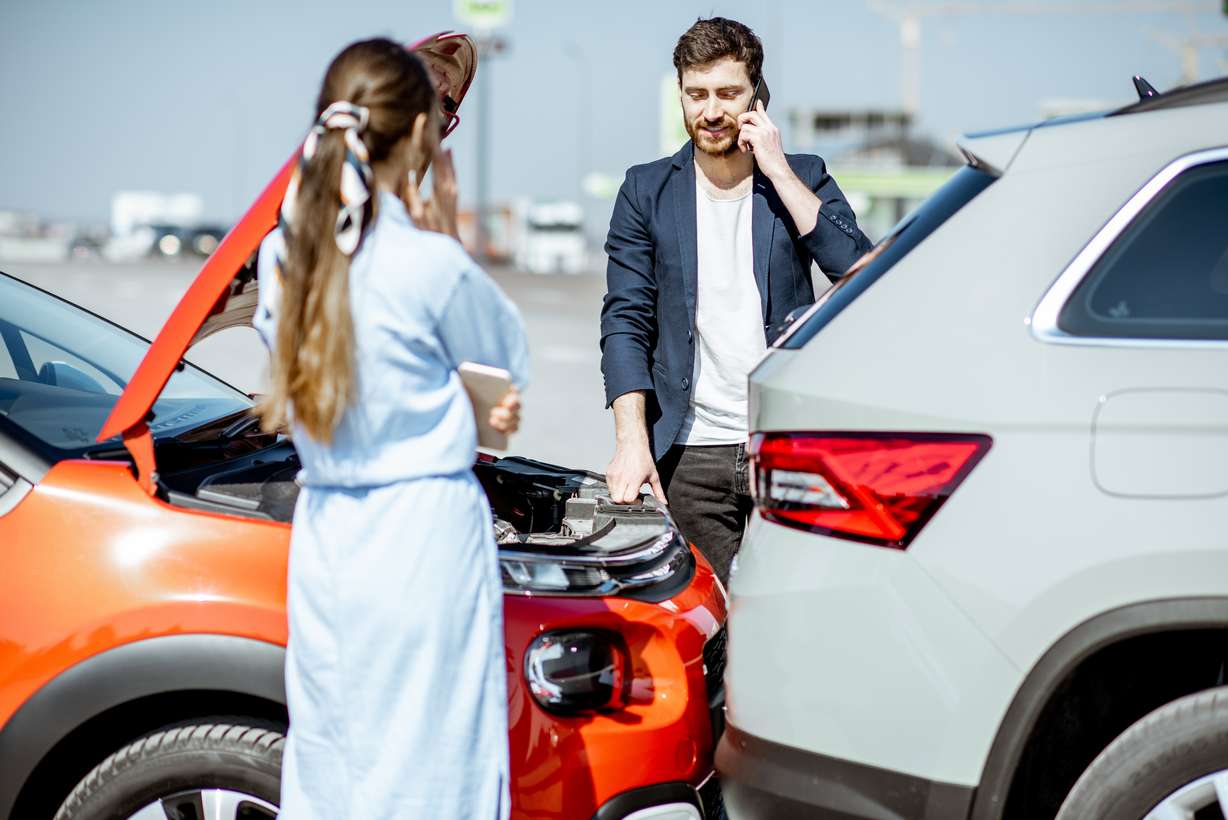
Once you've determined everyone's health and safety, exchange your contact and insurance information with the other people involved. The police will also ask for this information for their report.
In your conversations with everyone at the scene, be sure you don't accept blame or liability for the accident. Even if you're convinced you were in the wrong, there may be other factors at play. For example, if the sun was in the other driver's eyes or a construction sign was misplaced, no one person may be at fault.
Finally, make sure you take time to take pictures of the scene, your cars, and the intersection or road. The more context you can provide your insurer, the better they will be able to assess the situation. Take photos and videos from many different angles for a full view of the scene.
Call the police
No matter who caused the accident or how small it is, getting the police involved is helpful. Not only can they de-escalate a situation if necessary, but getting a police report for the accident can help in filing insurance claims. It may also be necessary if you decide to seek legal help.
On the off chance that police or sheriffs do not come to the scene because nobody is injured, be sure to file an accident report with the DMV.
Even if you feel you were definitively the cause of an accident, the team at Siegfried & Jensen notes that weather and road conditions play a role in many crashes. Commuting patterns and seasonal driving also affect risk, which is why understanding what to do after a car accident can help protect your rights and clarify your options in the aftermath.
If you feel these conditions impacted the accident in any way, it's important to communicate that to first responders and your insurance representative.
Contact your insurance provider
In 2021, there were about 4.2 private passenger auto collision insurance claims filed for every 100 drivers, according to Consumer Affairs. Though it may feel foreign for those who've never been in an accident, filing an insurance claim is an important part of dealing with a collision.
Once you're able to do so, file a claim with your insurer. Even if you don't believe you are responsible for the accident, your insurance provider can help you navigate securing a rental car (if it's covered by your policy) and vehicle damage repairs.
Be sure to keep the police report number close by. Your adjuster will ask for it to follow up on the accident and communicate with the other person's insurance company.
Your insurance representative will schedule an appointment for an inspection of your vehicle to determine how much it is worth and the estimated cost to fix it. Together, you'll work on a timeline for repairs if they are necessary. If it's determined that the cost to repair the car is higher than the worth of the car, your insurer may "total" the car and pay you its estimated value.
Prioritize medical care
Whether you feel fine right after an accident or not, getting a prompt medical evaluation is a good idea. In some accidents, you might not feel pain or aches right away. With a doctor's help, you can identify any issues stemming from the accident and get the right medical care.
This is also important because auto insurance will most likely cover the care you receive immediately following an accident.
Even if you are uninjured, avoid saying, "I'm fine" at the scene of the accident. Insurance companies might not cover medical care after you leave the scene if you first state you're not injured and later say otherwise, even if that is truly the case.
In most cases, your own auto insurance will cover your medical costs at first. This is what "personal injury protection" or PIP coverage is. Utah drivers are all required to have this coverage in their auto insurance policy.
Know that Utah is a no-fault state
Many Utahns don't realize Utah is a no-fault state. This means your car insurance is required to cover your own medical costs up to a certain threshold, even if the other person is largely responsible for the accident.
This does not apply to vehicle damage, though. According to Siegfried & Jensen's website, under Utah's no-fault system, "A claim for damage or the loss of a vehicle can be filed against the liable driver in Utah without any set limit."
It's important to keep in touch with your insurer to see what your options are for your specific situation. If you have more questions or need guidance, there is help available.
You can get no-pressure advice
The shock, embarrassment, pain and confusion can leave people ashamed to ask for help. And it's often not clear who to ask for advice.
The friendly experts at Siegfried & Jensen are a good resource with decades of experience. They can help you understand the process of insurance reimbursements, citations, and more.
If you're wondering at what point you should get guidance after an accident, it's likely you can already benefit from it. Online resources are helpful to a point, but local laws and systems matter more than general advice. Find someone who knows that timelines and limits matter.
The team at Siegfried & Jensen is here to help Utahns navigate the complex world of life after a car accident. Even if you just need some advice, their team is on call to help.

Where are all of Utah's new residents coming from?
When you look at all that Utah has to offer, the growth isn't surprising. It's full of wide open spaces, family-friendly communities, a great business environment and unmatched outdoor recreation. No wonder so many people want to call the Beehive State their home. The logical question is: Where are these new residents coming from? And what is there to know about the people who are choosing to build their lives here?Siegfried & Jensen
Since 1990, Siegfried & Jensen have been helping the people of Utah and surrounding states who have suffered needless injuries and death caused by car accidents, truck accidents, medical malpractice, defective drugs, dog bites, wrongful death, and other types of personal injury.
The firm is committed to keeping Utah families and communities safe by ensuring wrongdoers are held accountable. While a lawsuit isn't always the answer when it is needed, having someone on your side can mean the difference between declaring bankruptcy and rebuilding your life and moving forward, especially when you're up against an insurance company or a hospital.
Siegfried & Jensen has represented more than 35,000 clients and recovered over $1.2 billion for them.