'%3e%3cpath%20d='M34.1406%205.85938C30.3906%202.10547%2025.3047%200%2020%200C14.6953%200%209.60938%202.10547%205.85938%205.85938C2.10938%209.61328%200%2014.6953%200%2020C0%2025.3047%202.10547%2030.3906%205.85938%2034.1406C9.61328%2037.8906%2014.6953%2040%2020%2040C25.3047%2040%2030.3906%2037.8945%2034.1406%2034.1406C37.8906%2030.3906%2040%2025.3047%2040%2020C40%2014.6953%2037.8945%209.60938%2034.1406%205.85938ZM37.0117%2023.543H31.1602V13.5391H27.6328V19.9414C28.1211%2020.6914%2028.3711%2021.582%2028.3711%2022.5625V22.625C28.3711%2023.668%2028.1172%2024.6055%2027.6328%2025.4297V26.6094H36.082C33.4883%2032.9375%2027.2891%2037.3789%2020.0039%2037.3789C10.3711%2037.3789%202.62109%2029.6289%202.62109%2020C2.62109%2010.3711%2010.3711%202.62109%2020%202.62109C29.6289%202.62109%2037.3789%2010.3711%2037.3789%2020C37.3789%2021.1484%2037.2617%2022.2656%2037.0508%2023.3477C37.0391%2023.4141%2037.0234%2023.4766%2037.0117%2023.543Z'%20fill='white'/%3e%3cpath%20d='M22.3086%2018.5352C20.4336%2018.125%2019.9531%2017.8398%2019.9766%2017.1836V17.1406C19.9766%2016.6992%2020.3477%2016.2148%2021.4023%2016.2148C22.582%2016.2148%2023.8867%2016.6797%2025.0781%2017.4766L26.8516%2015.0195C25.4453%2013.8906%2023.707%2013.3398%2021.5547%2013.3398C18.5195%2013.3398%2016.4375%2015%2016.4063%2017.4766V17.5352C16.3633%2020.2617%2018.5859%2020.9805%2021.293%2021.6016C23.0391%2021.9766%2023.5703%2022.3164%2023.5703%2022.9609L23.5469%2022.9766C23.5469%2023.3906%2023.2578%2023.7031%2022.7852%2023.8359C22.5742%2023.9062%2022.1289%2023.9727%2021.5156%2023.9727C20.7617%2023.9727%2019.7539%2023.8633%2018.6328%2023.4844C18.0898%2023.2891%2017.4727%2023.0039%2016.8047%2022.6133L20.1406%2026.625C20.2813%2026.6602%2021.0977%2026.8516%2021.7734%2026.8516C25.0039%2026.8516%2027.0859%2025.2461%2027.1094%2022.6328V22.5703C27.1602%2020.1133%2025.2148%2019.1719%2022.3086%2018.5352Z'%20fill='white'/%3e%3cpath%20d='M5.24219%2013.5664V26.6133H8.75391V23.7578L10.2969%2021.9531L14.2031%2026.6133H18.3867L12.3555%2019.5195L17.4023%2013.5664H13.4531L8.75391%2019.0586V13.5664H5.24219Z'%20fill='white'/%3e%3c/g%3e%3cdefs%3e%3cclipPath%20id='clip0_97_2430'%3e%3crect%20width='40'%20height='40'%20fill='white'/%3e%3c/clipPath%3e%3c/defs%3e%3c/svg%3e)




- The leaders of the new city taking shape in the Ogden Valley have finalized some of the key accords for provision of services.
- They're also mulling a 1% transient room tax and 6% municipal energy tax to help generate the funds the city will need.
- Utah Lt. Gov. Deidre Henderson issued the certificate on Friday formalizing creation of the city.
EDEN, Weber County —The fledgling city taking shape in the Ogden Valley came into being on Friday after Utah Lt. Gov. Deidre Henderson issued the certificate formalizing creation of the Weber County locale.
It's the last step in the incorporation process and coincides with finalization of many of the key accords by Ogden Valley officials to make sure the new locale can provide residents with the services they need.
"A certificate was issued today to the mayor and county officials. We'll get it up on our website next week," Henderson said in a statement to KSL.com. Mayor Janet Wampler confirmed the news.
The Ogden Valley City Council, for its part, meets next Monday to present details of the city's operational plans, including particulars of a proposed 1% transient room tax and 6% municipal energy tax. The taxes will help the locale generate the money it needs to cover operational costs.
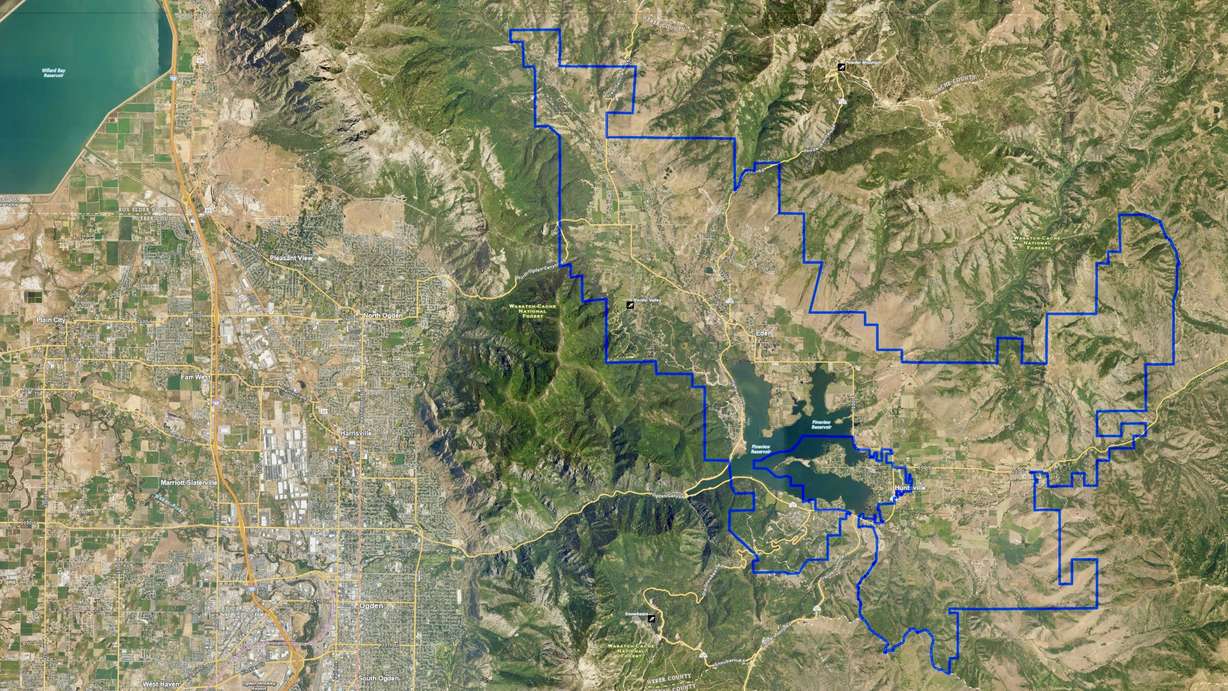
The new Weber County city covers a 63.3 square-mile swath of Weber County that encompasses the Eden, Liberty and Wolf Creek areas and the Nordic Valley ski resort east of Ogden across the Wasatch Mountains.
"We were able to conclude agreements for all major services that affect valley residents immediately," said Wampler, elected last November along with the five residents who will serve as City Council members. "The Ogden Valley City Council has worked tirelessly since they were elected and has succeeded in the Herculean task of being ready for Day 1."
The City Council is holding two meetings on Monday to update the public on the new city's operational plans, at noon and 5:30 p.m. The first meeting will be at Huntsville Town Hall, 7474 E. 200 South, and the later meeting is to be held at the Ogden Valley Branch Library, 131 S. 7400 East, also in Huntsville, which abuts the new city.

Well before voting in November that led to the election of the city's first leaders, Ogden Valley boosters had been meeting regularly to prepare for incorporation, approved by voters in a 2024 ballot question. The aim was to make sure municipal services were available to the city's 7,000 or so residents when the switch went on.
Weber County will provide snow plowing and animal control services and issue new business licenses while the Weber County Sheriff's Office will handle law enforcement. Weber Fire District, as before, will provide fire protection. A planning commission made up of locals will handle planning and zoning questions. Other accords for other services are in the works.
Ogden Valley area residents pushed for incorporation as a means of asserting local control as development pressure grows in the zone, a popular getaway area that's home to three ski resorts and Pineview Reservoir. Critics of the move have expressed concern that incorporating would lead to an increase in property taxes to cover the expenses of the new locale. The city now estimates a "significant revenue gap" of $1.25 million through 2028.
Whatever the case, Wampler said it's too early to tell if a hike will be needed. "For now, Ogden Valley city will continue the same property tax rate previously levied by Weber County for our area. Any future increase would require a truth-in-taxation process with public hearings," she said.
City leaders have more leeway to implement transient room taxes and municipal energy taxes, though, and Wampler said plans are moving forward in that direction. The 1% transient room tax, applicable to hotels, motels and short-term rentals, is the most that that city can charge, and most cities assess the tax.
"We think it's only fair that the people who come to stay in the valley help the city maintain operations and infrastructure through payment of this tax," Wampler said. She's not sure how much it would generate.
Likewise, the 6% municipal energy tax, applicable to natural gas and electricity, is the most the new city can assess, and most Utah cities with more than 5,000 people impose it. "The municipal energy tax is essential because it is the only significant revenue source that can be enacted immediately," Wampler said. What's more, it enables the city to borrow to cover operational costs as tax revenue starts trickling in.
For the average household, the 6% tax would cost an additional $7.92 a month for electricity and $2.70 a month for natural gas, or $10.62 a month in all.
In light of jitters over taxes, Wampler said city leaders are trying to operate "as leanly as possible," relying on volunteers and taking on oversight responsibilities of the various elements of city government instead of hiring staffers. The elected officials have deferred their pay, Wampler said, while Huntsville is permitting free use of some of the space at its town hall facility for six months.
City offices will be located in the Huntsville maintenance building adjacent to the Huntsville Town Hall facility, and operational hours will be from 9 a.m.-1 p.m. on Mondays and Wednesdays and from 1-5 p.m. on Thursdays. A public celebration to mark the birth of the new city is set for Jan. 24 from 6-8 p.m. at the Hearthside Event Center, 5612 E. 2200 North in Eden.
Ogden Valley is the working name of the new city, but that is subject to change.