'%3e%3cpath%20d='M34.1406%205.85938C30.3906%202.10547%2025.3047%200%2020%200C14.6953%200%209.60938%202.10547%205.85938%205.85938C2.10938%209.61328%200%2014.6953%200%2020C0%2025.3047%202.10547%2030.3906%205.85938%2034.1406C9.61328%2037.8906%2014.6953%2040%2020%2040C25.3047%2040%2030.3906%2037.8945%2034.1406%2034.1406C37.8906%2030.3906%2040%2025.3047%2040%2020C40%2014.6953%2037.8945%209.60938%2034.1406%205.85938ZM37.0117%2023.543H31.1602V13.5391H27.6328V19.9414C28.1211%2020.6914%2028.3711%2021.582%2028.3711%2022.5625V22.625C28.3711%2023.668%2028.1172%2024.6055%2027.6328%2025.4297V26.6094H36.082C33.4883%2032.9375%2027.2891%2037.3789%2020.0039%2037.3789C10.3711%2037.3789%202.62109%2029.6289%202.62109%2020C2.62109%2010.3711%2010.3711%202.62109%2020%202.62109C29.6289%202.62109%2037.3789%2010.3711%2037.3789%2020C37.3789%2021.1484%2037.2617%2022.2656%2037.0508%2023.3477C37.0391%2023.4141%2037.0234%2023.4766%2037.0117%2023.543Z'%20fill='white'/%3e%3cpath%20d='M22.3086%2018.5352C20.4336%2018.125%2019.9531%2017.8398%2019.9766%2017.1836V17.1406C19.9766%2016.6992%2020.3477%2016.2148%2021.4023%2016.2148C22.582%2016.2148%2023.8867%2016.6797%2025.0781%2017.4766L26.8516%2015.0195C25.4453%2013.8906%2023.707%2013.3398%2021.5547%2013.3398C18.5195%2013.3398%2016.4375%2015%2016.4063%2017.4766V17.5352C16.3633%2020.2617%2018.5859%2020.9805%2021.293%2021.6016C23.0391%2021.9766%2023.5703%2022.3164%2023.5703%2022.9609L23.5469%2022.9766C23.5469%2023.3906%2023.2578%2023.7031%2022.7852%2023.8359C22.5742%2023.9062%2022.1289%2023.9727%2021.5156%2023.9727C20.7617%2023.9727%2019.7539%2023.8633%2018.6328%2023.4844C18.0898%2023.2891%2017.4727%2023.0039%2016.8047%2022.6133L20.1406%2026.625C20.2813%2026.6602%2021.0977%2026.8516%2021.7734%2026.8516C25.0039%2026.8516%2027.0859%2025.2461%2027.1094%2022.6328V22.5703C27.1602%2020.1133%2025.2148%2019.1719%2022.3086%2018.5352Z'%20fill='white'/%3e%3cpath%20d='M5.24219%2013.5664V26.6133H8.75391V23.7578L10.2969%2021.9531L14.2031%2026.6133H18.3867L12.3555%2019.5195L17.4023%2013.5664H13.4531L8.75391%2019.0586V13.5664H5.24219Z'%20fill='white'/%3e%3c/g%3e%3cdefs%3e%3cclipPath%20id='clip0_97_2430'%3e%3crect%20width='40'%20height='40'%20fill='white'/%3e%3c/clipPath%3e%3c/defs%3e%3c/svg%3e)


Estimated read time: 5-6 minutes
- Cleve Davis' book explores Indian hunting rights history and legal battles.
- The book examines treaties court cases and cultural impacts on Shoshone-Bannock Tribes.
- Davis emphasizes the importance of preserving tribal heritage and confronting historical injustices.
FORT HALL, Idaho — A debut book by Idaho native Cleve Davis is reigniting discussion about the history, cultural meaning and legal battles surrounding Indian hunting rights — topics that wildlife and land management agencies remain reluctant to address publicly, despite their ongoing significance to tribal sovereignty.
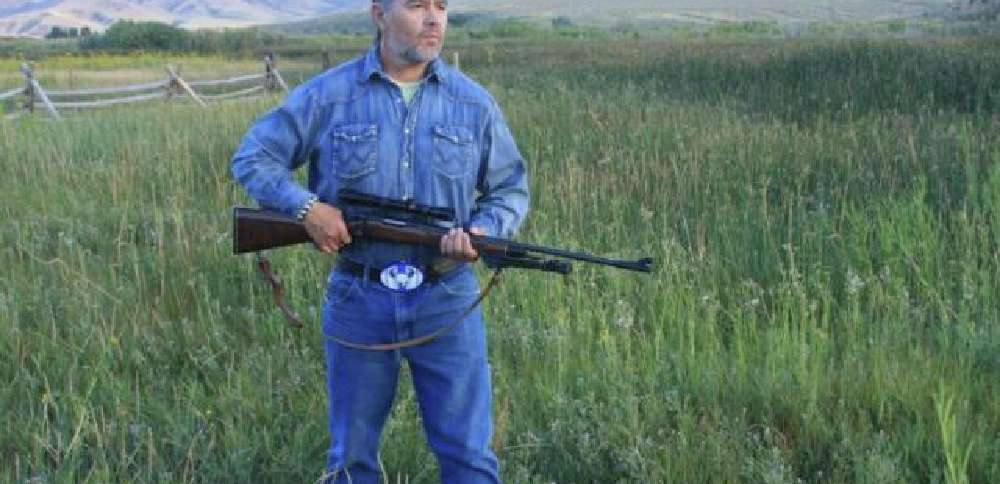
Davis, a rancher and enrolled member of the Shoshone-Bannock Tribes who holds a doctorate in environmental science, recently published "So Long as Game May Be Found Thereon… Indian Treaty Hunting from Fort Hall to Wyoming and Beyond."
The book follows three years of intensive research, drawing on historic treaties, U.S. Supreme Court cases, tribal teachings and Davis' own life journey.
He said the book examines the history and ongoing legal struggles involving the Shoshone-Bannock Tribes, the Northwestern Band of the Shoshone Nation and the Crow Tribe — each of which holds off-reservation treaty hunting rights.
Because the Shoshone and Bannock words for "hunting" also include fishing and gathering, the book explores salmon fishing rights and other traditional practices that remain central to tribal life.
Davis hopes his own tribal members and all hunters in general will better understand a struggle that is often overlooked or misunderstood.
"I want people to confront uncomfortable truths about American history, colonialism and the ongoing fight for justice," he said.
Life's defining moments inspired a desire to write
Davis said the project grew out of a difficult chapter in his life. When Davis was a young man "on a bad path," a counselor encouraged him to learn about his tribe's ceremonies and teachings. This guidance helped him become a more spiritual and grounded person.
Years later, while applying to enroll his daughter, Isla Rain, in the Shoshone-Bannock Tribes, he began researching his family's ancestry as part of the enrollment process. As he gathered the records, he realized the importance of preserving this history so that future generations would understand where they came from and the heritage they share.

He immersed himself in his roots, teaching himself both the distinctly different Shoshone and Bannock languages and exploring how Indian hunting rights have shaped the experiences of the Shoshone-Bannock Tribes and other tribal nations over the years.
"I've always known my Shoshone-Bannock heritage, with both parents enrolled in the tribes. Yet it wasn't until I began to explore the history of my ancestors and the origins of my people that I grasped the depth of my identity," he said.
Through that research, Davis discovered he is a direct descendant of John Race Horse Sr., the Bannock man at the center of the 1896 U.S. Supreme Court case Ward v. Race Horse — a landmark decision involving off-reservation treaty hunting rights in Wyoming.
"We need to know and remember where we came from," he said. "It's important to learn about our families and their knowledge, our culture and apply it to today's world."
Examining treaties and landmark court cases
Growing up on the Fort Hall Indian Reservation, where hunting and fishing shaped his upbringing, Davis delves deeply into the off-reservation treaty-hunting rights retained by the Shoshone-Bannock Tribes, the Northwestern Band of the Shoshone Nation, and the Crow Tribe.
Davis writes extensively about the impacts of federal assimilation policies, which discouraged traditional hunting, imposed Christianity, and attempted to transform Native hunters into farmers.
Central to his research is the 1868 Fort Bridger Treaty, which under Article IV states that the Shoshone and Bannock Indians "shall have the right to hunt on the unoccupied lands of the United States so long as game may be found thereon."
Davis also analyzes Ward v. Race Horse, a 1896 U.S. Supreme Court that challenged treaty-hunting rights in Wyoming.
The 1868 Fort Bridger Treaty — why it matters
The 1868 Fort Bridger Treaty was an agreement between the U.S. government and the Eastern Shoshone and Bannock peoples. In it, tribal leaders agreed to live on a reservation, but they intentionally kept important rights, including the right to hunt on unoccupied lands outside the reservation "so long as game may be found thereon."
"To the tribes, this was essential — they had always moved with the seasons, following animals and accessing traditional lands for hunting, fishing and gathering," said Davis.
In simple terms, the treaty promised that tribal people could continue their traditional way of life even as they were confined to a reservation. For generations, that promise has been at the heart of legal battles, because states have repeatedly challenged what those rights look like today.
"The chiefs were very wise to retain these rights," Davis said. "The importance of that didn't really hit me until I started writing this book."
Ward v. Race Horse (1896) — what it means in everyday terms
While there are many significant court cases involving Indian hunting rights, Ward v. Race Horse was significant. In 1896, the U.S. Supreme Court case involved a Bannock man named John Race Horse Sr., who was arrested in Wyoming for hunting off the reservation without a state license.
Race Horse argued that the 1868 Treaty guaranteed his people the right to hunt on "unoccupied lands of the United States" as long as game could be found there, something his ancestors had negotiated and legally retained.
But the Supreme Court ruled against him. The court held that once Wyoming became a state, its game laws took priority over treaty rights. In simple terms, the ruling treated treaty hunting rights as temporary and suggested they disappeared when a state joined the Union.
Davis believes this decision had devastating consequences for many tribes, allowing states to restrict — or outright deny — rights they had previously secured through treaty agreements.
Davis said he is often asked, "Why is treaty hunting such a big deal and why don't Indians just buy a tag like everyone else?"
"Hunting isn't just about getting food, it's about independence and self-reliance, providing for one's family and passing culture and tradition down to future generations," Davis said.
"When men were no longer able to hunt, they lost their role as providers. Prior to that, we moved with the seasons, killing and processing animals. Hunting was essential to a functioning tribal family and community system," he added.
Davis believes that violations of treaty promises are acts of injustice that continue to harm Indian communities, and the legacy of Ward v. Racehorse underscores the need to strengthen and support today's tribal justice systems.