'%3e%3cpath%20d='M34.1406%205.85938C30.3906%202.10547%2025.3047%200%2020%200C14.6953%200%209.60938%202.10547%205.85938%205.85938C2.10938%209.61328%200%2014.6953%200%2020C0%2025.3047%202.10547%2030.3906%205.85938%2034.1406C9.61328%2037.8906%2014.6953%2040%2020%2040C25.3047%2040%2030.3906%2037.8945%2034.1406%2034.1406C37.8906%2030.3906%2040%2025.3047%2040%2020C40%2014.6953%2037.8945%209.60938%2034.1406%205.85938ZM37.0117%2023.543H31.1602V13.5391H27.6328V19.9414C28.1211%2020.6914%2028.3711%2021.582%2028.3711%2022.5625V22.625C28.3711%2023.668%2028.1172%2024.6055%2027.6328%2025.4297V26.6094H36.082C33.4883%2032.9375%2027.2891%2037.3789%2020.0039%2037.3789C10.3711%2037.3789%202.62109%2029.6289%202.62109%2020C2.62109%2010.3711%2010.3711%202.62109%2020%202.62109C29.6289%202.62109%2037.3789%2010.3711%2037.3789%2020C37.3789%2021.1484%2037.2617%2022.2656%2037.0508%2023.3477C37.0391%2023.4141%2037.0234%2023.4766%2037.0117%2023.543Z'%20fill='white'/%3e%3cpath%20d='M22.3086%2018.5352C20.4336%2018.125%2019.9531%2017.8398%2019.9766%2017.1836V17.1406C19.9766%2016.6992%2020.3477%2016.2148%2021.4023%2016.2148C22.582%2016.2148%2023.8867%2016.6797%2025.0781%2017.4766L26.8516%2015.0195C25.4453%2013.8906%2023.707%2013.3398%2021.5547%2013.3398C18.5195%2013.3398%2016.4375%2015%2016.4063%2017.4766V17.5352C16.3633%2020.2617%2018.5859%2020.9805%2021.293%2021.6016C23.0391%2021.9766%2023.5703%2022.3164%2023.5703%2022.9609L23.5469%2022.9766C23.5469%2023.3906%2023.2578%2023.7031%2022.7852%2023.8359C22.5742%2023.9062%2022.1289%2023.9727%2021.5156%2023.9727C20.7617%2023.9727%2019.7539%2023.8633%2018.6328%2023.4844C18.0898%2023.2891%2017.4727%2023.0039%2016.8047%2022.6133L20.1406%2026.625C20.2813%2026.6602%2021.0977%2026.8516%2021.7734%2026.8516C25.0039%2026.8516%2027.0859%2025.2461%2027.1094%2022.6328V22.5703C27.1602%2020.1133%2025.2148%2019.1719%2022.3086%2018.5352Z'%20fill='white'/%3e%3cpath%20d='M5.24219%2013.5664V26.6133H8.75391V23.7578L10.2969%2021.9531L14.2031%2026.6133H18.3867L12.3555%2019.5195L17.4023%2013.5664H13.4531L8.75391%2019.0586V13.5664H5.24219Z'%20fill='white'/%3e%3c/g%3e%3cdefs%3e%3cclipPath%20id='clip0_97_2430'%3e%3crect%20width='40'%20height='40'%20fill='white'/%3e%3c/clipPath%3e%3c/defs%3e%3c/svg%3e)


This archived news story is available only for your personal, non-commercial use. Information in the story may be outdated or superseded by additional information. Reading or replaying the story in its archived form does not constitute a republication of the story.
- The University of Utah opened the $97 million Crocker Science Complex, enhancing STEM education.
- Gov. Spencer Cox emphasized Utah's commitment to science amidst national funding cuts.
- The complex includes state of the art facilities for research and interdisciplinary collaboration.
SALT LAKE CITY — The University of Utah on Wednesday advanced its commitment to becoming a top 10 public university through the completion of the $97 million Applied Science Project.
The project combines the renovated William Stewart Building with the new L.S. Skaggs Applied Science Building. Along with the existing Crocker Science Center, the buildings make up the 275,000-square-foot, state of the art Crocker Science Complex.
The new buildings will house the university's Department of Physics and Astronomy, Department of Atmospheric Science, and Wilkes Center for Climate Science and Policy.
Amid what Utah Gov. Spencer Cox described as an "interesting time" for science and technology research in the country, he said the Beehive State is doubling down on research and science.
"At the time when the federal government is cutting back on funding for scientific initiatives, which I think is a mistake, Utah is saying the exact opposite — that we can be fiscally responsible, and we can invest (in science and research)," Cox said.
Aside from additional instruction space, the buildings include a large amount of research and laboratory space, bringing together scientists working on some of the nation's most pressing issues, including air quality, energy innovation and water management.
"We care deeply about the prosperity of the state and its citizens. The system of higher education, as a whole, has doubled the number of STEM graduates in the last decade. This building itself will allow us to do our part," U. President Taylor Randall said. "This is an investment in Utah's future."
With enrollment in science, technology, engineering and math majors increasing, the new facilities will increase opportunities for experiential learning by boosting physics lab capacity by 56% to accommodate increasing demand for science courses.
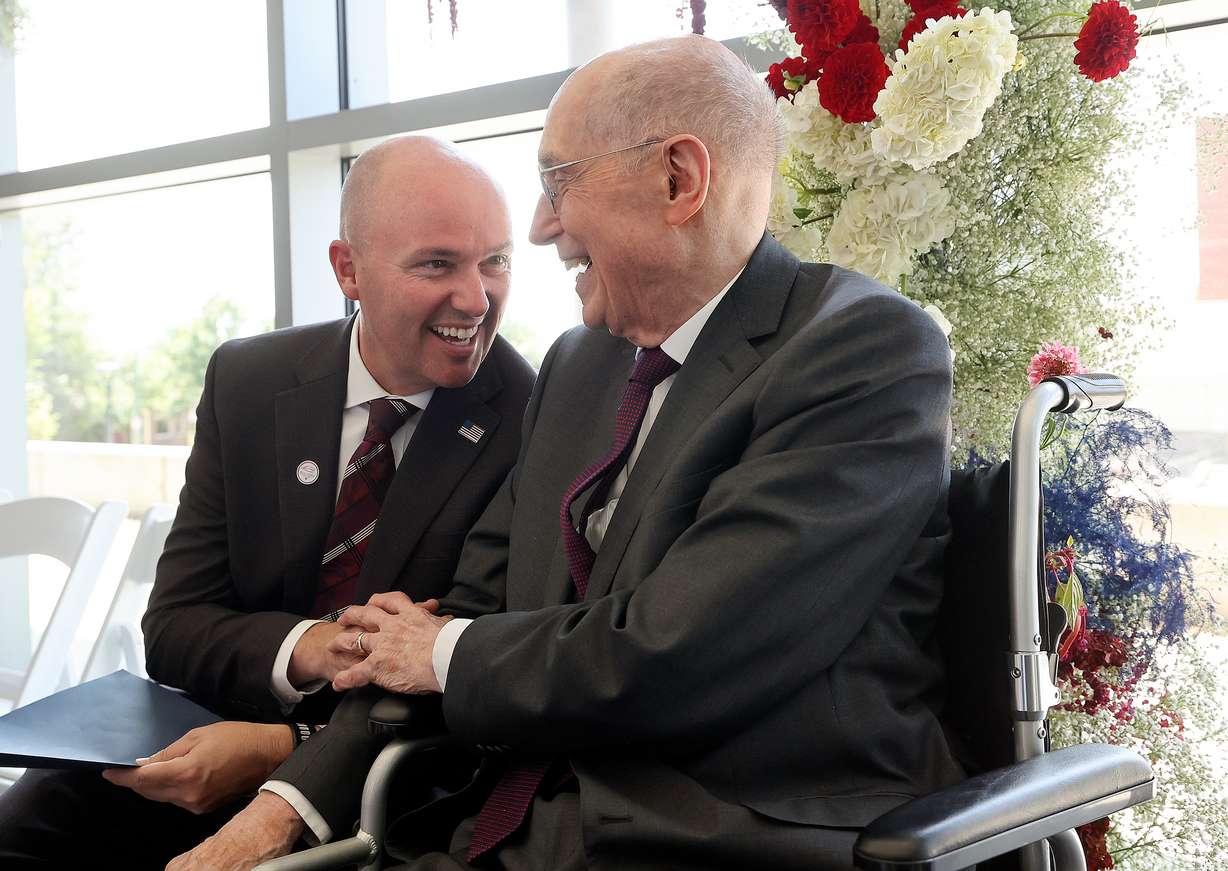
Classes in the Applied Science Project will begin this fall and serve 37 different STEM degree programs and nine preprofessional programs, including all engineering, premedical and computer science majors. And every future nurse, chemist, engineer, statistician and software developer educated at the U. will take courses in these buildings.
The project was funded through a partnership of state and private support, including a $67.5 million state appropriation and significant donations from the ALSAM Foundation — founded by L. S. and Aline W. Skaggs — and Gary and Ann Crocker.
Speaking at the opening, the ALSAM Foundation's Mark Skaggs expressed his fear for the future of science and research in the country while affirming his support — both financially and personally — for the university's Applied Science Project.
"I'm actually afraid of where we're headed — 'Make America Great Again' — explain to me how we do that when we cut the NIH (National Institutes of Health) budget by half? When we close (research) program after program after program at key universities?" Skaggs said. "If you're ever going to need serious medical help ... you might have to go to Vietnam; you might have to go to Canada; you might have to go to Germany. This is not the way to Make America Great Again."
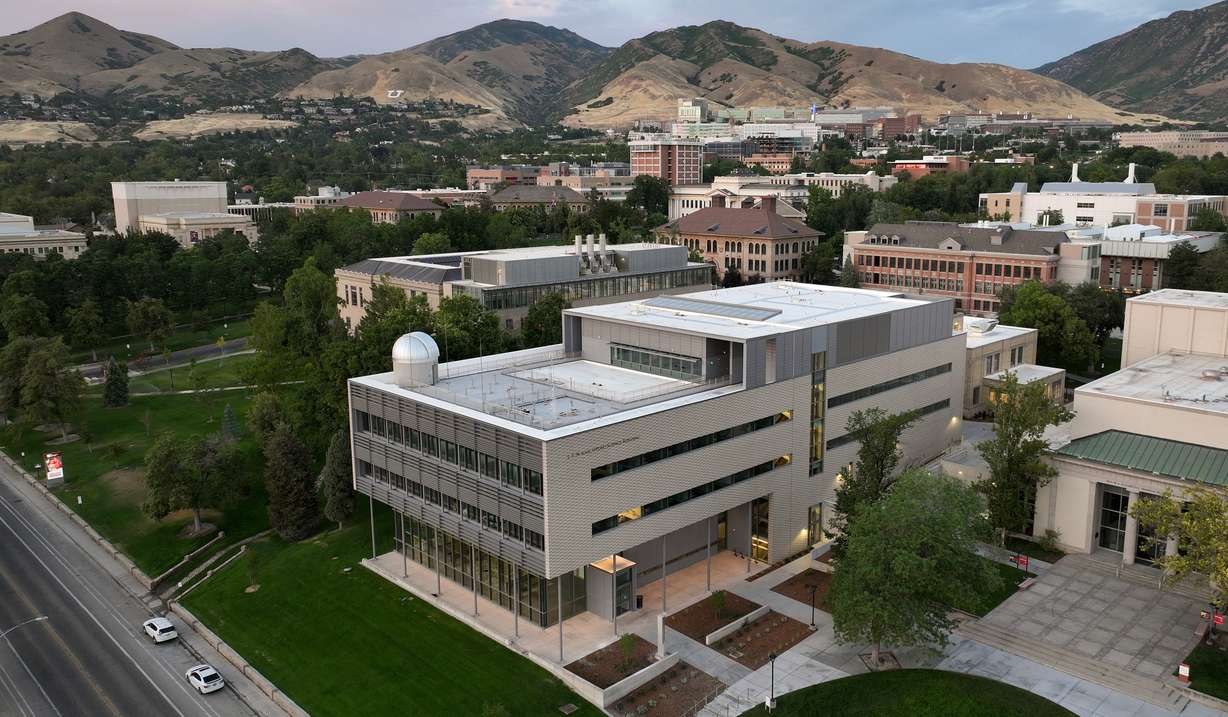
"This was our last major gift, and it could not have been a better last gift," Skaggs added.
The project also transforms the university's west entrance by creating a core gathering space on the campus's west side, which will facilitate interdisciplinary collaboration between the sciences as part of the completed Crocker Science Complex.
Still, with all of the new project's uses, student education remains central to its goal.
"This building is more than the sum of its parts; it's a beacon of knowledge, opportunity and hope already. It's a symbol of what we can accomplish when we work together, and it's one that holds the promise of a future of discovery, innovation and impact," said Pearl Sandick, interim dean of the university's College of Science.