Estimated read time: 7-8 minutes
Since Glen Canyon Dam's completion in the 1960s, Utahns have revered Lake Powell for a lot of reasons:
- It's a houseboating paradise, with many families planning multigenerational trips on the water every summer.
- It offers endless water recreation, satisfying not just boaters, but anglers, jet skiers, kayakers, cliff jumpers and anglers alike.
- It's set against one of the most dramatic backdrops anywhere, courtesy of southern Utah's trademark sandstone cliffs and slot canyons.
But look beyond the jet skis, and there are a number of captivating facts about Lake Powell that might make you appreciate it even more — from overlooked recreation opportunities to fascinating artifacts under the surface.
It took 17 years to fill
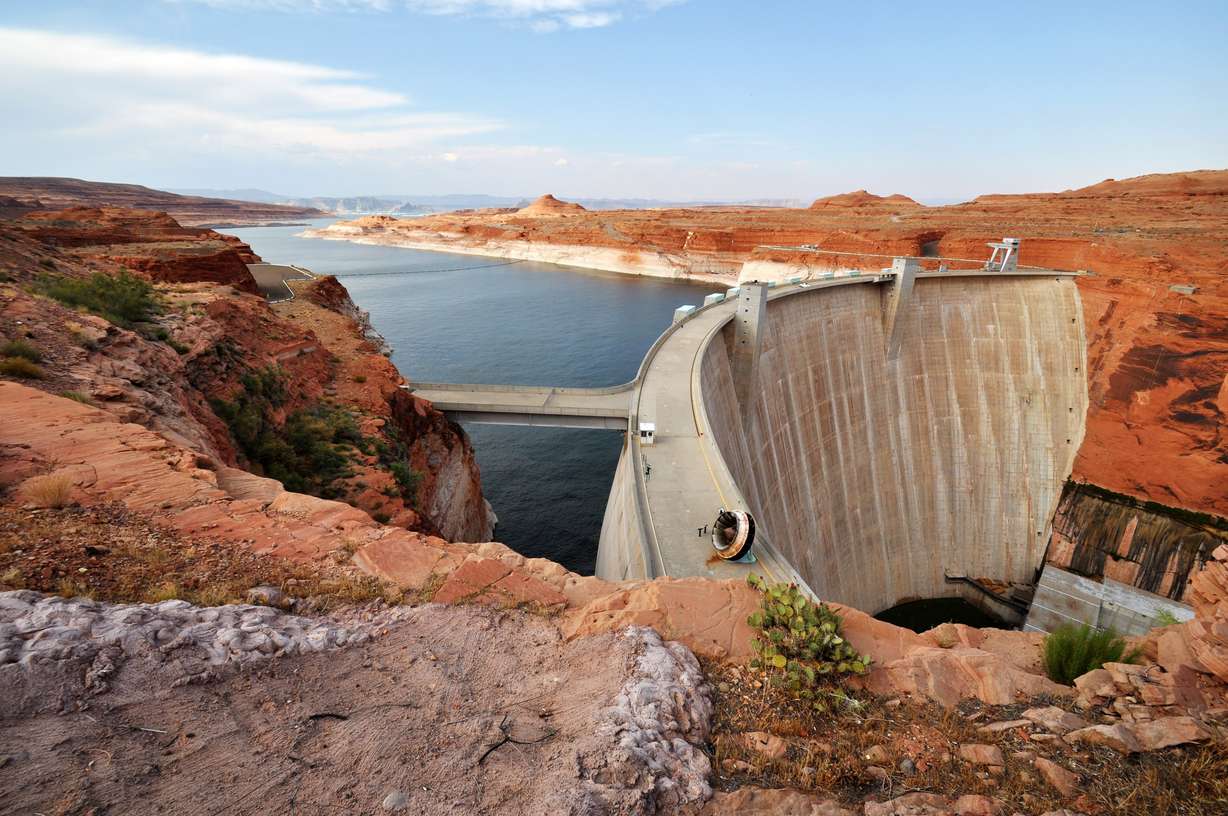
After the dam began holding back water in 1963, the lake finally reached full pool of 3,700 feet above sea level for the first time in 1980, according to LakePowell.com. Most recently measured on July 6, it was 3,560 feet, as reported by the Lake Powell Water Database.
Powell is the second largest manmade lake in the U.S. and its 50-year historical average elevation is 3,639 feet, although it hasn't reached that level since 2001. The water volume is currently about 32% of the full pool amount of 24.32-million acre feet.
It's likely Utah's most popular outdoor destination
It's difficult to pinpoint how many people visit Lake Powell each year. In 2023, for example, the National Park Service reported that a record 5.2 million people visited Glen Canyon National Recreation Area. That eclipsed the number that visited Zion National Park. But Glen Canyon is just one of Lake Powell's access points. Others go to Bullfrog, Halls Crossing or even to a few remote, undeveloped access points.
The lake has more shoreline than the West Coast
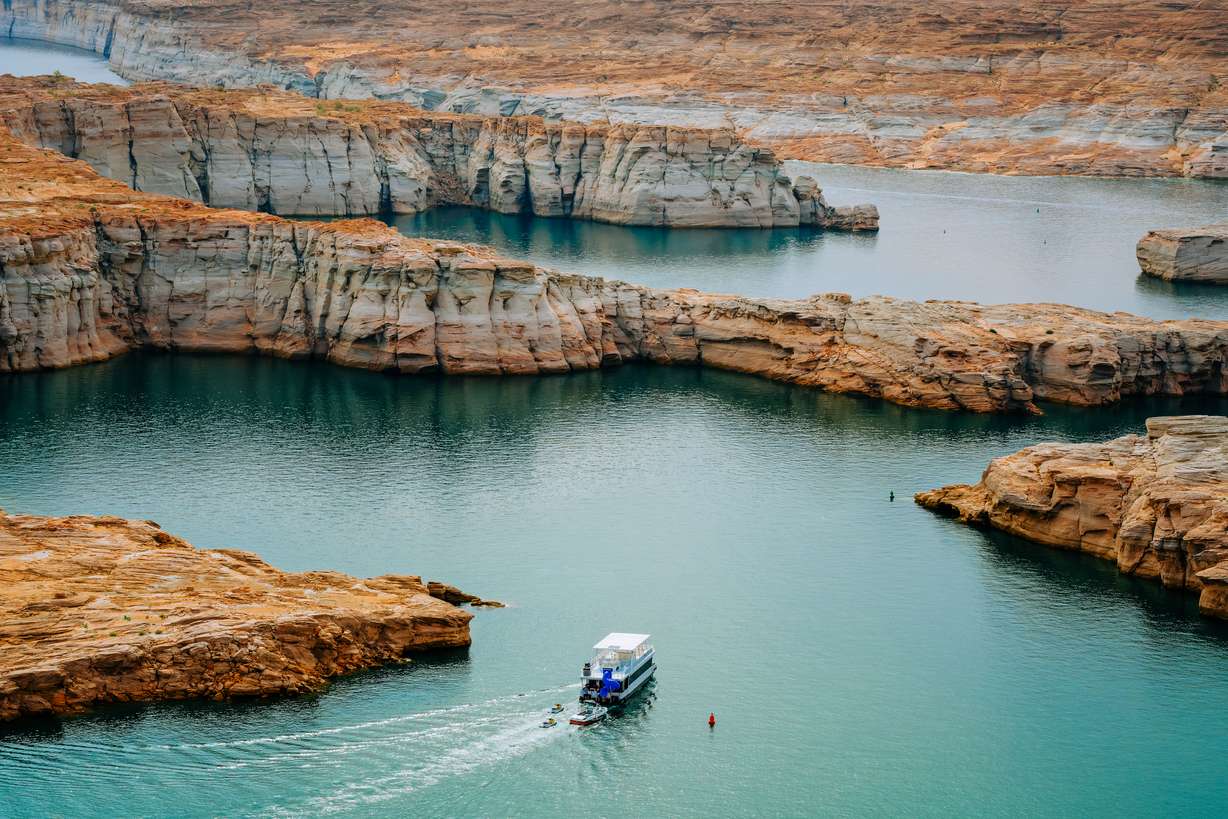
It's not hyperbole. When Lake Powell is full, its jagged shoreline stretches about 1,960 miles, according to information from the National Park Service. That's more than the coasts of California, Oregon, and Washington combined. Powell has 96 side canyons and hundreds of smaller coves and bays.
Most of the lake is only accessible by boat
On the subject of stunning shoreline stats, here's another: 90% of the lake's shoreline is unreachable by land.
Typical lakes have roads that circumvent much of the shoreline with numerous docks, marinas and other access points. Not Lake Powell. To see its best sights (e.g., canyons, beaches, and hidden swimming holes), you need to get around on some kind of watercraft.
When the dam site was chosen, the closest road was U.S. Route 89, more than 30 miles distant. During the initial construction phase, the Bureau of Reclamation reported that the only way across the gorge was a 1,300 foot long footbridge. Driving a car from one side to the other required a 225-mile trip.
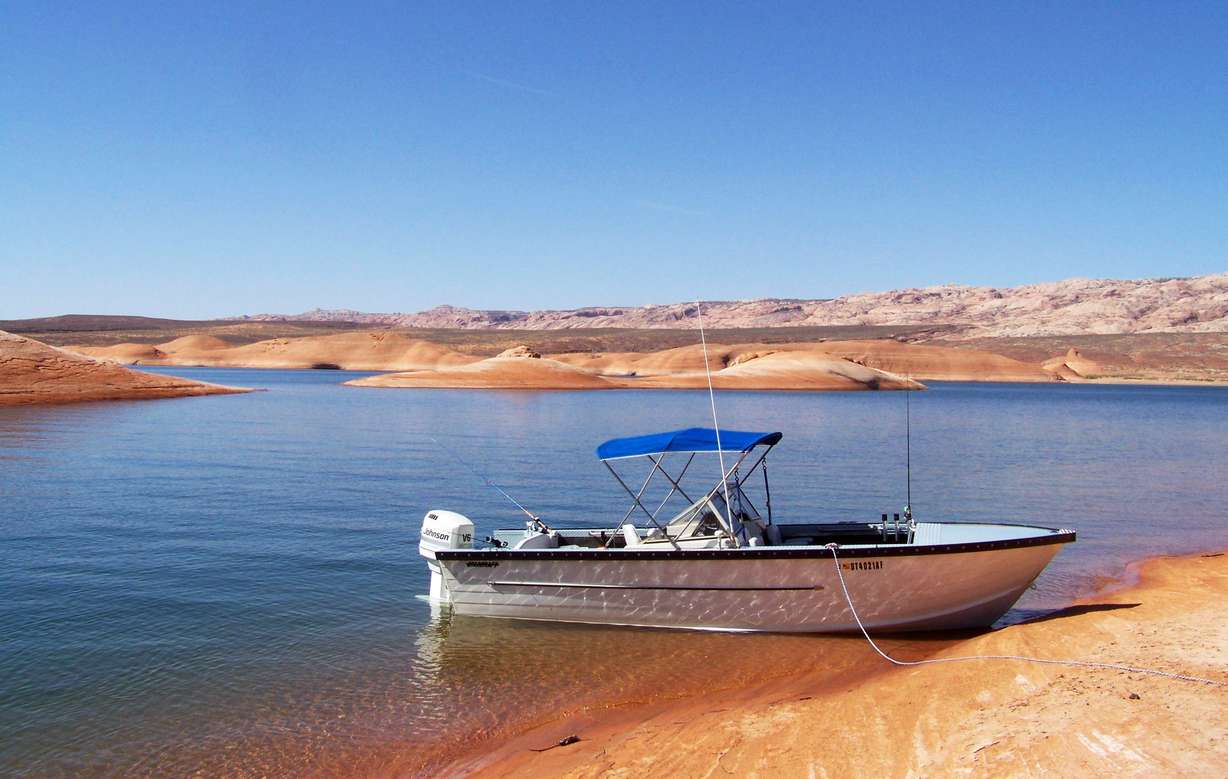
And while things have changed dramatically since construction in the 1950s, most of Lake Powell remains remote. Even with more than 5 million annual visitors, it's easy to find total solitude in an arm in the back of one of the canyons.
This unique accessibility (or lack thereof) adds to the lake's mystique. And it's a feature — not a flaw — as long as you plan ahead. Limited fuel, shade, and cell service means extra preparation is needed for a safe and successful adventure.
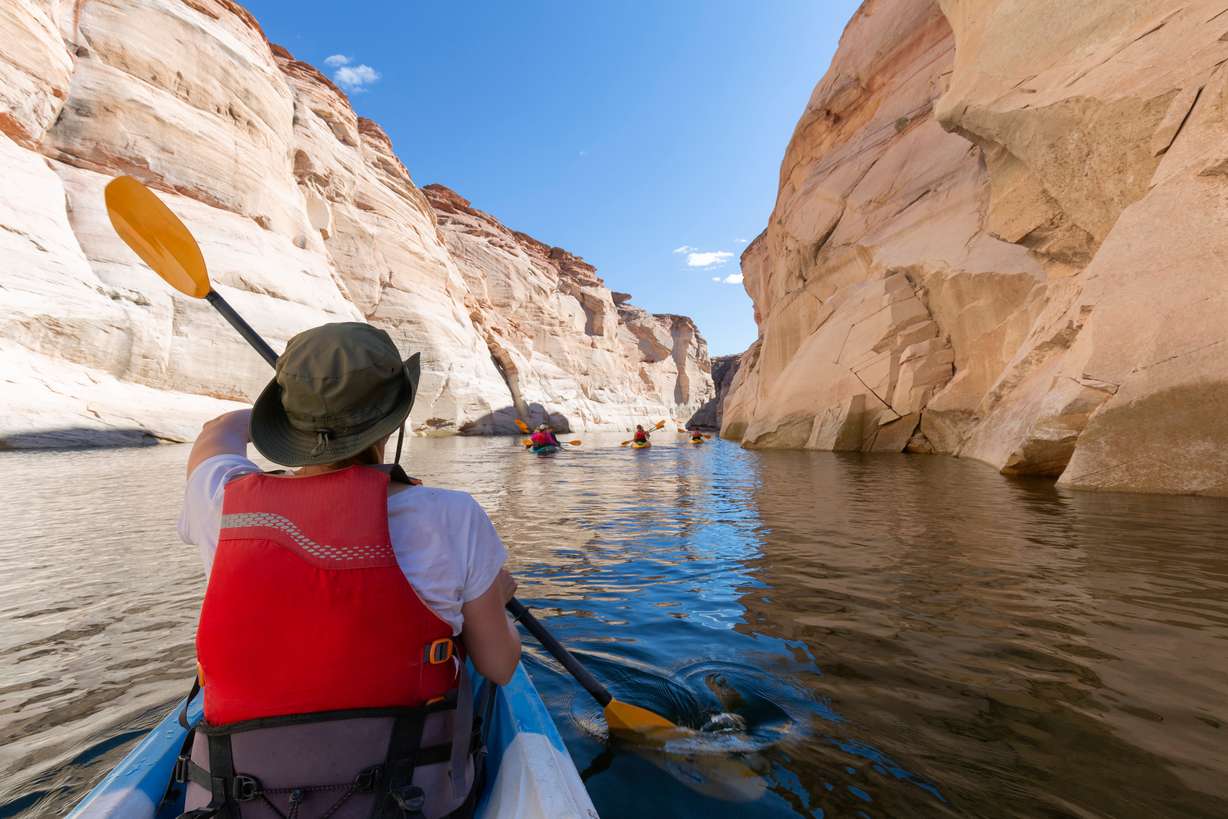
It has slot canyons you can kayak into
Do you find that exploring slot canyons on foot is just too mainstream? If so, first of all, kindly reconsider — all slot canyons are amazing. But also know that Lake Powell is home to places like Labyrinth Canyon and Antelope Canyon, which are only water-accessible and just wide enough for a kayak to weave through. (And no, it's not the better known Antelope Canyon — though it's part of the same slot canyon system.)
An essential reminder: Slot canyons are synonymous with flash floods, which often appear suddenly and unexpectedly — as indicated in the name. Always check the forecast across the region. If you see rain, it's best to save the canyon(s) for another day.
It is a dream for astronomy lovers
The spectacular views at Lake Powell don't stop when daylight departs; some might argue they get even better.
The lake is the centerpiece of Glen Canyon National Recreation Area, which was designated as an International Dark Sky Park in 2018. That means it's one of the best places in the U.S. to stargaze, thanks to minimal light pollution and fresh desert air. On a clear night, you can spot the entire Milky Way from horizon to horizon.
You can camp on remote beaches for free
One of Lake Powell's biggest and most pleasant unexpected surprises is that you can camp on nearly any beach along the shoreline on a first-come, first-served basis. It's mostly primitive camping — no developed campsites and facilities — so bring plenty of water, food, and shade.
And while boat-in camping is also allowed almost anywhere on the lake, the National Park Service warns that unless you are on a boat with a toilet, you are required to have a portable toilet and you must bring your waste out with you. If you have a pet, you must also collect that waste.
Park rangers regularly do spot checks of remote camps and you will receive a citation if you can't produce your portable toilet and waste.
It's not a lake!
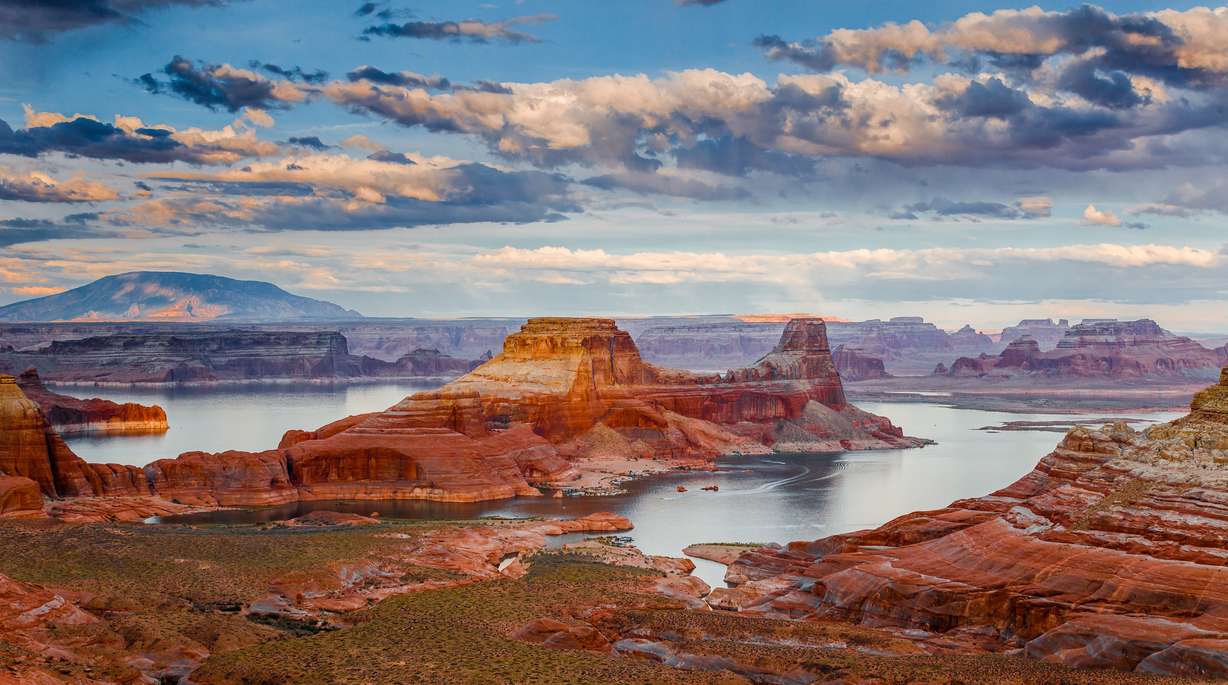
This is maybe not as obscure of a fact as everything previously mentioned, but Lake Powell was created by humans, not nature — making it a reservoir. However, "Reservoir Powell" just doesn't have the same ring to it, so it's been colloquially called a lake since inception.
It's split between two time zones
Parts of the lake lie in Utah (mountain time); others in Arizona (mountain standard time). The lack of daylight-saving observance by Utah's neighboring state means you might need to regularly reset your watch when navigating the lake's surrounding areas — and that you have to be just a bit more careful when scheduling things.
Treasures and history hide under its surface
Before Lake Powell, there was Glen Canyon — home to Native American rock art, pioneer routes, old mining cabins and all sorts of notable treasures. Today, this history lives through the frantic documentation (photos, maps, preserved artifacts) made by archaeologists and historians prior to the creation of the lake.
You can read an interesting article in The Canyon Country Zephyr about the experience of one of the families that lived in the canyon and their displacement after the dam's construction.
Re-exposed canyon walls during low-water years and petroglyph panels still peek through the lake's upper reaches and side canyons.

Unique expressions that immediately identify someone from Utah
Whether it's the unique slang, cultural quirks or devotion to specific beverages and get-rich-quick marketing schemes, these expressions will immediately reveal a person's Utah roots. Here are words and phrases that set long-time Utah residents apart from the rest of the world.Siegfried & Jensen
Since 1990, Siegfried & Jensen have been helping the people of Utah and surrounding states who have suffered needless injuries and death caused by car accidents, truck accidents, medical malpractice, defective drugs, dog bites, wrongful death, and other types of personal injury.
The firm is committed to keeping Utah families and communities safe by ensuring wrongdoers are held accountable. While a lawsuit isn't always the answer when it is needed having someone on your side can mean the difference between declaring bankruptcy and rebuilding your life and moving forward, especially when you're up against an insurance company or a hospital.
Siegfried & Jensen has represented more than 35,000 clients and recovered over $1.2 billion for them.