'%3e%3cpath%20d='M34.1406%205.85938C30.3906%202.10547%2025.3047%200%2020%200C14.6953%200%209.60938%202.10547%205.85938%205.85938C2.10938%209.61328%200%2014.6953%200%2020C0%2025.3047%202.10547%2030.3906%205.85938%2034.1406C9.61328%2037.8906%2014.6953%2040%2020%2040C25.3047%2040%2030.3906%2037.8945%2034.1406%2034.1406C37.8906%2030.3906%2040%2025.3047%2040%2020C40%2014.6953%2037.8945%209.60938%2034.1406%205.85938ZM37.0117%2023.543H31.1602V13.5391H27.6328V19.9414C28.1211%2020.6914%2028.3711%2021.582%2028.3711%2022.5625V22.625C28.3711%2023.668%2028.1172%2024.6055%2027.6328%2025.4297V26.6094H36.082C33.4883%2032.9375%2027.2891%2037.3789%2020.0039%2037.3789C10.3711%2037.3789%202.62109%2029.6289%202.62109%2020C2.62109%2010.3711%2010.3711%202.62109%2020%202.62109C29.6289%202.62109%2037.3789%2010.3711%2037.3789%2020C37.3789%2021.1484%2037.2617%2022.2656%2037.0508%2023.3477C37.0391%2023.4141%2037.0234%2023.4766%2037.0117%2023.543Z'%20fill='white'/%3e%3cpath%20d='M22.3086%2018.5352C20.4336%2018.125%2019.9531%2017.8398%2019.9766%2017.1836V17.1406C19.9766%2016.6992%2020.3477%2016.2148%2021.4023%2016.2148C22.582%2016.2148%2023.8867%2016.6797%2025.0781%2017.4766L26.8516%2015.0195C25.4453%2013.8906%2023.707%2013.3398%2021.5547%2013.3398C18.5195%2013.3398%2016.4375%2015%2016.4063%2017.4766V17.5352C16.3633%2020.2617%2018.5859%2020.9805%2021.293%2021.6016C23.0391%2021.9766%2023.5703%2022.3164%2023.5703%2022.9609L23.5469%2022.9766C23.5469%2023.3906%2023.2578%2023.7031%2022.7852%2023.8359C22.5742%2023.9062%2022.1289%2023.9727%2021.5156%2023.9727C20.7617%2023.9727%2019.7539%2023.8633%2018.6328%2023.4844C18.0898%2023.2891%2017.4727%2023.0039%2016.8047%2022.6133L20.1406%2026.625C20.2813%2026.6602%2021.0977%2026.8516%2021.7734%2026.8516C25.0039%2026.8516%2027.0859%2025.2461%2027.1094%2022.6328V22.5703C27.1602%2020.1133%2025.2148%2019.1719%2022.3086%2018.5352Z'%20fill='white'/%3e%3cpath%20d='M5.24219%2013.5664V26.6133H8.75391V23.7578L10.2969%2021.9531L14.2031%2026.6133H18.3867L12.3555%2019.5195L17.4023%2013.5664H13.4531L8.75391%2019.0586V13.5664H5.24219Z'%20fill='white'/%3e%3c/g%3e%3cdefs%3e%3cclipPath%20id='clip0_97_2430'%3e%3crect%20width='40'%20height='40'%20fill='white'/%3e%3c/clipPath%3e%3c/defs%3e%3c/svg%3e)




Estimated read time: 2-3 minutes
This archived news story is available only for your personal, non-commercial use. Information in the story may be outdated or superseded by additional information. Reading or replaying the story in its archived form does not constitute a republication of the story.
- The House will vote on a $9.4 billion spending cuts package next week.
- The package targets public broadcasting, foreign aid, and HIV/AIDS programs for cuts.
- Senate Majority Leader John Thune says the package will be a June focus.
WASHINGTON — The House will vote on a slew of spending cuts implemented by the Department of Government Efficiency as early as next week, sources familiar with the timeline confirmed to the Deseret News.
The White House sent its formal rescissions package to the House on Tuesday, outlining a number of proposed spending cuts that lawmakers must approve within the next 45 days. The $9.4 billion rescissions package includes several spending cut proposals identified by multibillionaire Elon Musk since the creation of DOGE in late January.
"The House will act quickly on this request," House Speaker Mike Johnson, R-La., said in a statement. "Under President Trump, every federal taxpayer dollar is actually being used to serve the American people, not to fund a bloated bureaucracy or purely partisan pet projects. We thank Elon Musk and his DOGE team for identifying a wide range of wasteful, duplicative and outdated programs, and House Republicans are eager to eliminate them."
The package would cut $1.1 billion from the Corporation for Public Broadcasting, a nonprofit organization authorized by Congress in 1967. Every year, Congress appropriates funds to the broadcast corporation, which are then distributed to more than 1,500 public media stations through community service grants.
The spending cuts specifically target stations such as PBS and NPR, which the Trump administration claims unfairly target conservatives and the Republican Party.
The package also cuts funding to the United States Agency for International Development, which provides foreign aid, as well as funds for the World Health Organization.
The bill proposes millions of dollars in cuts to the President's Emergency Plan for AIDS Relief, a program started under the George W. Bush administration focusing on the prevention and treatment of HIV/AIDS. The rescissions package would cut more than $8 million dedicated to the program.
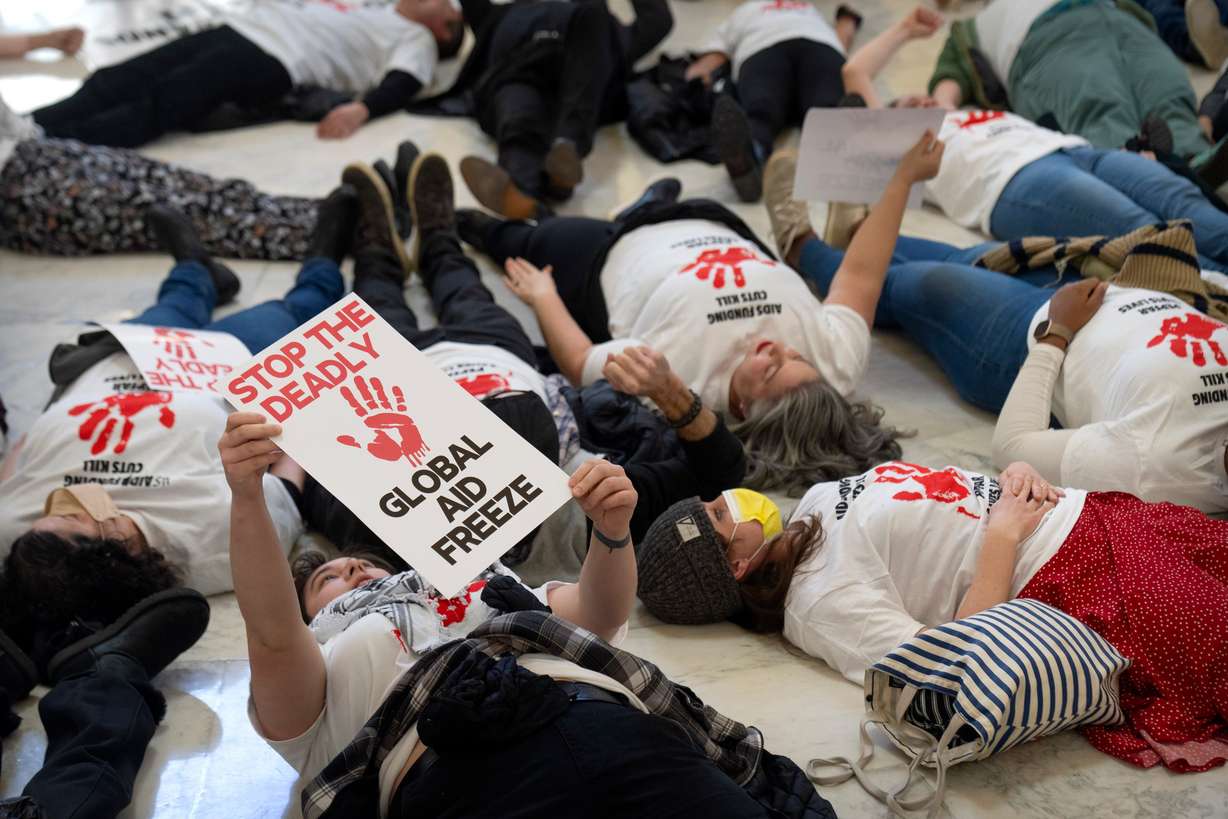
At least one Republican senator, Sen. Susan Collins, R-Maine, expressed opposition to that provision, calling the program "one of the most successful public health programs in the world without a doubt."
The package also targets programs related to LGBTQ and women's issues.
House GOP leaders are pushing to vote on the rescissions package sometime next week, sources familiar with the process told the Deseret News. After that, the package will head to the Senate where it will need only a simple majority to pass the upper chamber.
Under congressional rules, lawmakers have 45 days to approve the rescissions package. If the package is not passed by then, federal funding will be released to the agencies Trump is seeking to defund.
It's not yet clear how quickly the Senate would act on the package, but Senate Majority Leader John Thune, R-S.D., told reporters this week it would be a main focus over the June work period.