'%3e%3cpath%20d='M34.1406%205.85938C30.3906%202.10547%2025.3047%200%2020%200C14.6953%200%209.60938%202.10547%205.85938%205.85938C2.10938%209.61328%200%2014.6953%200%2020C0%2025.3047%202.10547%2030.3906%205.85938%2034.1406C9.61328%2037.8906%2014.6953%2040%2020%2040C25.3047%2040%2030.3906%2037.8945%2034.1406%2034.1406C37.8906%2030.3906%2040%2025.3047%2040%2020C40%2014.6953%2037.8945%209.60938%2034.1406%205.85938ZM37.0117%2023.543H31.1602V13.5391H27.6328V19.9414C28.1211%2020.6914%2028.3711%2021.582%2028.3711%2022.5625V22.625C28.3711%2023.668%2028.1172%2024.6055%2027.6328%2025.4297V26.6094H36.082C33.4883%2032.9375%2027.2891%2037.3789%2020.0039%2037.3789C10.3711%2037.3789%202.62109%2029.6289%202.62109%2020C2.62109%2010.3711%2010.3711%202.62109%2020%202.62109C29.6289%202.62109%2037.3789%2010.3711%2037.3789%2020C37.3789%2021.1484%2037.2617%2022.2656%2037.0508%2023.3477C37.0391%2023.4141%2037.0234%2023.4766%2037.0117%2023.543Z'%20fill='white'/%3e%3cpath%20d='M22.3086%2018.5352C20.4336%2018.125%2019.9531%2017.8398%2019.9766%2017.1836V17.1406C19.9766%2016.6992%2020.3477%2016.2148%2021.4023%2016.2148C22.582%2016.2148%2023.8867%2016.6797%2025.0781%2017.4766L26.8516%2015.0195C25.4453%2013.8906%2023.707%2013.3398%2021.5547%2013.3398C18.5195%2013.3398%2016.4375%2015%2016.4063%2017.4766V17.5352C16.3633%2020.2617%2018.5859%2020.9805%2021.293%2021.6016C23.0391%2021.9766%2023.5703%2022.3164%2023.5703%2022.9609L23.5469%2022.9766C23.5469%2023.3906%2023.2578%2023.7031%2022.7852%2023.8359C22.5742%2023.9062%2022.1289%2023.9727%2021.5156%2023.9727C20.7617%2023.9727%2019.7539%2023.8633%2018.6328%2023.4844C18.0898%2023.2891%2017.4727%2023.0039%2016.8047%2022.6133L20.1406%2026.625C20.2813%2026.6602%2021.0977%2026.8516%2021.7734%2026.8516C25.0039%2026.8516%2027.0859%2025.2461%2027.1094%2022.6328V22.5703C27.1602%2020.1133%2025.2148%2019.1719%2022.3086%2018.5352Z'%20fill='white'/%3e%3cpath%20d='M5.24219%2013.5664V26.6133H8.75391V23.7578L10.2969%2021.9531L14.2031%2026.6133H18.3867L12.3555%2019.5195L17.4023%2013.5664H13.4531L8.75391%2019.0586V13.5664H5.24219Z'%20fill='white'/%3e%3c/g%3e%3cdefs%3e%3cclipPath%20id='clip0_97_2430'%3e%3crect%20width='40'%20height='40'%20fill='white'/%3e%3c/clipPath%3e%3c/defs%3e%3c/svg%3e)



Estimated read time: 5-6 minutes
This archived news story is available only for your personal, non-commercial use. Information in the story may be outdated or superseded by additional information. Reading or replaying the story in its archived form does not constitute a republication of the story.
PROVO — As BYU football put the finishing touches on training camp Wednesday ahead of next Saturday's season opener against FCS Southern Illinois (6 p.m. MDT, ESPN+), plenty of questions still remained on the practice field.
Chief among them was the starting quarterback competition, which had failed to cement itself in favor of either incumbent Jake Retzlaff or newcomer Gerry Bohanon Jr. as late as Monday afternoon.
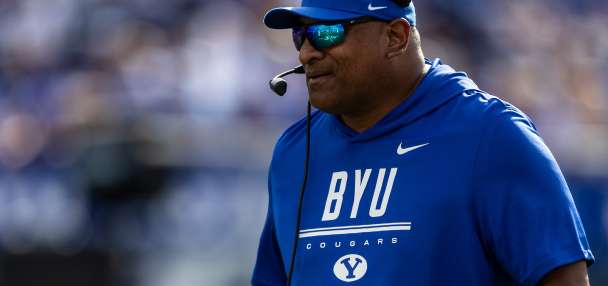
So what did the Cougars learn through four weeks of training camp? For head coach Kalani Sitake, the biggest takeaway was the "super close team" that had emerged from the 5-7 campaign in BYU's first year in the Big 12 — and a group that is motivated to improve on that mark.
"Adversity does something to you, and these guys believe in each other," Sitake said. "They've bonded really closely. I'm really proud of this team, the camaraderie and the connection they have with each other. It's going to be a lot of fun to see them get out and play."
Offensive coordinator Aaron Roderick echoed those sentiments.
"This is a really close team," he said. "We haven't won a game yet, but I feel like we have a close-knit group here – definitely more so than we had a year ago."
Here are three takeaways from the end of training camp as the Cougars turn the page to the Salukis — and beyond — to open the 2024 season.

Who will play quarterback?
No clear starter emerged after the month-long training camp which followed a spring session of equal reps among the top-two contenders.
The competition has taken longer than Roderick would have preferred, the fourth-year offensive coordinator admitted after media watched both Retzlaff and Bohanon touchdown passes during the final media-viewing portion of camp Monday.
"They're both playing really well," Roderick said. "You guys saw them both make some really good plays in those last few drives. It's what practice has been like all through camp; they're both good players, and we haven't decided yet what we're going to do."
The decision will primarily lie with Roderick, both the offensive coordinator/quarterbacks coach and Sitake. But he will also check feedback from other coaches on the offensive staff, and all final approval goes through Roderick.
He'd "prefer not to" play both quarterbacks as co-starters against the Salukis, but admits "there's always a chance." And while Sitake isn't philosophically opposed to a two-quarterback setup to start the year, he's also keeping an eye on how the team "naturally" coalesces around a starter before the opening kickoff.
"I truly feel comfortable with either one playing on the field and winning games for us," Sitake said. "We'll just go through the process of the quarterback battle; we've been through this before. The closer we get to the game, I'm pretty sure the more likely we'll have a starter named."
On-field comms incoming
NFL teams have used headset communication between the field and the booth since 1994, and college football will catch up 30 years later with teams finally able to utilize a limited number of helmet radios and on-field tablets for immediate video playback on the sidelines under recent NCAA legislation.
Like most teams, the Cougars have been using the new technology in practice, including the use of Surface tablets to immediately watch and review video under the Big 12's partnership with Microsoft.
Wide receiver Kody Epps used similar tablet review at Mater Dei High School in Santa Ana, California, but hasn't picked it up much in four years since. saying "it's kind of weird" to get back into the rhythm of visual in-game learning.
"I made a good catch today, and one of the dudes said, 'you want to look at it?' I said, 'no, keep the tablet.' I really am not even acclimated enough with the tablets again," he recalled. "But I'm excited when the opportunity in the season comes. There's a bunch of stuff you don't normally get to see; you just have to feel and recall in your memory coverages and look. To have those tablets and talk with your coaches, quarterbacks, offensive line — and to all be on the same page — I'm really excited about that."
Only one player will have a headset in their helmet on game day — the quarterback, for example, on offense and a linebacker on defense, in BYU's case — under NCAA rules, and communication is cut off with 15 seconds left on the play clock. That means the Cougars will still use limited traditions, like signs and hand signals to call in plays from the sidelines.
"Being able to get that immediate feedback will be very helpful for them," he said. "Sometimes in a game, when you want them to see something, they can see it in real time. It kind of fits in line with this generation of how they learn; they're more visual learners."
LaVell's new turf
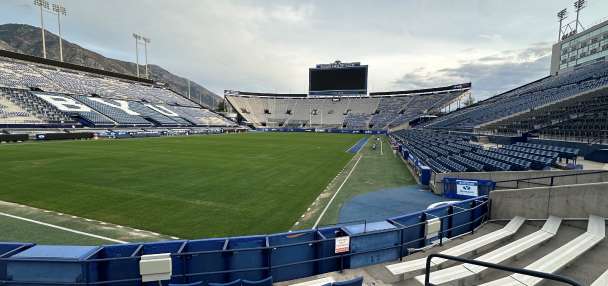
Among the changes that fans will notice in the season opener at LaVell Edwards Stadium will be a recently re-plotted turf by the BYU grounds crew.
The new grass will also include royal blue accents around the field edges, a deviation from the traditional white. And the new grass is "awesome," Sitake said, after playing on it through thunderstorms during a 120-play scrimmage that included 70 live reps last Saturday.
"It rained, and we wanted to get a good feel for it (in the weather conditions)," he added. "We were worried what would happen if we stepped on it being wet, but the field people were good to test it out. I was jealous; I wish I could've played on it. It was cool, and we appreciate all the hard work that goes into having that surface ready for us. It was really nice on Saturday, and we're looking forward to playing on it when it goes live."