'%3e%3cpath%20d='M34.1406%205.85938C30.3906%202.10547%2025.3047%200%2020%200C14.6953%200%209.60938%202.10547%205.85938%205.85938C2.10938%209.61328%200%2014.6953%200%2020C0%2025.3047%202.10547%2030.3906%205.85938%2034.1406C9.61328%2037.8906%2014.6953%2040%2020%2040C25.3047%2040%2030.3906%2037.8945%2034.1406%2034.1406C37.8906%2030.3906%2040%2025.3047%2040%2020C40%2014.6953%2037.8945%209.60938%2034.1406%205.85938ZM37.0117%2023.543H31.1602V13.5391H27.6328V19.9414C28.1211%2020.6914%2028.3711%2021.582%2028.3711%2022.5625V22.625C28.3711%2023.668%2028.1172%2024.6055%2027.6328%2025.4297V26.6094H36.082C33.4883%2032.9375%2027.2891%2037.3789%2020.0039%2037.3789C10.3711%2037.3789%202.62109%2029.6289%202.62109%2020C2.62109%2010.3711%2010.3711%202.62109%2020%202.62109C29.6289%202.62109%2037.3789%2010.3711%2037.3789%2020C37.3789%2021.1484%2037.2617%2022.2656%2037.0508%2023.3477C37.0391%2023.4141%2037.0234%2023.4766%2037.0117%2023.543Z'%20fill='white'/%3e%3cpath%20d='M22.3086%2018.5352C20.4336%2018.125%2019.9531%2017.8398%2019.9766%2017.1836V17.1406C19.9766%2016.6992%2020.3477%2016.2148%2021.4023%2016.2148C22.582%2016.2148%2023.8867%2016.6797%2025.0781%2017.4766L26.8516%2015.0195C25.4453%2013.8906%2023.707%2013.3398%2021.5547%2013.3398C18.5195%2013.3398%2016.4375%2015%2016.4063%2017.4766V17.5352C16.3633%2020.2617%2018.5859%2020.9805%2021.293%2021.6016C23.0391%2021.9766%2023.5703%2022.3164%2023.5703%2022.9609L23.5469%2022.9766C23.5469%2023.3906%2023.2578%2023.7031%2022.7852%2023.8359C22.5742%2023.9062%2022.1289%2023.9727%2021.5156%2023.9727C20.7617%2023.9727%2019.7539%2023.8633%2018.6328%2023.4844C18.0898%2023.2891%2017.4727%2023.0039%2016.8047%2022.6133L20.1406%2026.625C20.2813%2026.6602%2021.0977%2026.8516%2021.7734%2026.8516C25.0039%2026.8516%2027.0859%2025.2461%2027.1094%2022.6328V22.5703C27.1602%2020.1133%2025.2148%2019.1719%2022.3086%2018.5352Z'%20fill='white'/%3e%3cpath%20d='M5.24219%2013.5664V26.6133H8.75391V23.7578L10.2969%2021.9531L14.2031%2026.6133H18.3867L12.3555%2019.5195L17.4023%2013.5664H13.4531L8.75391%2019.0586V13.5664H5.24219Z'%20fill='white'/%3e%3c/g%3e%3cdefs%3e%3cclipPath%20id='clip0_97_2430'%3e%3crect%20width='40'%20height='40'%20fill='white'/%3e%3c/clipPath%3e%3c/defs%3e%3c/svg%3e)


Estimated read time: 6-7 minutes
This archived news story is available only for your personal, non-commercial use. Information in the story may be outdated or superseded by additional information. Reading or replaying the story in its archived form does not constitute a republication of the story.
Anyone who grew up in Utah knows the magic that is — and was — Lagoon. The iconic white roller coaster could be seen easily from the freeway, calling to kids and adults alike.
But it wasn't just known for the rides, Lagoon was a place people went to jam out, dance and see favorite performers. Over the years, sensational names graced the various stages at Lagoon. These are just a few:
- Louis Armstrong
- Johnny Cash
- The Beach Boys
- Andy Williams
- Brenda Lee
- Ella Fitzgerald
- The Doors
- Frankie Avalon
- The Mamas & The Papas
- Duke Ellington
- Mel Torme
- The Monkees
- Nat King Cole
- The Osmond Brothers
- Ray Charles
- Three Dog Night
- The Turtles
- The Who
- The Doors.
Lagoon wasn't only for those who loved music, though. Movies and TV shows were also filmed at the park from the 1950s to present day.
Shows like the 1988 "Werewolf," "Wide, Wide World" and "The Aquabats! Super Show!" all filmed at the park.
Movies such as Hallmark's "Christmas Land," Disney's "Luck of the Irish," and "Terror in the Family" starring Hilary Swank shot scenes at Lagoon.
Though Lagoon is an icon of Utah's recent history and present day, it originated as something quite different.
Nearly 14 decades of fun
This beloved landmark has been a hub for family fun for 138 years now — a full 10 years before Utah officially became a state in 1896.
Lagoon's story begins in the summer of 1886 when it first opened as Lake Park. As the park's former name suggests, it used to be located near the shore of the Great Salt Lake.
A lot has changed since those early days of mule-drawn merry-go-rounds and open-air dance halls. Here's a brief, abbreviated history of Lagoon and how it's evolved over the years.
1886: The birth of Lake Park. While modern visitors enjoy roller coasters and high adrenaline rides like The Rocket, visitors in 1883 were lured by considerably more tame fare like a bowling alley, water sports and roller skating.
1899: New home, new name. 13 years after its opening, it was time to move, this time to the banks of a 9-acre pond that the park is now named after. 1899 was also the year of Lagoon's first thrill ride — the cleverly named Shoot-the-Chutes.
1906: Lagoon gets a carousel. Still in operation today — and just as popular as ever — Lagoon's Victorian-era carousel features 45 hand-crafted animals and other characters.
1921: The roller coaster makes its debut. This beloved wooden roller coaster, or, as it's sometimes called, the "white roller coaster" (while actually no longer painted white since its refreshment a few years ago), is one of the oldest operating wooden coasters in the world, according to coasternation.com. It's still a great time, and its 2,500 feet of track provides plenty of giggles for children and adults alike.
1927: Filtered water swimming pool. Before Lagoon-A-Beach, Lagoon constructed the first filtered swimming pool west of the Mississippi, located just north of Lagoon Lake. This million-gallon swimming pool was a hit and made hot summer days at the park all the more bearable.
1953: A devastating fire. 54 years after opening at its new location, tragedy struck. A fire broke out and burned most of the park, including a significant portion of the beloved Roller Coaster and Carousel. The park manager, Robert Freed, promised to rebuild the park better than ever.
1954: A year of rebuilding. With widespread damage from the fire, it took some time to rebuild as Freed promised. As part of the rebuild process, new additions were made, including several rides that comprise today's Kiddieland.
1960: A concert hotspot. The 1960s put Lagoon on the map like no era before — and perhaps after. It was then that Lagoon became a destination concert venue.
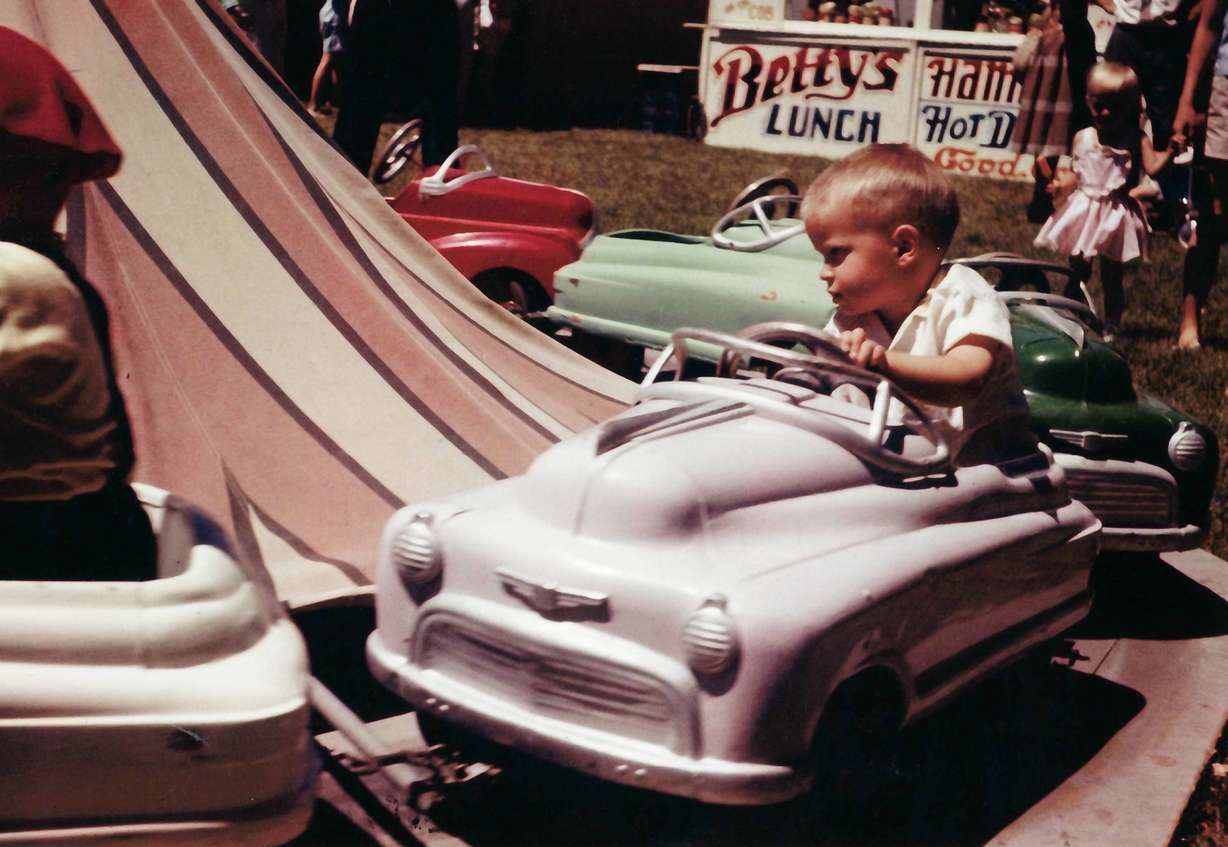
1965: Fighting for civil rights. Robert Freed, Lagoon's respected owner and operator, was well known for his civil rights advocacy. During a time of segregation, Freed fought hard for years to allow all races to enjoy Lagoon without restrictions. According to a KSL Radio article, he finally won the battle in 1965, allowing all visitors to enjoy the park together.
1966: The peak of rock-and-roll. What began in the 50s crescendoed in the mid-60s when Lagoon's status as a premier rock and roll venue reached a fever pitch. Rock icons like the Rolling Stones, Jimi Hendrix, Janis Joplin, The Doors and the Beach Boys all drew huge crowds through the years. The Beach Boys played at Lagoon so often that they even wrote a song about the area titled "Salt Lake City."
1968: The Broadway era begins. In the summer of 1968 Lagoon opened its Opera House where hit plays like "A Funny Thing Happened on the Way to the Forum" and "Joseph and the Amazing Technicolor Dreamcoat" were performed.
1976: Pioneer Village. Somewhat of a hidden gem, few places in Utah bring pioneer history to life quite like Pioneer Village at Lagoon. This area of the park is full of authentic pioneer and Victorian-era buildings and treasures, including a first-rate clock shop and gun collection.
1983: A Colossus of roller coasters. Still a favorite today, Colossus the Fire Dragon opened in 1983 to widespread acclaim. Its high speed, drop and 65-foot double loop inversions were so popular, that it was voted one of the top 10 roller coasters in the country that year, according to Lagoon.
1989: Hello, Lagoon-A-Beach. Lagoon truly offers all-day fun, and that's especially the case with its waterpark, Lagoon-A-Beach. Replacing the original swimming pool, the slides, tubes and winding lazy river are an excellent way to escape the heat this summer.
2007: A Wicked good year. Lagoon is well-loved because of its roller coasters, and 2007's Wicked was an excellent addition to the lineup. No matter how many times you ride it, the 55 mph launch up the 110-foot tower will never get old.
2015: Lagoon's biggest thrill yet. Topping many visitors' lists of favorite rides is the 208-foot-tall Cannibal. It's thrilling. This one-of-a-kind coaster drops riders into 70 miles per hour speeds, all while offering a loop, corkscrews and plenty of high-speed turns — not to mention the initial 116-degree inverted dive.
2021: Fire strikes again.Lagoonhistory.com stated In December of 2021 an electrical fire broke out and burned the Carousel Candy shop and the 44-year-old Scamper bumper car ride for children. Thankfully the fire wasn't more widespread and renovations are nearly complete on the rebuild.
2023: Primordial arrives after eight years. After a lot of hype, Lagoon's expensive and technologically advanced 3D interactive coaster, Primordial, opened near the tail end of the 2023 season after nearly eight years of planning and construction. It's since proven to be a hit and was named 2024's best new theme park attraction by USA Today.
Starting on the Great Salt Lake and moving to Farmington, Lagoon's growth throughout the years is nothing short of remarkable. After many closures, fires and setbacks over the years, the legend and love of Lagoon is still strong for Utahns.
14 unique baby names that can only be from Utah
Utahns place a strong focus on families, and many parents want their children to stand out with a special name. Here are 14 baby names that just scream "Utah."Siegfried & Jensen
Since 1990, Siegfried & Jensen have been helping the people of Utah and surrounding states who have suffered needless injuries and death caused by car accidents, truck accidents, medical malpractice, defective drugs, dog bites, wrongful death, and other types of personal injury.
The firm is committed to keeping Utah families and communities safe by ensuring wrongdoers are held accountable. While a lawsuit isn't always the answer when it is needed having someone on your side can mean the difference between declaring bankruptcy and rebuilding your life and moving forward, especially when you're up against an insurance company or a hospital.
Siegfried & Jensen has represented more than 35,000 clients and recovered over $1.2 billion for them.