'%3e%3cpath%20d='M34.1406%205.85938C30.3906%202.10547%2025.3047%200%2020%200C14.6953%200%209.60938%202.10547%205.85938%205.85938C2.10938%209.61328%200%2014.6953%200%2020C0%2025.3047%202.10547%2030.3906%205.85938%2034.1406C9.61328%2037.8906%2014.6953%2040%2020%2040C25.3047%2040%2030.3906%2037.8945%2034.1406%2034.1406C37.8906%2030.3906%2040%2025.3047%2040%2020C40%2014.6953%2037.8945%209.60938%2034.1406%205.85938ZM37.0117%2023.543H31.1602V13.5391H27.6328V19.9414C28.1211%2020.6914%2028.3711%2021.582%2028.3711%2022.5625V22.625C28.3711%2023.668%2028.1172%2024.6055%2027.6328%2025.4297V26.6094H36.082C33.4883%2032.9375%2027.2891%2037.3789%2020.0039%2037.3789C10.3711%2037.3789%202.62109%2029.6289%202.62109%2020C2.62109%2010.3711%2010.3711%202.62109%2020%202.62109C29.6289%202.62109%2037.3789%2010.3711%2037.3789%2020C37.3789%2021.1484%2037.2617%2022.2656%2037.0508%2023.3477C37.0391%2023.4141%2037.0234%2023.4766%2037.0117%2023.543Z'%20fill='white'/%3e%3cpath%20d='M22.3086%2018.5352C20.4336%2018.125%2019.9531%2017.8398%2019.9766%2017.1836V17.1406C19.9766%2016.6992%2020.3477%2016.2148%2021.4023%2016.2148C22.582%2016.2148%2023.8867%2016.6797%2025.0781%2017.4766L26.8516%2015.0195C25.4453%2013.8906%2023.707%2013.3398%2021.5547%2013.3398C18.5195%2013.3398%2016.4375%2015%2016.4063%2017.4766V17.5352C16.3633%2020.2617%2018.5859%2020.9805%2021.293%2021.6016C23.0391%2021.9766%2023.5703%2022.3164%2023.5703%2022.9609L23.5469%2022.9766C23.5469%2023.3906%2023.2578%2023.7031%2022.7852%2023.8359C22.5742%2023.9062%2022.1289%2023.9727%2021.5156%2023.9727C20.7617%2023.9727%2019.7539%2023.8633%2018.6328%2023.4844C18.0898%2023.2891%2017.4727%2023.0039%2016.8047%2022.6133L20.1406%2026.625C20.2813%2026.6602%2021.0977%2026.8516%2021.7734%2026.8516C25.0039%2026.8516%2027.0859%2025.2461%2027.1094%2022.6328V22.5703C27.1602%2020.1133%2025.2148%2019.1719%2022.3086%2018.5352Z'%20fill='white'/%3e%3cpath%20d='M5.24219%2013.5664V26.6133H8.75391V23.7578L10.2969%2021.9531L14.2031%2026.6133H18.3867L12.3555%2019.5195L17.4023%2013.5664H13.4531L8.75391%2019.0586V13.5664H5.24219Z'%20fill='white'/%3e%3c/g%3e%3cdefs%3e%3cclipPath%20id='clip0_97_2430'%3e%3crect%20width='40'%20height='40'%20fill='white'/%3e%3c/clipPath%3e%3c/defs%3e%3c/svg%3e)


Estimated read time: 3-4 minutes
This archived news story is available only for your personal, non-commercial use. Information in the story may be outdated or superseded by additional information. Reading or replaying the story in its archived form does not constitute a republication of the story.
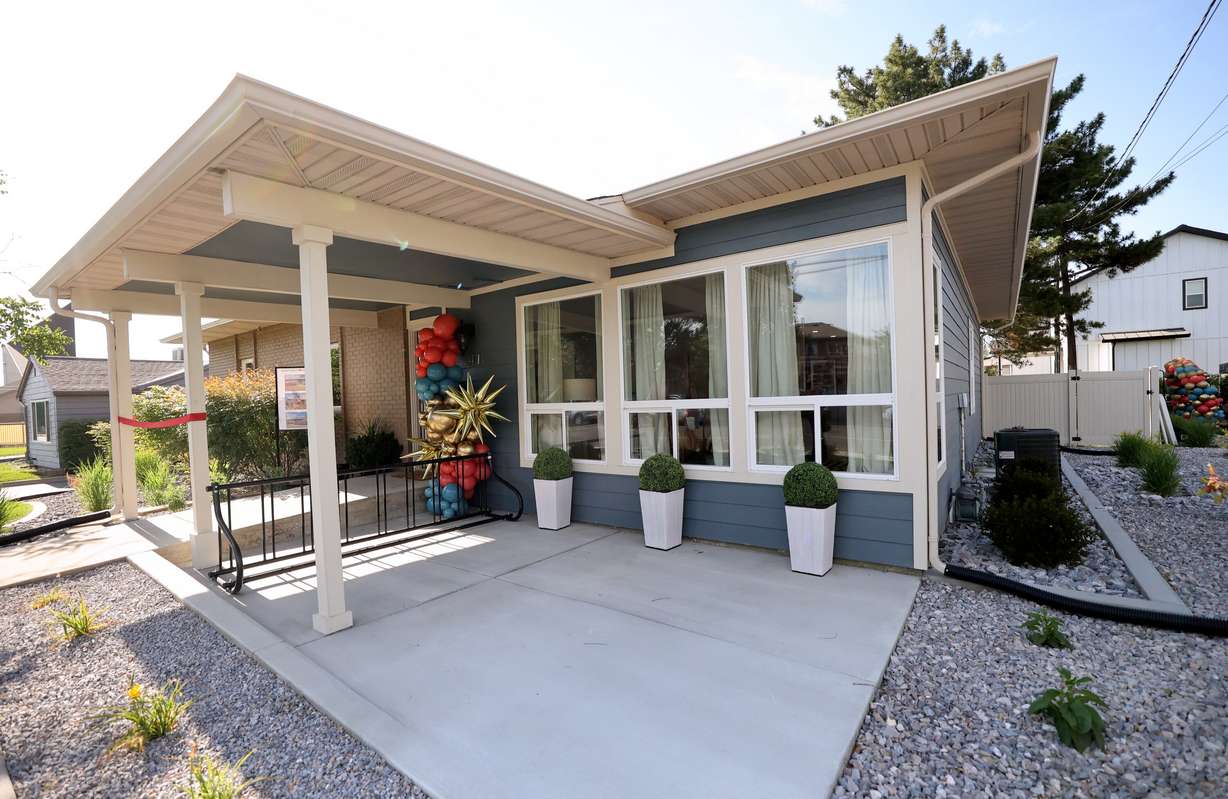
SANDY — The house is handsome but not remarkable from the outside: a beige brick rambler with a basement off 700 East and 8600 South in Sandy. There's a perfectly manicured yard and a small patio off the front porch where sits a heavy black bike rack.
The place screams this is not just a house, but a home.
That sense is even stronger in one of the well-appointed bedrooms, where a laughing handful of girls are jumping up and down and two of them actually squeal a little with excitement as they open closets and peer into the pristine shower before exploring the rest of the place.
Look closer, though, and see they're not girls, but young women. And this place matters to them because housing is not something everyone takes for granted.
The excited young adults are members of the Youth Action Board of Salt Lake County Youth Services, a panel dedicated to combating homelessness among young people. For some of them, homelessness is a memory, not a theory. They were there, couch surfing, maybe sleeping in their cars, moving between shelters and friends' houses in search of a roof and safety in precarious times.
This home is one such haven, part of the Milestone Transitional Living Program operated by Salt Lake County Youth Services. This particular place was just renovated and is featured in the 2024 Salt Lake Parade of Homes.
On July 15, state and local government officials, faith leaders, volunteers, formerly homeless adults, contractors, builders and other donors invited the community to see what big hearts, corporate and private donors, and a lot of hard work can do for an especially vulnerable community. About a third of the program's young adults aged out of foster care. All of them lacked the traditional crucial supports that help teens transition to independent adulthood.
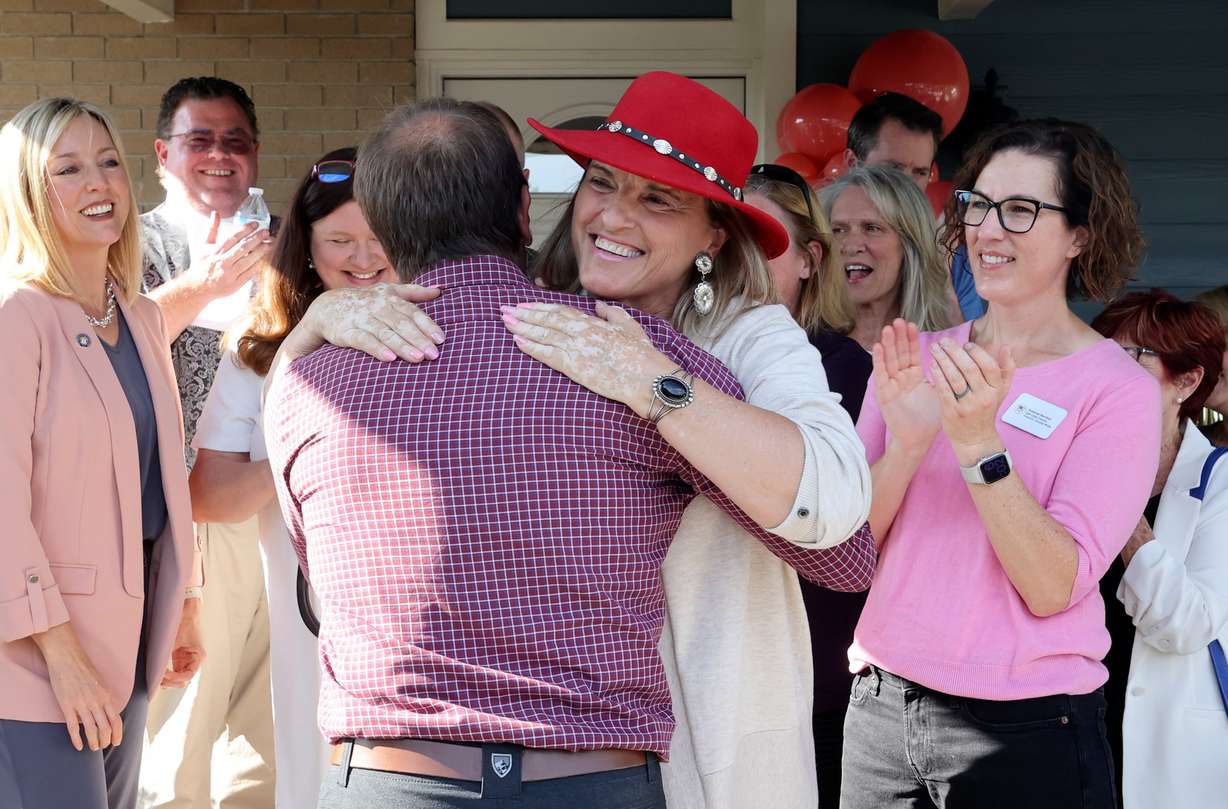
An elaborate array of red, blue and gold balloons, some shaped like spiky stars, adorned the front entrance Monday. The place was decked out for a celebration.
Reaching milestones
Good Shepherd Lutheran Church, right next door, owns three of the Milestone transitional houses, all located in Sandy. A West Valley City fourplex is master leased with Housing Connect. And Salt Lake Rotary just bought an apartment building in Millcreek that is now part of the program, each location operated by Salt Lake County Youth Services. Between them, 36 young adults who were homeless or on the brink are safe and sheltered.
Still, the houses are not shelters, but rather the core of a self-sufficiency program for adults 18 to 21 who were homeless or frighteningly close. Young adults who will commit to clean, sober living and obey a set of basic rules like no substance use including smoking, no weapons, no overnight visitors, no pets. They also commit to finding jobs or being in school.
The program especially emphasizes the importance of having a high school diploma or its equivalent, said Mina Koplin, section manager at Salt Lake County Youth Services.
They can stay for up to 18 months while they learn skills, finish high school if they've dropped out, and find work or enroll in further education, including vocational training. In Koplin's words, it's about helping a vulnerable population "get capable." Each house has a house manager. Youth Services provides case managers with small caseloads so they can provide real help. Skill-building includes essentials including cooking and managing one's money.
There is no free ride here. The formerly homeless or vulnerable adults pay a $50 deposit and then a monthly fee that starts at $200 and goes up $50 every three months as they find work and become more capable of managing that cost.
The program boasts an 83% success rate, defined as being housed and having jobs or being in school. A program study of all 300 who have transitioned through the program in the past found that two years after leaving, 80% still met those criteria.

Most recent Utah homelessness stories
Related topics
 Lois M. Collins






