
Estimated read time: 5-6 minutes
This archived news story is available only for your personal, non-commercial use. Information in the story may be outdated or superseded by additional information. Reading or replaying the story in its archived form does not constitute a republication of the story.
OGDEN — Being ready for kindergarten used to mean a child turned 5 by a certain date. But, as the stakes and expectations get higher, teachers are encountering some surprising behaviors.
"Kindergarten is not what it used to be," said kindergarten teacher Sarah Birch. "If they're not at a certain level, then they're already behind."
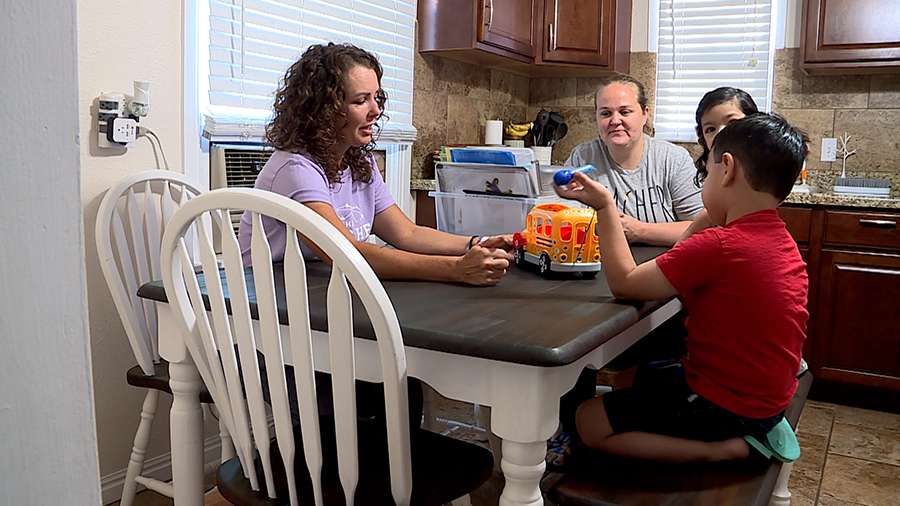
That is why she and fellow teacher Kacee Weaver spent the summer making house calls in Ogden, sitting at kitchen tables counting and rhyming words with incoming students.
"Children are just not prepared to be coming to school. And when you're starting at a deficit, making up all those skills can be real difficult," Weaver said.
Education research shows an 88% probability a child would remain a poor reader at the end of fourth grade if they are a poor reader at the end of first grade. That means kindergarten is a narrow window that sets the stage for student success.
Kindergarten proficiency tests, called KEEP, show 59% of Utah students were ready for school in 2021-22. The numbers vary dramatically, depending on demographics. For example, readiness drops to 45% for students who are racial minorities or are economically disadvantaged.
In about a third of Utah school districts, fewer than ½ of all students are really ready when they start school.
"It's a bit of a tragedy," Weaver said.
Beyond academics
It isn't just academic subjects where kids are lacking. Kindergarten teachers in several districts say they're encountering behaviors they've never seen.
"We're seeing some aggression, but we're also seeing students who aren't potty trained," said Jennifer Millett, kindergarten specialist with the Granite School District.
Schools are having to bring in diaper-changing stations and parents to help.
"I'm seeing a lot more defiance. When you ask a child to sit down ... they'll just tell you, 'No,'" added another kindergarten teacher, Holly Duke.
"We've had a lot more kids coming to kindergarten who aren't able to take care of basic needs. We've had parents request that we feed kids for them," Erin Butler, who also teaches kindergarten, said.
Teachers attribute some of these behaviors to the COVID-19 closures, which kept kids at home and away from social settings during their formative years.
"It is important for those kids to be in the classroom. They love and need those social skills, they need to be working together with each other," pre-school instructor Michelle Ortiz said.
"I think it's just the pandemic — a lot of these kids have not interacted with each other," said kindergarten teacher Naiby Chan.
Teachers are working hard to instill those missing skills where they can. In addition to Ogden's house call pilot program, Salt Lake School District holds extended summer pre-school programs for children who need a boost.
"They need to be reading and writing by the time they leave kindergarten, so they can be ready (to learn more)," Butler said.
Expansion of full-day kindergarten
Another development that has put kindergarten in the spotlight in Utah is a new focus on full-day kindergarten.
Last year, Utah legislators passed funding mechanisms to expand full-day kindergarten for anyone who wants it. Now, 65% of Utah families have access to full-day, compared to just 34% of parents last year.
"It's a game changer," Millett said.
New data from the Utah State Board of Education show schools that already had full-day kindergarten, the percentage of kids leaving their grades "proficient" was 10% higher for kids in full-day versus half-day schooling.
"Ten percent might not sound like many but, looking at the big picture — the number of students that that represents, it definitely makes a difference for those students and those families," said Jared Lisonbee, a preschool education specialist at the Utah State Board of Education.
At the same time, many districts are going to great lengths to help parents realize their power in preparing their own children for school.
"I feel like parents do, overall, want what's best for their children and sometimes they just don't know what's available," Duke said.
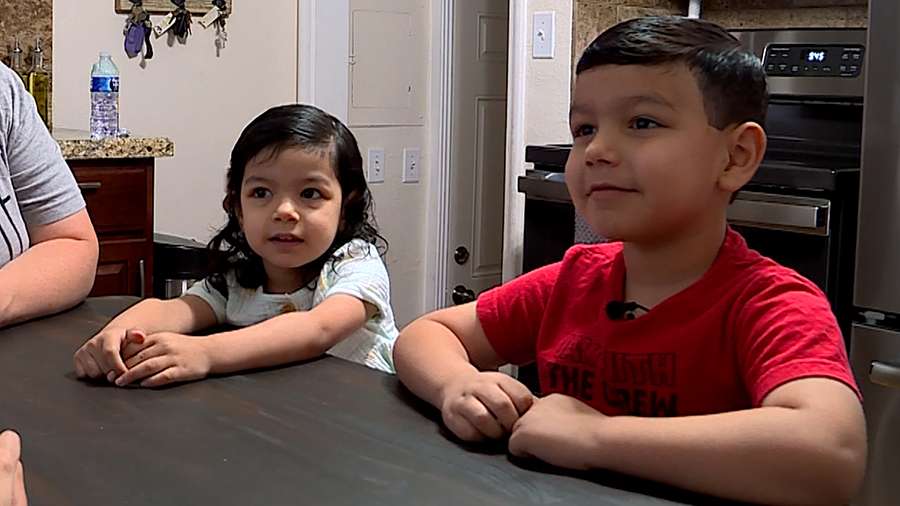
In Ogden, the house call program tries to bridge that gap. Over the summer, teachers worked with children like Cesar to recognize letters and numbers, while guiding his mom, Martha Avalos, to resources such as high-quality preschool and food programs.
By the end of the summer, Cesar made so much progress, teachers determined he could skip kindergarten and go directly to first grade.
"It has been a blessing to have them come and just be able to identify that my son was more advanced and was able to skip a grade. That's huge," Avalos said.
"I'm excited to go to school," says Cesar.
Resources for kindergarten readiness
The Utah State Board of Education and individual school districts have many resources for parents, including ways parents can help prepare their children for school.
In English:
In Spanish:
Utah Education Network also offers an early-learning online library, called Preschool Path.
And a Waterford School-created tool, Upstart, is a high-quality, at-home early learning program with free software, and support for families, to help kids learn how to read.