'%3e%3cpath%20d='M34.1406%205.85938C30.3906%202.10547%2025.3047%200%2020%200C14.6953%200%209.60938%202.10547%205.85938%205.85938C2.10938%209.61328%200%2014.6953%200%2020C0%2025.3047%202.10547%2030.3906%205.85938%2034.1406C9.61328%2037.8906%2014.6953%2040%2020%2040C25.3047%2040%2030.3906%2037.8945%2034.1406%2034.1406C37.8906%2030.3906%2040%2025.3047%2040%2020C40%2014.6953%2037.8945%209.60938%2034.1406%205.85938ZM37.0117%2023.543H31.1602V13.5391H27.6328V19.9414C28.1211%2020.6914%2028.3711%2021.582%2028.3711%2022.5625V22.625C28.3711%2023.668%2028.1172%2024.6055%2027.6328%2025.4297V26.6094H36.082C33.4883%2032.9375%2027.2891%2037.3789%2020.0039%2037.3789C10.3711%2037.3789%202.62109%2029.6289%202.62109%2020C2.62109%2010.3711%2010.3711%202.62109%2020%202.62109C29.6289%202.62109%2037.3789%2010.3711%2037.3789%2020C37.3789%2021.1484%2037.2617%2022.2656%2037.0508%2023.3477C37.0391%2023.4141%2037.0234%2023.4766%2037.0117%2023.543Z'%20fill='white'/%3e%3cpath%20d='M22.3086%2018.5352C20.4336%2018.125%2019.9531%2017.8398%2019.9766%2017.1836V17.1406C19.9766%2016.6992%2020.3477%2016.2148%2021.4023%2016.2148C22.582%2016.2148%2023.8867%2016.6797%2025.0781%2017.4766L26.8516%2015.0195C25.4453%2013.8906%2023.707%2013.3398%2021.5547%2013.3398C18.5195%2013.3398%2016.4375%2015%2016.4063%2017.4766V17.5352C16.3633%2020.2617%2018.5859%2020.9805%2021.293%2021.6016C23.0391%2021.9766%2023.5703%2022.3164%2023.5703%2022.9609L23.5469%2022.9766C23.5469%2023.3906%2023.2578%2023.7031%2022.7852%2023.8359C22.5742%2023.9062%2022.1289%2023.9727%2021.5156%2023.9727C20.7617%2023.9727%2019.7539%2023.8633%2018.6328%2023.4844C18.0898%2023.2891%2017.4727%2023.0039%2016.8047%2022.6133L20.1406%2026.625C20.2813%2026.6602%2021.0977%2026.8516%2021.7734%2026.8516C25.0039%2026.8516%2027.0859%2025.2461%2027.1094%2022.6328V22.5703C27.1602%2020.1133%2025.2148%2019.1719%2022.3086%2018.5352Z'%20fill='white'/%3e%3cpath%20d='M5.24219%2013.5664V26.6133H8.75391V23.7578L10.2969%2021.9531L14.2031%2026.6133H18.3867L12.3555%2019.5195L17.4023%2013.5664H13.4531L8.75391%2019.0586V13.5664H5.24219Z'%20fill='white'/%3e%3c/g%3e%3cdefs%3e%3cclipPath%20id='clip0_97_2430'%3e%3crect%20width='40'%20height='40'%20fill='white'/%3e%3c/clipPath%3e%3c/defs%3e%3c/svg%3e)


Estimated read time: 6-7 minutes
This archived news story is available only for your personal, non-commercial use. Information in the story may be outdated or superseded by additional information. Reading or replaying the story in its archived form does not constitute a republication of the story.
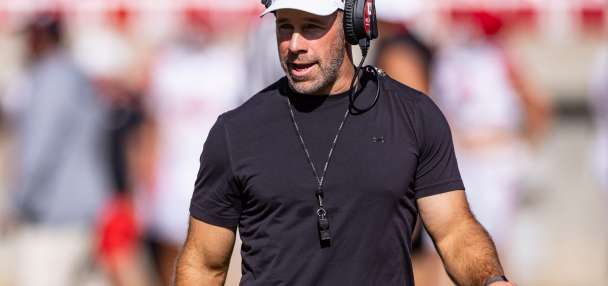
SALT LAKE CITY — As the latest round of conference realignment knocked on the University of Arizona's door, then Arizona State, and ultimately the University of Utah, there wasn't much Runnin' Utes head coach Craig Smith could do about it.
Better yet, Smith wasn't even in the country as things really started ramping two weeks ago. He and his team had left the United States on the evening of July 25 for a four-game foreign tour of Barcelona, San Sebastian and Madrid.
On Aug. 4, two days after completing a four-game sweep of the trip, Utah boarded a flight to John F. Kennedy International Airport in New York City, where it then connected home to Salt Lake City. In the middle of that excursion, things went haywire.
"We left Madrid on Aug. 4, and we're somewhere over the Atlantic in the Pac-12," Smith said tongue-in-cheek to KSL.com during a recent phone interview. "Then, somewhere over the Atlantic, we were in the Big 12."
Technically, the news broke once the team was on the connecting flight over the United States, but Smith's point remains. Utah left home as a member of one conference, and returned home as the member of another — although the Utes will not begin play in the Big 12 until the 2024-25 season.
Smith may have been out of the country while all of this was happening, but he was not completely out of the loop, to which he credits Utah athletic director Mark Harlan.
One day early in the trip, Utah took the 200-mile ride east from Barcelona to Zaragoza, played a game, drove back, and had dinner before Smith and Harlan spoke on the phone. At that particular point, Utah leaving the Pac-12 was not imminent, nor was the conference's effective collapse.
"It was just more of a talk or a conversation," Smith said. "He expressed that they were working and that things were really fluid, but nobody knew exactly what was going to happen. I didn't lose any sleep over the conference realignment. We had a good talk on that day, but there was nothing specific."
Smith and Harlan spoke again once Utah had a destination and the dust had settled some. That conversation wasn't exactly filled with great detail about what had gone on or what was coming, but for his own program's purposes, Smith already knew what was coming.
From now until the end of the 2023-24 season, there is a fine line Smith and his staff must walk. On one side, there is a season to play as a member of the Pac-12, but the other side of that line is the fact that Utah will be stepping up a weight class or two into the Big 12, which has solidified itself in recent years as one of the two or three best conferences in the country.
Furthermore, the current conference claims two of the last three national champions (Baylor, 2021; Kansas, 2022), and is set to add another power program this academic year in the University of Houston. As a member of the AAC, the Cougars went to the Final Four in 2021, and have advanced to at least the second weekend of the NCAA Tournament in each of the last four seasons.
Neither Smith, nor assistant coaches Chris Burgess, DeMarlo Slocum or Tramel Barnes, have experience on a Big 12 staff to at least gauge the lay of the land, so there is long-term work to be done while the short-term zeroes in on the coming season.
"We do have to be proactive and be a step ahead of the game, and we're going to learn some things about that league, studying each team, looking at different styles of play, and what are maybe some commonalities of successful teams in that league," Smith said. "We had a long staff meeting (Tuesday), and that was one of the agenda items that we talked about, reaching out to friends in the Big 12 and just kind of getting the scoop, so to speak — very broad questions, open ended — but we're going to put our best foot forward that way and learn, because it's a quick turnaround.
"We've got to be prepared for that in every facet, from what those teams look like, to what winning teams look like. What does team travel look like? What do budgets look like? Just anything and everything that you could possibly think of, we're gonna move forward doing it."
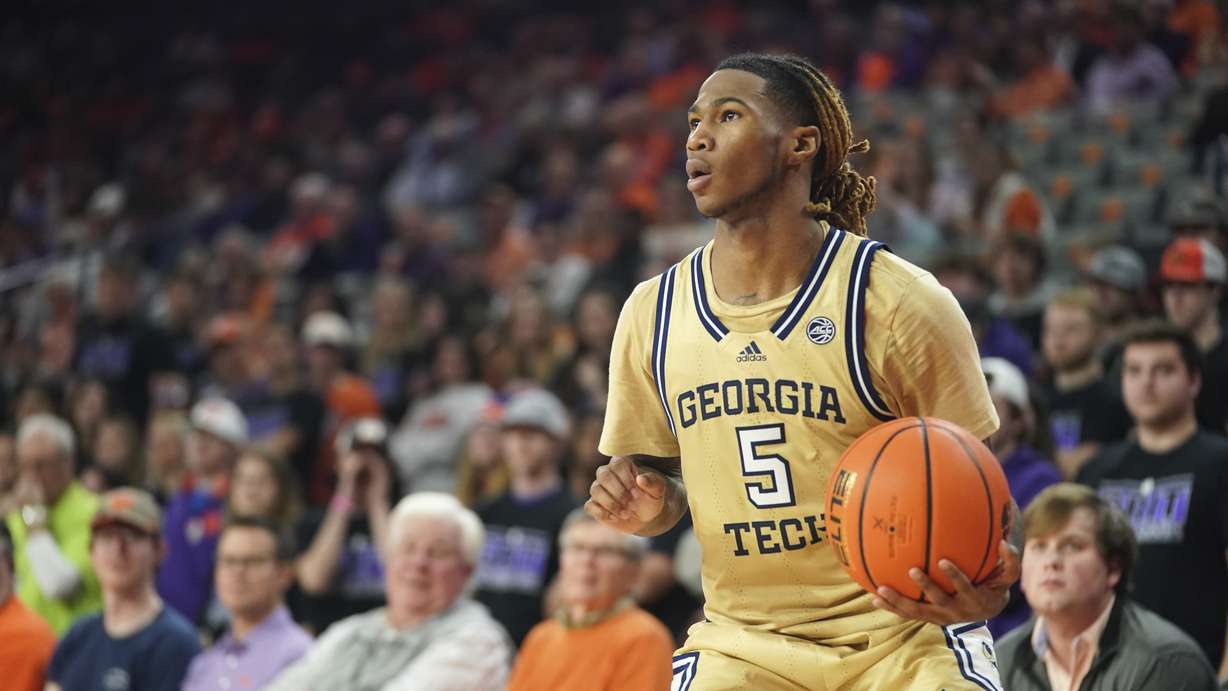
Will Deivon Smith get a transfer waiver?
Smith, a former top-100 recruit who spent his freshman year at Mississippi State and the last two at Georgia Tech, could be a boon for Utah's backcourt this season, but there is no guarantee he will play.
As a two-time undergraduate transfer, Smith needs an eligibility waiver from the NCAA to play. The problem is, the college athletics governing body has made clear that it intends to tighten the criteria for such a waiver, making it appear unlikely to happen in the majority of cases.
Two such cases this month in the world of college football received national attention after Florida State defensive tackle Darrell Jackson Jr. and North Carolina receiver Devontez Walker had waivers rejected. Walker's case specifically had people in an uproar as he began his career at FCS North Carolina Central in 2020, but never played there after both the school's fall and spring seasons were canceled in the face of the COVID-19 pandemic.
"Our compliance people, they've gone to work on this thing and they're doing everything that they can and, obviously, in a lot of aspects of college athletics, football sets the standard or the trend," Craig Smith said. "The NCAA has been steadfast in saying that they're going to tighten this thing up in a major way, so I don't really have a feeling one way or the other as to whether we'll get it or not.
"Obviously, by nature, you hope for the best and expect the worst. I do think he's got a good case, but it's just hard to know."
Graduate transfers are eligible immediately, while the NCAA Board of Governors in April 2021 ratified one-time transfer legislation, allowing for immediate eligibility for an undergraduate transferring for the first time.
As a third-year sophomore last season at Georgia Tech, Smith averaged 8.0 points, 5.6 rebounds and 3.7 assists in 24 games, including 13 starts. If eligible, Smith figures to play rotation minutes at the point, if not push Rollie Worster for his starting spot.
Worster has started in 60 of the 61 games he has played in for Utah since following Craig Smith from Utah State via the NCAA Transfer Portal following the 2020-21 season.

Most recent Utah Utes stories
Related topics
 Josh Newman