'%3e%3cpath%20d='M34.1406%205.85938C30.3906%202.10547%2025.3047%200%2020%200C14.6953%200%209.60938%202.10547%205.85938%205.85938C2.10938%209.61328%200%2014.6953%200%2020C0%2025.3047%202.10547%2030.3906%205.85938%2034.1406C9.61328%2037.8906%2014.6953%2040%2020%2040C25.3047%2040%2030.3906%2037.8945%2034.1406%2034.1406C37.8906%2030.3906%2040%2025.3047%2040%2020C40%2014.6953%2037.8945%209.60938%2034.1406%205.85938ZM37.0117%2023.543H31.1602V13.5391H27.6328V19.9414C28.1211%2020.6914%2028.3711%2021.582%2028.3711%2022.5625V22.625C28.3711%2023.668%2028.1172%2024.6055%2027.6328%2025.4297V26.6094H36.082C33.4883%2032.9375%2027.2891%2037.3789%2020.0039%2037.3789C10.3711%2037.3789%202.62109%2029.6289%202.62109%2020C2.62109%2010.3711%2010.3711%202.62109%2020%202.62109C29.6289%202.62109%2037.3789%2010.3711%2037.3789%2020C37.3789%2021.1484%2037.2617%2022.2656%2037.0508%2023.3477C37.0391%2023.4141%2037.0234%2023.4766%2037.0117%2023.543Z'%20fill='white'/%3e%3cpath%20d='M22.3086%2018.5352C20.4336%2018.125%2019.9531%2017.8398%2019.9766%2017.1836V17.1406C19.9766%2016.6992%2020.3477%2016.2148%2021.4023%2016.2148C22.582%2016.2148%2023.8867%2016.6797%2025.0781%2017.4766L26.8516%2015.0195C25.4453%2013.8906%2023.707%2013.3398%2021.5547%2013.3398C18.5195%2013.3398%2016.4375%2015%2016.4063%2017.4766V17.5352C16.3633%2020.2617%2018.5859%2020.9805%2021.293%2021.6016C23.0391%2021.9766%2023.5703%2022.3164%2023.5703%2022.9609L23.5469%2022.9766C23.5469%2023.3906%2023.2578%2023.7031%2022.7852%2023.8359C22.5742%2023.9062%2022.1289%2023.9727%2021.5156%2023.9727C20.7617%2023.9727%2019.7539%2023.8633%2018.6328%2023.4844C18.0898%2023.2891%2017.4727%2023.0039%2016.8047%2022.6133L20.1406%2026.625C20.2813%2026.6602%2021.0977%2026.8516%2021.7734%2026.8516C25.0039%2026.8516%2027.0859%2025.2461%2027.1094%2022.6328V22.5703C27.1602%2020.1133%2025.2148%2019.1719%2022.3086%2018.5352Z'%20fill='white'/%3e%3cpath%20d='M5.24219%2013.5664V26.6133H8.75391V23.7578L10.2969%2021.9531L14.2031%2026.6133H18.3867L12.3555%2019.5195L17.4023%2013.5664H13.4531L8.75391%2019.0586V13.5664H5.24219Z'%20fill='white'/%3e%3c/g%3e%3cdefs%3e%3cclipPath%20id='clip0_97_2430'%3e%3crect%20width='40'%20height='40'%20fill='white'/%3e%3c/clipPath%3e%3c/defs%3e%3c/svg%3e)


Estimated read time: 4-5 minutes
This archived news story is available only for your personal, non-commercial use. Information in the story may be outdated or superseded by additional information. Reading or replaying the story in its archived form does not constitute a republication of the story.
OGDEN — Watching the inaugural U.S. Adaptive Open golf tournament last July, Max Togisala turned to his dad and said, "I'm going to play in that next year."
Togisala, 19, had been recovering for about five months from a Feb. 19, 2022 ski accident that left him paralyzed from the waist down. He told his dad he didn't know how he would get to the U.S. Adaptive Open, but he was going to "make sure" that he did.
One year later, on July 12, Togisala won the seated category of the second annual U.S. Adaptive Open in Pinehurst, North Carolina. He also placed 17th overall, after having entered the tournament with the goal of making at least the top 20.
Togisala also broke a world record for the lowest-scoring round of golf for a seated player in tournament play. On the second day of the three-day tournament, he shot 2-under-par, breaking the record by nine strokes.
"You can't tell this kid he can't do something, because he'll clearly prove you wrong," Togisala's mom, Amber Togisala, said. "It was just so neat to see him fulfill this dream of his."
Togisala has golfed since he was 3 years old. Before his accident, he had a scholarship to play for Central Wyoming College in Riverton, Wyoming. But even when he was in the hospital recovering from his accident, he made a goal to get back into competitive golfing.
He's proving that anybody can play the game of golf.
– Amber Togisala, Max Togisala's mom
To prepare for the Adaptive Open, however, required a different strategy than before. He spent the year before the tournament practicing and gathering equipment, including a VertaCat golf chair that raises him to a standing position to allow him to complete a full swing.
Togisala also had to qualify himself by competing in other tournaments. He won a competition in California and placed second at another in Arizona prior to qualifying for the U.S. Adaptive Open.
Competing at the Pinehurst Resort & Country Club, Togisala found it inspiring to connect with others with disabilities.
"It was really inspiring to see that they can swing with one arm or swing with one leg, and still play really well and still compete against everyone else," he said.
Amber Togisala noticed how supportive the golfers were of each other, saying the other golfers "shared (Max's) joy with him."

"To be there was very humbling and just such an amazing experience to be able to witness these incredible athletes with all different sorts of disabilities," Amber Togisala said. "It was an experience we'll never forget."
In the same way that watching the inaugural tournament helped Togisala set a goal for the future, he hopes that others with disabilities will be inspired by seeing him and other golfers compete in the U.S. Adaptive Open.
"They can show other people that are maybe in the hospital right now going through a life-changing experience, that their life is not over, that they can still continue to grow and live a happy life," Togisala said.
This tournament was only the beginning of Togisala achieving his dreams. His mom said that immediately afterward, he was already making goals for next year's U.S. Alternative Open: Place in the top 10, and maybe even win the whole tournament.
"He's so self-driven and so motivated and determined," Amber Togisala said.
In the 17 months since his accident, Togisala has gotten involved in other wheelchair sports, including lacrosse, basketball, pickleball, pingpong and biking. He also started skiing again in January using a mono-ski, with the goal of returning to complete the run in Sun Valley where he had his accident, exactly one year after the fact.
On Feb. 19, he accomplished that goal.
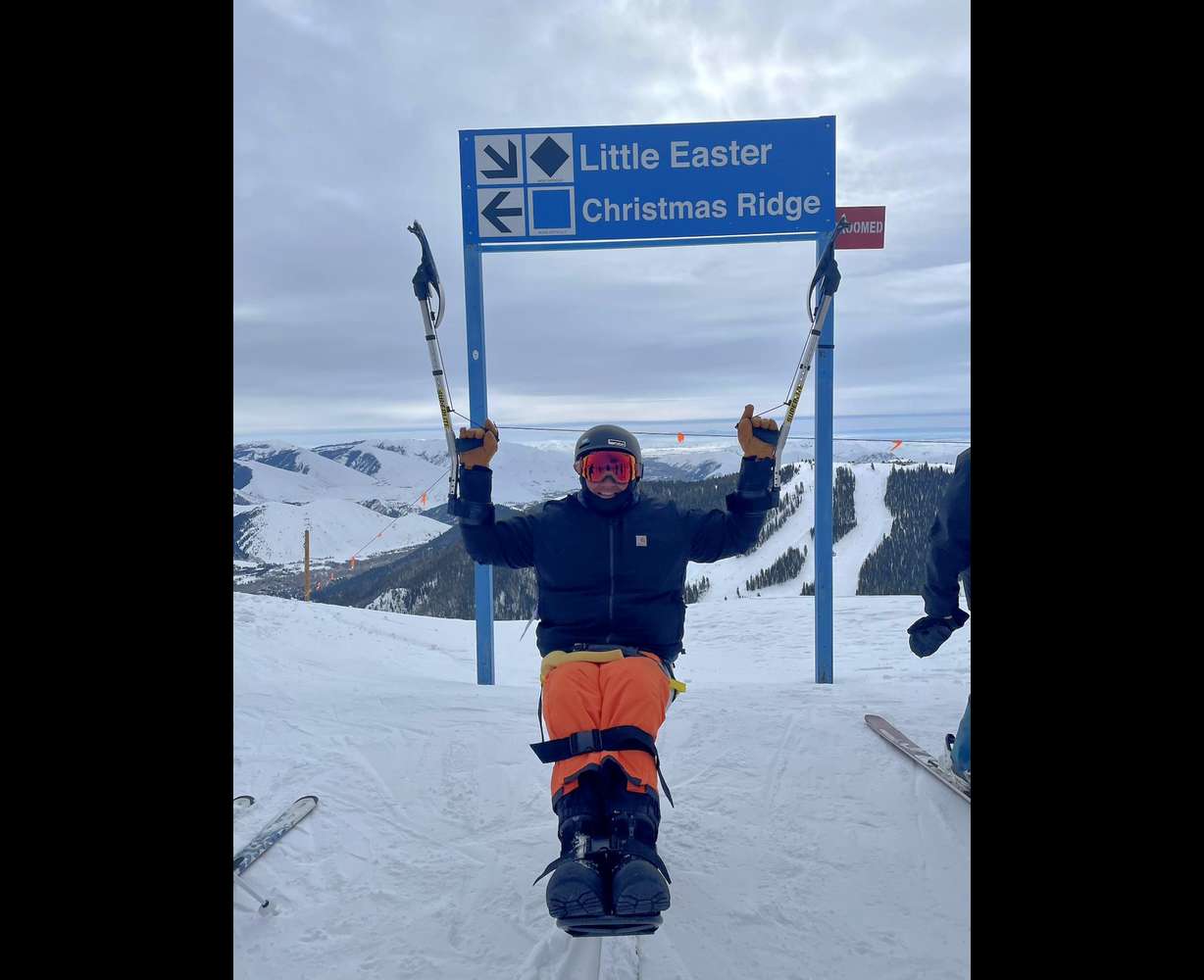
"I find a lot of joy in it," Togisala said of staying active. "I didn't know there were these adaptive programs for people with disabilities and people in wheelchairs, but it's like a family out there, and it's very welcoming."
Togisala just finished his first year at Weber State University studying professional sales. He also teaches golf to kids at the Tee Box, an indoor golf-training facility in Uintah, Weber County.
"I love seeing people learn how to play golf, and I love that I am still able to do that even from a wheelchair," Togisala said.
He still hopes to golf competitively in college, as well as help bring more adaptive play options to Utah, where options are limited for disabled golfers. He hopes to meet with the Utah Golf Association soon to make arrangements to compete in able-bodied local tournaments.
"He's proving that anybody can play the game of golf," Amber Togisala said. "There's so many life lessons to be learned on a golf course."
She made the analogy that when a golfer has a bad hole, they simply move on to the next one.
"We can't sit and dwell on the hard things," she said. "You make the best of every situation."

Photos
Related stories
Most recent Weber County stories
Related topics
 Gabrielle Shiozawa