'%3e%3cpath%20d='M34.1406%205.85938C30.3906%202.10547%2025.3047%200%2020%200C14.6953%200%209.60938%202.10547%205.85938%205.85938C2.10938%209.61328%200%2014.6953%200%2020C0%2025.3047%202.10547%2030.3906%205.85938%2034.1406C9.61328%2037.8906%2014.6953%2040%2020%2040C25.3047%2040%2030.3906%2037.8945%2034.1406%2034.1406C37.8906%2030.3906%2040%2025.3047%2040%2020C40%2014.6953%2037.8945%209.60938%2034.1406%205.85938ZM37.0117%2023.543H31.1602V13.5391H27.6328V19.9414C28.1211%2020.6914%2028.3711%2021.582%2028.3711%2022.5625V22.625C28.3711%2023.668%2028.1172%2024.6055%2027.6328%2025.4297V26.6094H36.082C33.4883%2032.9375%2027.2891%2037.3789%2020.0039%2037.3789C10.3711%2037.3789%202.62109%2029.6289%202.62109%2020C2.62109%2010.3711%2010.3711%202.62109%2020%202.62109C29.6289%202.62109%2037.3789%2010.3711%2037.3789%2020C37.3789%2021.1484%2037.2617%2022.2656%2037.0508%2023.3477C37.0391%2023.4141%2037.0234%2023.4766%2037.0117%2023.543Z'%20fill='white'/%3e%3cpath%20d='M22.3086%2018.5352C20.4336%2018.125%2019.9531%2017.8398%2019.9766%2017.1836V17.1406C19.9766%2016.6992%2020.3477%2016.2148%2021.4023%2016.2148C22.582%2016.2148%2023.8867%2016.6797%2025.0781%2017.4766L26.8516%2015.0195C25.4453%2013.8906%2023.707%2013.3398%2021.5547%2013.3398C18.5195%2013.3398%2016.4375%2015%2016.4063%2017.4766V17.5352C16.3633%2020.2617%2018.5859%2020.9805%2021.293%2021.6016C23.0391%2021.9766%2023.5703%2022.3164%2023.5703%2022.9609L23.5469%2022.9766C23.5469%2023.3906%2023.2578%2023.7031%2022.7852%2023.8359C22.5742%2023.9062%2022.1289%2023.9727%2021.5156%2023.9727C20.7617%2023.9727%2019.7539%2023.8633%2018.6328%2023.4844C18.0898%2023.2891%2017.4727%2023.0039%2016.8047%2022.6133L20.1406%2026.625C20.2813%2026.6602%2021.0977%2026.8516%2021.7734%2026.8516C25.0039%2026.8516%2027.0859%2025.2461%2027.1094%2022.6328V22.5703C27.1602%2020.1133%2025.2148%2019.1719%2022.3086%2018.5352Z'%20fill='white'/%3e%3cpath%20d='M5.24219%2013.5664V26.6133H8.75391V23.7578L10.2969%2021.9531L14.2031%2026.6133H18.3867L12.3555%2019.5195L17.4023%2013.5664H13.4531L8.75391%2019.0586V13.5664H5.24219Z'%20fill='white'/%3e%3c/g%3e%3cdefs%3e%3cclipPath%20id='clip0_97_2430'%3e%3crect%20width='40'%20height='40'%20fill='white'/%3e%3c/clipPath%3e%3c/defs%3e%3c/svg%3e)


Estimated read time: 5-6 minutes
This archived news story is available only for your personal, non-commercial use. Information in the story may be outdated or superseded by additional information. Reading or replaying the story in its archived form does not constitute a republication of the story.
ARLINGTON, Texas — One year ago, incoming Big 12 commissioner Brett Yormark caused a stir across college football when he proclaimed his conference "open for business."
The conference wasn't closed when Yormark addressed the media for the second time Wednesday afternoon at AT&T Stadium in Arlington, Texas. But with a full year to build on, the former Nets CEO and one-time college sports novice was much more eager to build on the league's "celebrations" as it swelled to 14 teams for the first time.
That includes celebrating the addition of BYU, Cincinnati, Houston and UCF as incoming members; celebrating the continuing eight Big 12 members; and adding an additional celebration for Texas and Oklahoma as the SEC-bound departing parties move south and east.
"We plan to use this season to celebrate the incredible strength we have going forward," Yormark said, "with our eight continuing members, our four incoming members, and also to celebrate the impact that Texas and Oklahoma have had on this conference since the beginning."
Donning a New York-style suit while speaking on a tech-savvy stage in front of a "refreshed" Big 12 logo, Yormark pitched his league as a cross between East Coast business and America's heartland, as well as a bastion of Gen Z populace that intends to get "hipper, younger, cooler" by the year.
But he also emphasized the conference's accomplishments the past 365 days, including TCU's run to the College Football Playoff national championship game; an 80% postseason bowl rate that ranks among the nation's best; four national team titles, including Oklahoma softball's third straight championship; and 23 individual national championships won by Big 12 athletes.
There was also a little bit of news, like the conference extending its agreement with AT&T Stadium to host the Big 12 championship game through 2030.
But as is usually the case in college football, the focus quickly turned to the future; and in the Big 12, the future has often involved conference expansion.
Yormark has been public about his desire to turn the league into a coast-to-coast conference, to add a "fourth time zone" to a conference whose roots encompassed nothing outside the Central time zone.
The commissioner reportedly eyed teams from UConn in the northeast to San Diego State on the west coast to Gonzaga as a basketball-first power. Memphis, Colorado, Utah, Arizona and Arizona State are also among the schools the Big 12 has reportedly chased.
But once the Sooners and Longhorns send the conference back to a mathematically accurate 12 teams again, is a move back to 14 — or beyond — in the cards?
Not necessarily.
"We have a plan for expansion," Yormark said. "I'm not going to really address today; you can ask me, but I am not going to address it. But we have a plan, and hopefully we can execute it sooner rather than later.
"But I love the composition of the conference right now. … If we stay at 12, we're perfectly fine with that."
Yormark previously quipped that he has said he "liked 14" as a round number of his league. But he admitted Wednesday that he's "backpedaled" a bit on the supposition. That's not to say the Big 12 won't eventually go back to 14 — or maybe even 16 teams, or beyond.
"We're not chasing a number," he said. "If and when the opportunity presents itself to stay at 14, we'll pursue. … It's all about creating value for membership."
Value can come in many ways, of course.
In television terms, it might mean an increased payout for media partners for additional teams. ESPN reportedly has a pro-rata clause to boost the league's contract for any Power Five programs that might be added over the life of the deal.
But money — and specifically, television — may not be the only reason to expand. And Power Five additions might not be the only candidate, a veiled reference to San Diego State and Connecticut that sit outside the current Power Five structure.

"We have great collaboration with the board and our athletic directors," Yormark said. "There are lots of different routes you could take to expansion. ... If they create value and align with our goals and objectives, it's a conversation that we'll consider having."
As far as geography is concerned, a fourth time zone would open the Big 12 up to additional broadcast windows. As the only Power Five conference that claims teams in three time zones, unlocking that fourth is still a goal for Yormark.
But so, too, was expanding to a top-10 market nationally like Houston and planting a flag in the state of Florida at Orlando-based UCF.
The Cougars, in particular, were an especially essential addition to the league that formed from a merger of the old Big 8 and Southwest conferences — a merger that left Houston away from its old SWC colleagues for the first time in 21 years and left to wander in Conference USA and the American Athletic Conference since 1996.
BYU apologists have tried to find an entry into college football's power structure for over 30 years. Houston had one, and found it ripped away.
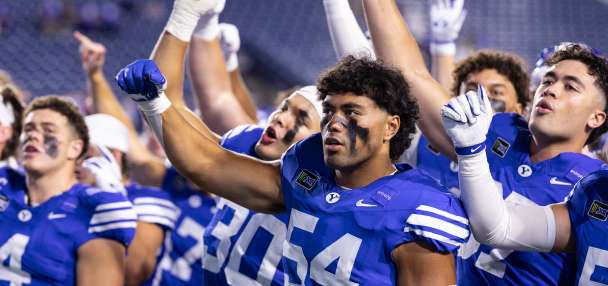
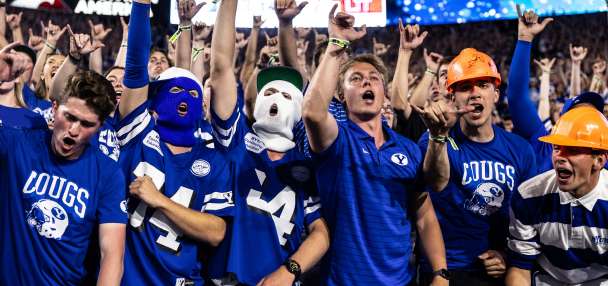
But both programs are key building blocks in the future Big 12. BYU provides a strong foothold in the West, Yormark said, and any additional westward expansion is likely to keep the Cougars high in mind.
"We love BYU, and we're excited about them coming to the conference," Yormark said. "They bring a different time zone, which is great for us. But right now, there is nothing on the board (to expand further). We'll explore all options, but until this point, we love our current makeup."