'%3e%3cpath%20d='M34.1406%205.85938C30.3906%202.10547%2025.3047%200%2020%200C14.6953%200%209.60938%202.10547%205.85938%205.85938C2.10938%209.61328%200%2014.6953%200%2020C0%2025.3047%202.10547%2030.3906%205.85938%2034.1406C9.61328%2037.8906%2014.6953%2040%2020%2040C25.3047%2040%2030.3906%2037.8945%2034.1406%2034.1406C37.8906%2030.3906%2040%2025.3047%2040%2020C40%2014.6953%2037.8945%209.60938%2034.1406%205.85938ZM37.0117%2023.543H31.1602V13.5391H27.6328V19.9414C28.1211%2020.6914%2028.3711%2021.582%2028.3711%2022.5625V22.625C28.3711%2023.668%2028.1172%2024.6055%2027.6328%2025.4297V26.6094H36.082C33.4883%2032.9375%2027.2891%2037.3789%2020.0039%2037.3789C10.3711%2037.3789%202.62109%2029.6289%202.62109%2020C2.62109%2010.3711%2010.3711%202.62109%2020%202.62109C29.6289%202.62109%2037.3789%2010.3711%2037.3789%2020C37.3789%2021.1484%2037.2617%2022.2656%2037.0508%2023.3477C37.0391%2023.4141%2037.0234%2023.4766%2037.0117%2023.543Z'%20fill='white'/%3e%3cpath%20d='M22.3086%2018.5352C20.4336%2018.125%2019.9531%2017.8398%2019.9766%2017.1836V17.1406C19.9766%2016.6992%2020.3477%2016.2148%2021.4023%2016.2148C22.582%2016.2148%2023.8867%2016.6797%2025.0781%2017.4766L26.8516%2015.0195C25.4453%2013.8906%2023.707%2013.3398%2021.5547%2013.3398C18.5195%2013.3398%2016.4375%2015%2016.4063%2017.4766V17.5352C16.3633%2020.2617%2018.5859%2020.9805%2021.293%2021.6016C23.0391%2021.9766%2023.5703%2022.3164%2023.5703%2022.9609L23.5469%2022.9766C23.5469%2023.3906%2023.2578%2023.7031%2022.7852%2023.8359C22.5742%2023.9062%2022.1289%2023.9727%2021.5156%2023.9727C20.7617%2023.9727%2019.7539%2023.8633%2018.6328%2023.4844C18.0898%2023.2891%2017.4727%2023.0039%2016.8047%2022.6133L20.1406%2026.625C20.2813%2026.6602%2021.0977%2026.8516%2021.7734%2026.8516C25.0039%2026.8516%2027.0859%2025.2461%2027.1094%2022.6328V22.5703C27.1602%2020.1133%2025.2148%2019.1719%2022.3086%2018.5352Z'%20fill='white'/%3e%3cpath%20d='M5.24219%2013.5664V26.6133H8.75391V23.7578L10.2969%2021.9531L14.2031%2026.6133H18.3867L12.3555%2019.5195L17.4023%2013.5664H13.4531L8.75391%2019.0586V13.5664H5.24219Z'%20fill='white'/%3e%3c/g%3e%3cdefs%3e%3cclipPath%20id='clip0_97_2430'%3e%3crect%20width='40'%20height='40'%20fill='white'/%3e%3c/clipPath%3e%3c/defs%3e%3c/svg%3e)





Estimated read time: 4-5 minutes
This archived news story is available only for your personal, non-commercial use. Information in the story may be outdated or superseded by additional information. Reading or replaying the story in its archived form does not constitute a republication of the story.
BRIGHAM CITY — For some, it's been more than three decades since they last saw the "I" painted on the hillside in Brigham City.
Yet, on a Friday in late May, 26 or so graduates gathered at their old stomping grounds.
The students from the Intermountain Indian School came from across the country — Arizona, Washington, California and Montana, just to name a few states.
The difference in graduating class wasn't the only unique thing about this high school reunion.
At least eight different tribes were represented as they burned cedar and prayed for loved ones on the school grounds.
"I always tell people that this was the best four years of my life here," said Cris Polk, from the Yakama Tribe of Washington.
The Intermountain Indian School is where Polk met her best friend, who also attended the reunion.
"We were 15 years old, and we met in Mr. Iverson's science class," Polk said. "We've been best friends ever since."
Andy Merrick, chairman of the Omaha Tribe of Nebraska, met his wife at Intermountain Indian School. They celebrated their 43rd anniversary this year.
"I love this place. I love the mountains and the memories I have here," Merrick said. "One of the best times of my life was out here in Utah."
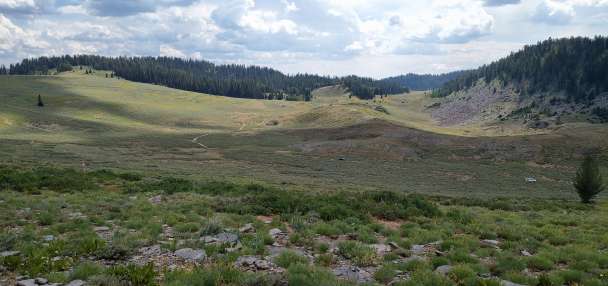
Many of these former students come back every year to help paint the "I" overlooking Brigham City.
Others like Greg Rolette traveled more than 700 miles to attend for the first time.
"Not only to paint the 'I,' but to relive the times when I used to go to school here and to meet up with former students," said Rolette, from the Shawnee Tribe of Oklahoma. "Some people I have not seen since 1981."
The "I" stands for Intermountain Indian School, which at one time was the largest boarding school for Native Americans in the United States.
Following World War II, President Harry Truman declared the Navajo Reservation in a state of emergency due to population growth on the reservation and not enough land to support them.
Certain tribal leaders called for federal support to help educate their kids.
The Intermountain Indian School opened in 1950.
Lorina Antonio was just 10 years old when she was bused to the school from the Navajo Reservation.
"I didn't know where I was at," said Antonio. "I really had a hard time the first few weeks and month or so."
Nationwide, reports of abuse and mistreatment at boarding schools and the practice of relocating Native Americans to predominantly white communities have been scrutinized.
But these students said that was not their experience. "I came here because I wanted to come here," said Merrick.
For Polk, the Intermountain Indian School gave her opportunities she didn't have in public school.
Polk said she tried out for the cheerleading team and was denied because she was a Native American. "When I came here, I got to do everything," said Polk.
From student council, to cheerleading, to enjoying going to the theater, Polk said Intermountain Indian School provided a new life for her.
It's been 56 years since Antonio first started attending the Intermountain Indian School. She was raised on the Navajo Reservation and her father was an alcoholic.
Antonio said the school created a life for her she never thought she could have.
"Without Intermountain, I wouldn't have a home in Salt Lake City," said Antonio. "I wouldn't have an education. I wouldn't be responsible."
Her gratitude inspired Antonio to put together yearly reunions and to repaint the "I" on the hill.
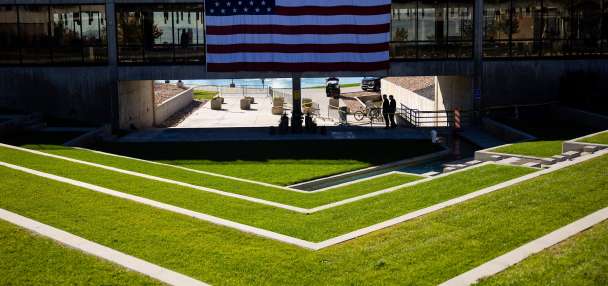
In 1984, Intermountain Indian School permanently closed. The old campus is now owned, in part, by Utah State University.
The students' yearly hike to the "I" is not just about repainting a letter on a mountain. For Antonio it's about remembering and helping the surrounding community recognize the people who once lived on their land.
"I want them to remember the Native American people are still alive," said Antonio. "The 'I' is not just for Intermountain. It stands for American Indians, too."
The "I" is one of the last remnants of the school that once brought around 2,000 students to its campus.
"When we were younger, all of that was just the yellow buildings," said Polk, looking at the campus from the mountain. "And now, there's nothing there anymore. It breaks your heart."
Painting the "I" keeps the traditions and memories alive, something they hope to do for years to come.
"We want our 'I' to stay," said Antonio. "Even if I don't do it, I want the next generation to keep painting it."
Those interested in helping can email Antonio at lorina.antonio@yahoo.com.