'%3e%3cpath%20d='M34.1406%205.85938C30.3906%202.10547%2025.3047%200%2020%200C14.6953%200%209.60938%202.10547%205.85938%205.85938C2.10938%209.61328%200%2014.6953%200%2020C0%2025.3047%202.10547%2030.3906%205.85938%2034.1406C9.61328%2037.8906%2014.6953%2040%2020%2040C25.3047%2040%2030.3906%2037.8945%2034.1406%2034.1406C37.8906%2030.3906%2040%2025.3047%2040%2020C40%2014.6953%2037.8945%209.60938%2034.1406%205.85938ZM37.0117%2023.543H31.1602V13.5391H27.6328V19.9414C28.1211%2020.6914%2028.3711%2021.582%2028.3711%2022.5625V22.625C28.3711%2023.668%2028.1172%2024.6055%2027.6328%2025.4297V26.6094H36.082C33.4883%2032.9375%2027.2891%2037.3789%2020.0039%2037.3789C10.3711%2037.3789%202.62109%2029.6289%202.62109%2020C2.62109%2010.3711%2010.3711%202.62109%2020%202.62109C29.6289%202.62109%2037.3789%2010.3711%2037.3789%2020C37.3789%2021.1484%2037.2617%2022.2656%2037.0508%2023.3477C37.0391%2023.4141%2037.0234%2023.4766%2037.0117%2023.543Z'%20fill='white'/%3e%3cpath%20d='M22.3086%2018.5352C20.4336%2018.125%2019.9531%2017.8398%2019.9766%2017.1836V17.1406C19.9766%2016.6992%2020.3477%2016.2148%2021.4023%2016.2148C22.582%2016.2148%2023.8867%2016.6797%2025.0781%2017.4766L26.8516%2015.0195C25.4453%2013.8906%2023.707%2013.3398%2021.5547%2013.3398C18.5195%2013.3398%2016.4375%2015%2016.4063%2017.4766V17.5352C16.3633%2020.2617%2018.5859%2020.9805%2021.293%2021.6016C23.0391%2021.9766%2023.5703%2022.3164%2023.5703%2022.9609L23.5469%2022.9766C23.5469%2023.3906%2023.2578%2023.7031%2022.7852%2023.8359C22.5742%2023.9062%2022.1289%2023.9727%2021.5156%2023.9727C20.7617%2023.9727%2019.7539%2023.8633%2018.6328%2023.4844C18.0898%2023.2891%2017.4727%2023.0039%2016.8047%2022.6133L20.1406%2026.625C20.2813%2026.6602%2021.0977%2026.8516%2021.7734%2026.8516C25.0039%2026.8516%2027.0859%2025.2461%2027.1094%2022.6328V22.5703C27.1602%2020.1133%2025.2148%2019.1719%2022.3086%2018.5352Z'%20fill='white'/%3e%3cpath%20d='M5.24219%2013.5664V26.6133H8.75391V23.7578L10.2969%2021.9531L14.2031%2026.6133H18.3867L12.3555%2019.5195L17.4023%2013.5664H13.4531L8.75391%2019.0586V13.5664H5.24219Z'%20fill='white'/%3e%3c/g%3e%3cdefs%3e%3cclipPath%20id='clip0_97_2430'%3e%3crect%20width='40'%20height='40'%20fill='white'/%3e%3c/clipPath%3e%3c/defs%3e%3c/svg%3e)




Estimated read time: 5-6 minutes
This archived news story is available only for your personal, non-commercial use. Information in the story may be outdated or superseded by additional information. Reading or replaying the story in its archived form does not constitute a republication of the story.
SALT LAKE CITY — Veteran free safety R.J. Hubert didn't miss the moment.
As Utah's defensive players filed into the locker room beneath the recently rebuilt south end zone of Rice-Eccles Stadium at halftime against USC, Hubert went up to each member of the defense and told each player: "Hey, man, we've got to stay together; we've got to stay together and we've got to play together," according to cornerback Clark Phillips III.
The collective group, which had struggled up to that point to contain a nimble and elusive Caleb Williams, the USC quarterback and Heisman hopeful, were resolved to find a way to stop the Trojans offense in a must-win game to maintain conference title aspirations. To that point, USC had 364 total yards of offense and didn't show signs of slowing down.
It was a familiar script seen at least two other times previously in the season when the defense couldn't get off the field, and the two other times the game ended in a loss.
Something had to change.
Hubert's message was a rallying cry of sorts to the team to dig a little deeper, try a little harder and stay together for the final 30 minutes of game time.
On the field, Hubert is the last line of defense and one that has a clear view of the other 21 players at any given moment. He sees the team's successes and failures better than most. And with that clarity and veteran leadership, Hubert made his voice known to help his team get better.
His message was a reinforcement of what head coach Kyle Whittingham and defensive coordinator Morgan Scalley reminded the team of in their preparation for the second half: "Hey, you're good players. I mean, start playing like you're capable of," Whittingham said.
Halftime speeches can go a long way to help teams, but Whittingham said it was Scalley that "simplified things just a little" and "changed up the calls" to help the defense not think too much while on the field. It all led to the defense holding USC to two scores and 192 yards of total offense in the second half — nearly half the production of the first half.
Whether it was the halftime speech or a simplification in the defensive schemes, it seemed to work, and it gave Utah's offense the runway it needed to make a thrilling comeback that was capped off by quarterback Cam Rising running it in for the go-ahead 2-point conversion and the win.
For at least one week against one of the best team's in the Pac-12, Utah's defense found a way to stop the bleeding — or at least limit the harm.
It's too early to know if the simplification of the defensive schemes will help Utah for the remainder of the season, but it's a step in the right direction. Whittingham said before the team's bye last week that there was going to be an emphasis made to review where the team is "deficient" on defense and work to get the players ready for the remainder of the season.
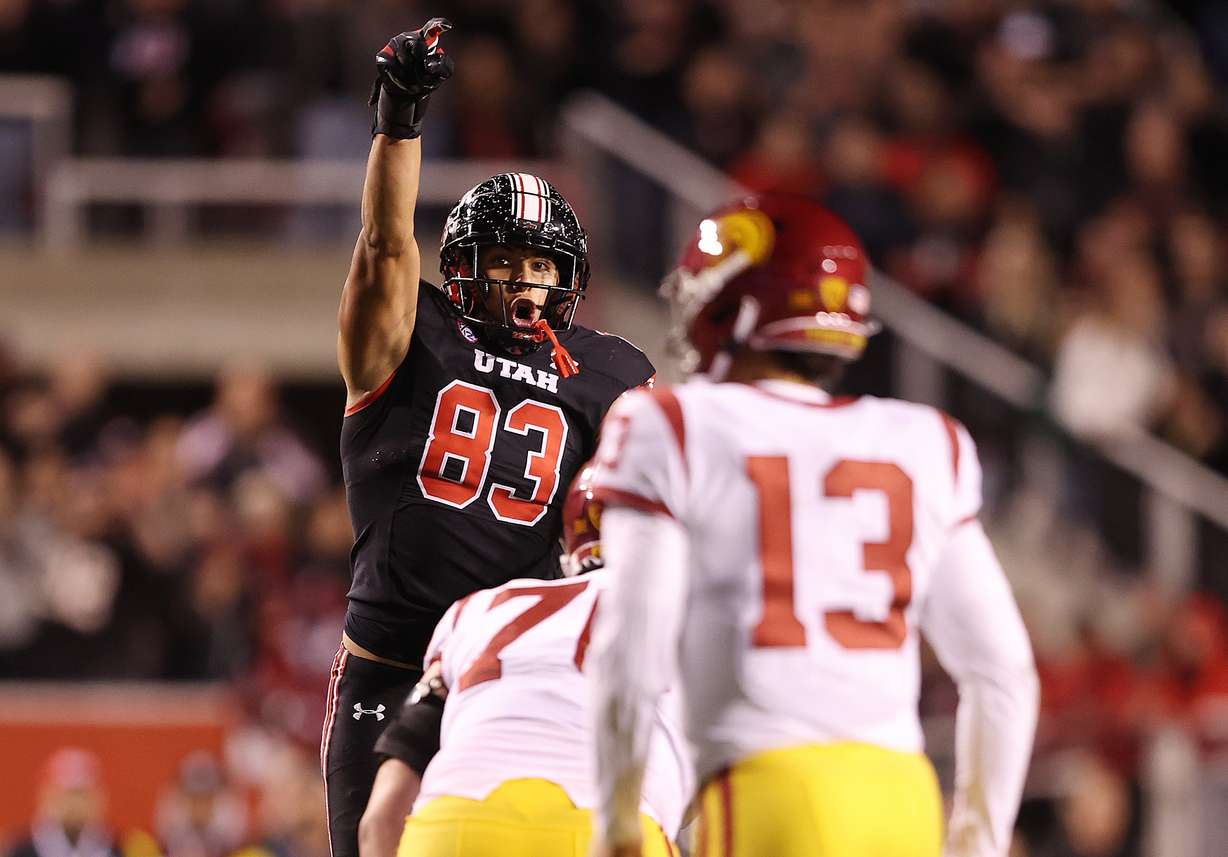
On Monday, Whittingham said there was more "streamlining" made to the defense, "but not a ton."
"It's not like it was overly complicated," Whittingham said of the defensive schemes. "If you look at the second half, we played much better in the second half than we did the first half last week, and so there's no panic or reason to have wholesale changes. But if we can play more like we did in the second half rather than the first, that's the objective."
Sophomore defensive end Jonah Elliss said Monday that the playbook going into Thursday night's game against Washington State is "a little bit smaller," but it's still a matter of guys on defense doing their right assignments and staying within the schemes called.
"It was just simple (missed assignments) that we had gone over and we'd gotten right in practice, and it was just in the heat of the moment we were messing it up," Elliss said. "But I mean, that's something that comes with your years playing. We're a pretty young defense, so that's something we'll definitely be able to pick up, but, yeah, we shortened the playbook a little bit this week and I think it's gonna be really good."
"Everyone just need to do their jobs," defensive lineman Junior Tafuna said. "I think that's the biggest thing that stood out was just if one person doesn't do their job, obviously, it's gonna be downfall on both sides of the ball. And that's kind of been what it's been. But we've been practicing and working, and it's only up from here."
So while it's been a bit of a simplification of the defensive playbook, it's been a complete team buy-in to focus on everyone doing their job as the team grows together.
Utah's defense will be tested again Thursday against a Washington State offense that Whittingham described as similarly structured to that of USC. He said he doesn't know if that's "a good thing or bad thing for us, but there's a lot of carryover."
"They're really going to try and get us tired and then try and get big plays off of that," Elliss said. "So we've just got to be really conditioned and mentally prepared for that. But that's really what it is, they're a fast-paced offense; and just like USC, we're gonna have to keep tempo with that, which is something we've struggled with, so we've been working on a lot in practice."
"They're both tempo teams, and so I think this will definitely — playing USC definitely helps us defensively just because how fast they move on the ball, how fast they get their plays on," Tafuna said. "So I think USC really just prepped us for this game, so it's been awesome."
The question is whether Utah's defense will look like the first half or the second half; the team is hoping for the latter.