'%3e%3cpath%20d='M34.1406%205.85938C30.3906%202.10547%2025.3047%200%2020%200C14.6953%200%209.60938%202.10547%205.85938%205.85938C2.10938%209.61328%200%2014.6953%200%2020C0%2025.3047%202.10547%2030.3906%205.85938%2034.1406C9.61328%2037.8906%2014.6953%2040%2020%2040C25.3047%2040%2030.3906%2037.8945%2034.1406%2034.1406C37.8906%2030.3906%2040%2025.3047%2040%2020C40%2014.6953%2037.8945%209.60938%2034.1406%205.85938ZM37.0117%2023.543H31.1602V13.5391H27.6328V19.9414C28.1211%2020.6914%2028.3711%2021.582%2028.3711%2022.5625V22.625C28.3711%2023.668%2028.1172%2024.6055%2027.6328%2025.4297V26.6094H36.082C33.4883%2032.9375%2027.2891%2037.3789%2020.0039%2037.3789C10.3711%2037.3789%202.62109%2029.6289%202.62109%2020C2.62109%2010.3711%2010.3711%202.62109%2020%202.62109C29.6289%202.62109%2037.3789%2010.3711%2037.3789%2020C37.3789%2021.1484%2037.2617%2022.2656%2037.0508%2023.3477C37.0391%2023.4141%2037.0234%2023.4766%2037.0117%2023.543Z'%20fill='white'/%3e%3cpath%20d='M22.3086%2018.5352C20.4336%2018.125%2019.9531%2017.8398%2019.9766%2017.1836V17.1406C19.9766%2016.6992%2020.3477%2016.2148%2021.4023%2016.2148C22.582%2016.2148%2023.8867%2016.6797%2025.0781%2017.4766L26.8516%2015.0195C25.4453%2013.8906%2023.707%2013.3398%2021.5547%2013.3398C18.5195%2013.3398%2016.4375%2015%2016.4063%2017.4766V17.5352C16.3633%2020.2617%2018.5859%2020.9805%2021.293%2021.6016C23.0391%2021.9766%2023.5703%2022.3164%2023.5703%2022.9609L23.5469%2022.9766C23.5469%2023.3906%2023.2578%2023.7031%2022.7852%2023.8359C22.5742%2023.9062%2022.1289%2023.9727%2021.5156%2023.9727C20.7617%2023.9727%2019.7539%2023.8633%2018.6328%2023.4844C18.0898%2023.2891%2017.4727%2023.0039%2016.8047%2022.6133L20.1406%2026.625C20.2813%2026.6602%2021.0977%2026.8516%2021.7734%2026.8516C25.0039%2026.8516%2027.0859%2025.2461%2027.1094%2022.6328V22.5703C27.1602%2020.1133%2025.2148%2019.1719%2022.3086%2018.5352Z'%20fill='white'/%3e%3cpath%20d='M5.24219%2013.5664V26.6133H8.75391V23.7578L10.2969%2021.9531L14.2031%2026.6133H18.3867L12.3555%2019.5195L17.4023%2013.5664H13.4531L8.75391%2019.0586V13.5664H5.24219Z'%20fill='white'/%3e%3c/g%3e%3cdefs%3e%3cclipPath%20id='clip0_97_2430'%3e%3crect%20width='40'%20height='40'%20fill='white'/%3e%3c/clipPath%3e%3c/defs%3e%3c/svg%3e)


Estimated read time: 9-10 minutes
This archived news story is available only for your personal, non-commercial use. Information in the story may be outdated or superseded by additional information. Reading or replaying the story in its archived form does not constitute a republication of the story.
The severe drought over the last few years creates significant concerns for all landscape owners. One worry is that with water restrictions in place, your lawn is going to die.
If you are worried, you are not alone, but your worries may be unfounded. Grass is an amazing, resilient plant. There are literally hundreds of varieties of grasses, each with its own specific characteristics and suitability for various climate and soil conditions. They can be found in very cold and very hot environments all over the world and they have built-in defenses for survival when water gets scarce.
Grasses in a landscape are also resilient. Unfortunately, people can create weakness by their lawn treatment. Mowing too short, watering too much, over-fertilizing, etc., can all lead to various lawn problems when drought conditions are added to the mix. Of course, there are grubs and the damage they can cause as well
This article covers several things you should know about grasses, starting with the types of grass for lawns. Lawn or turf grasses come in two broad categories: cool-season and warm season. This categorization is based on the typical climate zones most suitable for their successful growth.
Northern Utah falls under a transition zone so both categories of grass will grow in this climate, but each has some characteristics that you should know about to be successful.
Warm-season grasses
Warm-season grasses are not commonly used in northern Utah as turf grass, but they do grow well here and use much less water than the cool season varieties. The downside to this group is that they don't green up in spring until nighttime temperatures reach the high 40-degree to low 50-degree range and then go dormant quickly in the fall when temperatures drop. They also have a different shade of green– a lighter, blue-green look that some people prefer less than the cool season types.
Many of the warm season grasses are short prairie grasses that can be left un-mowed for the whole summer and might grow less than 12 inches in height. When they are dormant, they do not compete with the early or late season weeds so a good weed control program must be used during the dormant times of late fall and early spring.
As far as water use, a well-established warm-season grass may only need water every 7-10 days in the heat of the summer in average loamy soil. They are great for water conservation even though they do have traits that cause many to hesitate to use them.
Cool-season grasses
Cool-season grasses are the most common for northern Utah and include Kentucky Bluegrasses, fescues, and ryes. They do their best and thrive in cooler temperatures between April to June and then again from September to November. In the heat of the summer, people force these cool-season grasses to stay green and active by regular irrigation and extra fertilization. These grasses will naturally slow down growth and will go into a dormant condition when there is excessive heat and drought stress or when it is too cold; however, some varieties keep a little green foliage even in the coldest months of the winter if there is snow cover.
In a typical summer with hot, dry conditions, cool-season grasses naturally want to slow their growth and this might result in the blades or foliage changing to a lighter green. If there is a lack of water the foliage will yellow and will dry out. When conditions become suitable again, they will grow from the crown and green up as they recover to full activity and active growth again.
With prolonged periods without any water, these grasses can die. However, with as little as one inch of water per month, the lawn usually survives, but it won't look good. Dry grasses with heavy traffic will take significant time to recover fully. This ability to go dormant is a physiological mechanism that keeps these grasses growing naturally in many places of the world where only natural precipitation is available and droughts are common.
With the current extreme drought conditions in Utah and throughout the west over the last few years if you notice your lawn turning yellow or straw-colored it is a sign that it is in stress and turning dormant because of heat and lack of water. Sometimes people make it worse because of how the lawn has been mowed and fertilized over the years.
Dormancy is completely reversible, and your lawn will green up when temperatures come back down to their preferred range and water becomes available, which usually happens in September for northern Utah. You should irrigate these grasses at least once a month to keep the crown and roots alive, but don't worry if it isn't greening up in hot and dry conditions. It will green up when the conditions are right.
If your soils are very sandy and don't hold water, then irrigation at least every couple of weeks might be necessary to keep it alive.
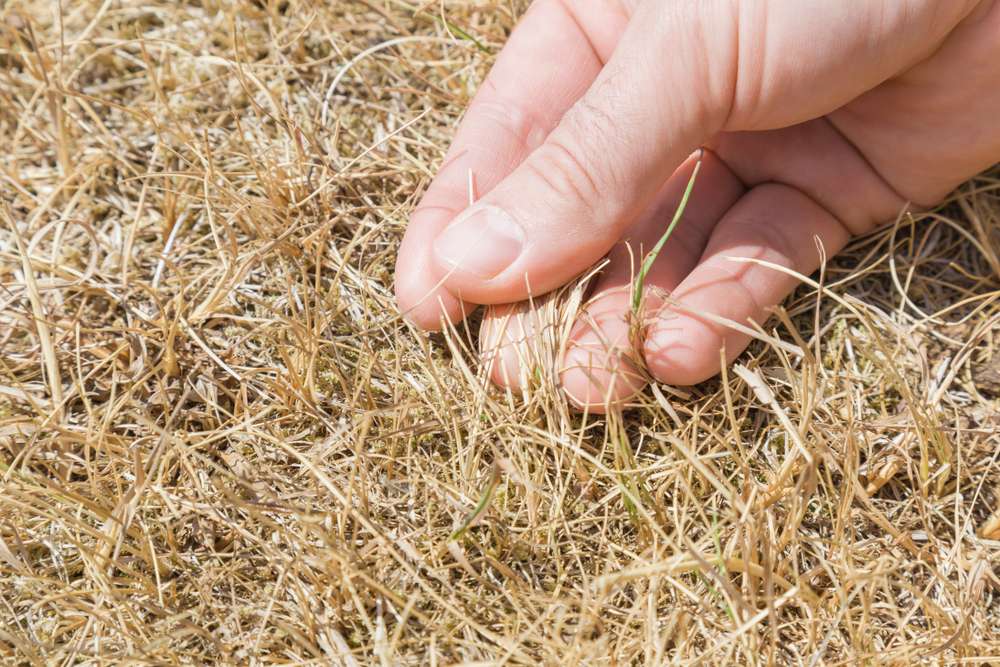
How do you know if your grass is dormant or dead?
Remember that dormant grass only needs about an inch of water a month to keep the roots and crown alive and in some studies, specific varieties survived on even less. Pull on the grass blades and try pulling up the plant. If it takes effort, the plant is alive and will come back. If the grass pulls out of the ground (not just breaks off) with no resistance and it seems to pull the roots with it, it could be dead but there could be other problems like grubs, mold, or other pathogens that are sometimes more common when lawns are stressed. So don't assume the problem is always lack of water.
If a patch of grass dies, it is generally the easiest and cheapest area of the landscape to replant and seed is readily available. During drought years when usage cuts are required, lawn watering is the first area that is asked to be cut.
If you must prioritize watering, prioritize trees and shrubs first with lawn being the lowest priority in any landscape. Do hand-watering or use drip irrigation for the trees and shrubs rather than using your sprinkler system. It will be more efficient and get water only where it is needed to keep your more expensive and well-established plants alive.
Consider for a moment the grasses you see in nature or along highways. Of course, these are not manicured and cut every week like your lawn and they may be different varieties, but if you notice, they are green in the spring, then they begin to go brown by mid-June (depending on the temperatures) and they remain brown the rest of the season until fall rains come. But every year the grasses are back, green, and full just like the year before. They didn't die, they just stopped growth and waited for more favorable conditions.
Lawn grasses are not quite as hardy because we cut and treat them differently, but they are tougher than many give them credit for. Your lawn will not die because you missed one irrigation event or because it started turning yellow or tan. Not all varieties are the same, but Kentucky Bluegrass, the predominant type used locally, can be quite hardy and tolerant of extended drought conditions when treated properly. Fescues are also very drought tolerant in our climate.
A good practice is to start mowing the grass a little taller which results in deeper root systems and increased drought tolerance. Water less frequently (meaning don't pamper the lawn) on normal years so that roots are forced deeper. And understanding how they grow and what they need can allow lawn owners to not expect lush, deep green in the summer when these grasses naturally want to slow down.
This ongoing drought is one for the record books with record low levels in lakes and reservoirs. Lawns are most likely going to survive even though they don't look good now and won't look good through the hottest, driest parts of summer. Following drought restriction recommendations will not create a lush, green appearance but it will keep grass alive and it will maintain adequate water supplies for important water uses including all potable use indoors, food production, other industry, etc.
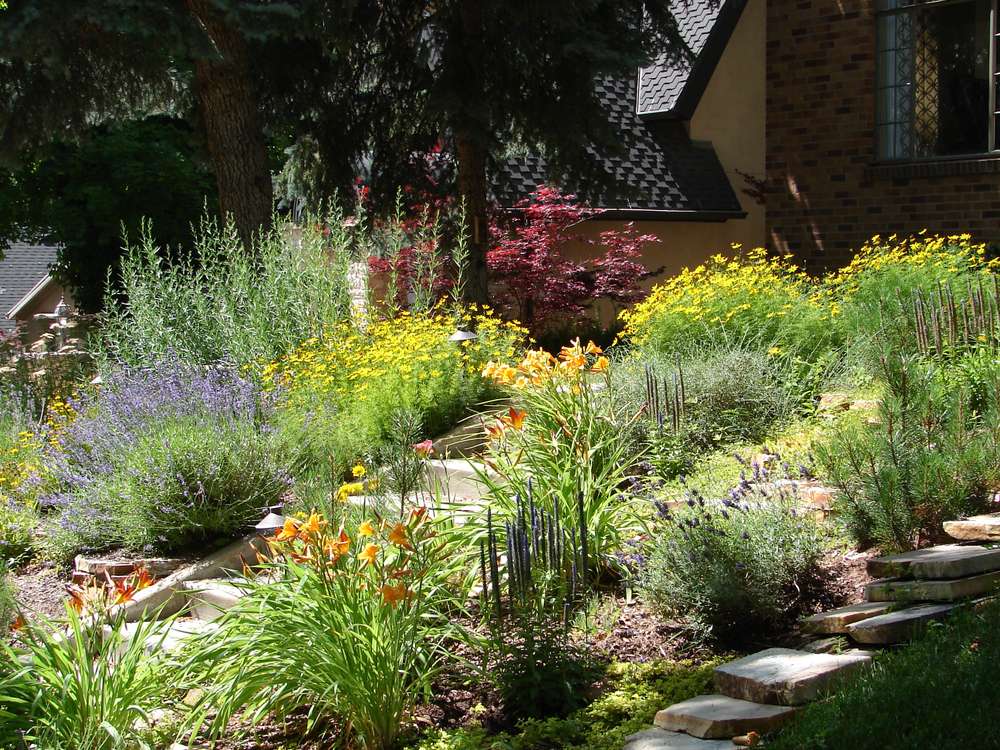
Do your part to help conserve
If everyone does their part the water supply can last and sustain us during this period of drought. Cutting back on lawn watering will save a lot of water. The restrictions in place may be a challenge for some but there are no exceptions on the number of days per week to irrigate.
All water users are being asked to reduce the total volume of outdoor irrigation. Sprinkler products vary in the rate at which water is applied, so you need to pay attention and learn what your system is doing to keep it alive while reducing the volume. You can check the drought restrictions at www.weberbasin.com/drought to understand what you need to do in Davis and Weber Counties.
For other counties, please check with your local city or water district. Conditions are changing all the time so updated information is available at those websites.
Look at other resources that will help you save water at www.weberbasin.com under the conservation section. There are classes, information, and tips on how you can change a few things in your landscape and in your behavior to be more water efficient.
As you evaluate your water use, consider what you use your lawn for and the needs or wants it provides. Do you use it for recreation, for pets, for kids or simply because it is green and generally simple to maintain? Is it only used as a decorative border around your flower beds or a pathway on a side yard? Taking stock of your outdoor needs and planning for a modification or redesign of your landscape can create a long-term reduction of water use whether there is a drought or not.
Lawn certainly has a place in our landscapes, but perhaps it doesn't need to be the default groundcover using a lot of water without a specific function. There are many great plants that will create beauty, and interest and help with the cooling of our home landscape environments.
A program designed for Utah landscapes called Localscapes can help you to design or redesign your landscape to meet your functional needs, keep aesthetic appeal, and use much less water if planned and irrigated correctly, while still using lawn as the central open shape of any yard. Using a Localscape plan can help you design a yard that fulfills your needs and wants while fitting our local climate, soil types, and designing for drought resiliency.
Visit www.weberbasin.com/conservation/classcalendar to sign up for landscape classes through Weber Basin Water Conservancy District. Look through recordings of past classes to supplement your design and visit their Learning Garden in Layton at 2837 East Highway 193 to get ideas of what a Localscape looks like.