'%3e%3cpath%20d='M34.1406%205.85938C30.3906%202.10547%2025.3047%200%2020%200C14.6953%200%209.60938%202.10547%205.85938%205.85938C2.10938%209.61328%200%2014.6953%200%2020C0%2025.3047%202.10547%2030.3906%205.85938%2034.1406C9.61328%2037.8906%2014.6953%2040%2020%2040C25.3047%2040%2030.3906%2037.8945%2034.1406%2034.1406C37.8906%2030.3906%2040%2025.3047%2040%2020C40%2014.6953%2037.8945%209.60938%2034.1406%205.85938ZM37.0117%2023.543H31.1602V13.5391H27.6328V19.9414C28.1211%2020.6914%2028.3711%2021.582%2028.3711%2022.5625V22.625C28.3711%2023.668%2028.1172%2024.6055%2027.6328%2025.4297V26.6094H36.082C33.4883%2032.9375%2027.2891%2037.3789%2020.0039%2037.3789C10.3711%2037.3789%202.62109%2029.6289%202.62109%2020C2.62109%2010.3711%2010.3711%202.62109%2020%202.62109C29.6289%202.62109%2037.3789%2010.3711%2037.3789%2020C37.3789%2021.1484%2037.2617%2022.2656%2037.0508%2023.3477C37.0391%2023.4141%2037.0234%2023.4766%2037.0117%2023.543Z'%20fill='white'/%3e%3cpath%20d='M22.3086%2018.5352C20.4336%2018.125%2019.9531%2017.8398%2019.9766%2017.1836V17.1406C19.9766%2016.6992%2020.3477%2016.2148%2021.4023%2016.2148C22.582%2016.2148%2023.8867%2016.6797%2025.0781%2017.4766L26.8516%2015.0195C25.4453%2013.8906%2023.707%2013.3398%2021.5547%2013.3398C18.5195%2013.3398%2016.4375%2015%2016.4063%2017.4766V17.5352C16.3633%2020.2617%2018.5859%2020.9805%2021.293%2021.6016C23.0391%2021.9766%2023.5703%2022.3164%2023.5703%2022.9609L23.5469%2022.9766C23.5469%2023.3906%2023.2578%2023.7031%2022.7852%2023.8359C22.5742%2023.9062%2022.1289%2023.9727%2021.5156%2023.9727C20.7617%2023.9727%2019.7539%2023.8633%2018.6328%2023.4844C18.0898%2023.2891%2017.4727%2023.0039%2016.8047%2022.6133L20.1406%2026.625C20.2813%2026.6602%2021.0977%2026.8516%2021.7734%2026.8516C25.0039%2026.8516%2027.0859%2025.2461%2027.1094%2022.6328V22.5703C27.1602%2020.1133%2025.2148%2019.1719%2022.3086%2018.5352Z'%20fill='white'/%3e%3cpath%20d='M5.24219%2013.5664V26.6133H8.75391V23.7578L10.2969%2021.9531L14.2031%2026.6133H18.3867L12.3555%2019.5195L17.4023%2013.5664H13.4531L8.75391%2019.0586V13.5664H5.24219Z'%20fill='white'/%3e%3c/g%3e%3cdefs%3e%3cclipPath%20id='clip0_97_2430'%3e%3crect%20width='40'%20height='40'%20fill='white'/%3e%3c/clipPath%3e%3c/defs%3e%3c/svg%3e)




Estimated read time: 3-4 minutes
This archived news story is available only for your personal, non-commercial use. Information in the story may be outdated or superseded by additional information. Reading or replaying the story in its archived form does not constitute a republication of the story.
SALT LAKE CITY — Happy birthday, dear Georgia.
Utah's Hogle Zoo staff and patrons on Tuesday celebrated the first birthday of a gorilla that was the first of its species successfully born at the zoo in decades.
"It's very, very exciting," said Clair Hallyburton, animal care supervisor of Hogle's primates.
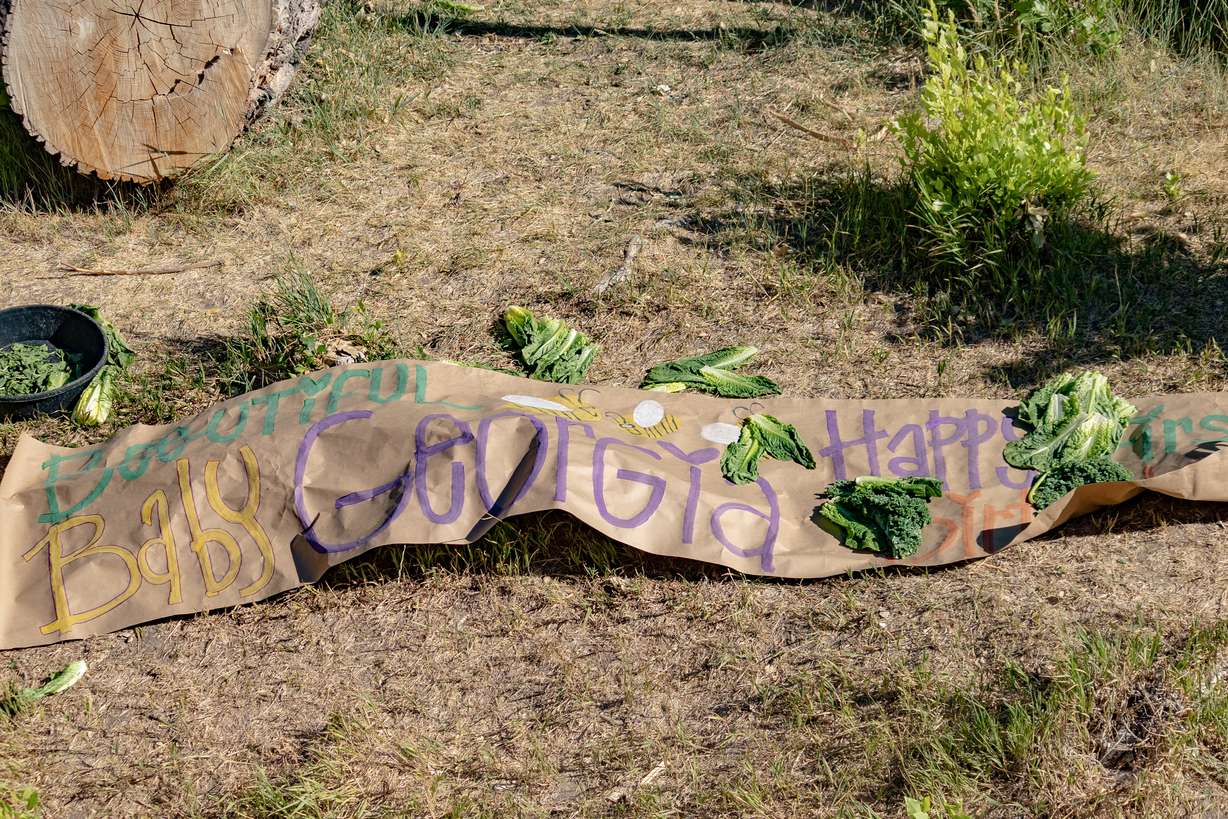
Staff and visitors celebrated her first birthday by tossing food for her enrichment. There were also some other events for zoo guests.
Georgia's birth last year was important beyond being the first Western lowland gorilla born at the zoo. The species is considered "critically endangered" by the International Union for Conservation of Nature; there are an estimated 150,000 to 250,000 western lowland gorillas in the world but that number is on the decline, according to the San Diego Zoo.
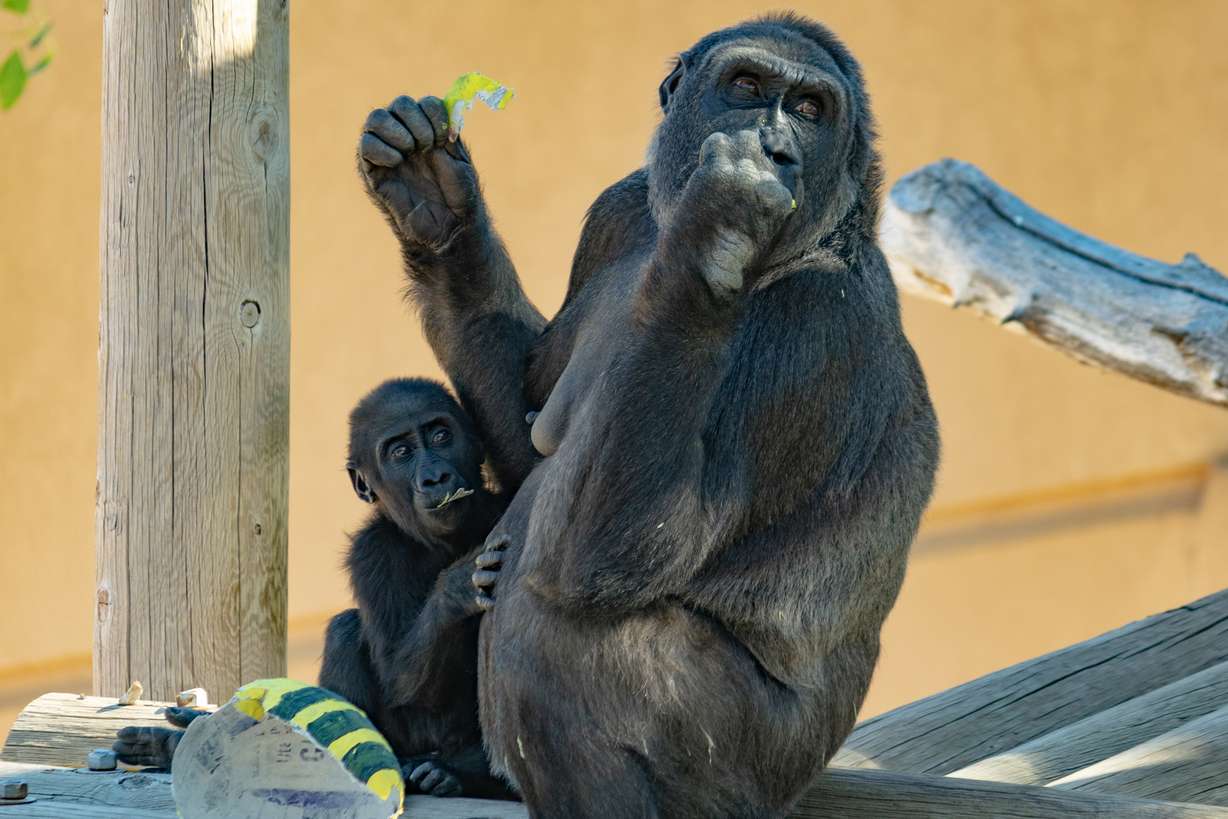
Hallyburton explained one of the biggest factors for the decline is deforestation of the mammals' natural African habitat due to illegal mining for coltan, which is a metal that's used in the manufacturing of cellphones and small electronics. Georgia's birth helps ensure the species is still reproducing.
The young gorilla is the first child for two of the zoo's other residents: her mother Jabali and father Husani. Hallyburton said that caretakers weren't exactly sure how the two would handle parenthood since neither really had experience with baby primates before last year but it appears they've handled it just fine.
"We're just so over the moon that they are doing just such an amazing job and Georgia's just thriving and doing really well," she said.
Georgia still spends most of her time with Jabali, which Hallyburton added is a pretty standard trait for young gorillas. She's learned to climb, forage for food and beat her chest over the past year. Her caretakers describe her as "playful, outgoing and inquisitive" as she grows.
She's also not far from her grandmother. JoRayK, Jabali's mother, is the zoo's other Western lowland gorilla. Like Georgia, all three were born at zoos. Hogle Zoo's multigenerational living situation is very similar to how the species lives in a natural habitat.
Gorillas spend about five years heavily attached to their mother before they become independent. Once an adult, female Western lowland gorillas can get up to about 200 pounds in size and they live up into their 40s and 50s, Hallyburton said. JoRayK is 43, while Husani is 30 and Jabali is 17.
She added that Georgia has become a crowd favorite over the past year, likely due to people's fascination with gorillas. The species shares about 98% of the same DNA and that carries over in some of the same traits as how humans act.
"You can see that in their behavior," Hallyburton said. "It's very easy to relate to these guys."
As for how people can help the declining species, Hogle Zoo officials say people can simply recycle their old phones and other electronics to help reduce the demand for coltan mining. Visitors can recycle specific electronics free of charge at the zoo's guest services office.