'%3e%3cpath%20d='M34.1406%205.85938C30.3906%202.10547%2025.3047%200%2020%200C14.6953%200%209.60938%202.10547%205.85938%205.85938C2.10938%209.61328%200%2014.6953%200%2020C0%2025.3047%202.10547%2030.3906%205.85938%2034.1406C9.61328%2037.8906%2014.6953%2040%2020%2040C25.3047%2040%2030.3906%2037.8945%2034.1406%2034.1406C37.8906%2030.3906%2040%2025.3047%2040%2020C40%2014.6953%2037.8945%209.60938%2034.1406%205.85938ZM37.0117%2023.543H31.1602V13.5391H27.6328V19.9414C28.1211%2020.6914%2028.3711%2021.582%2028.3711%2022.5625V22.625C28.3711%2023.668%2028.1172%2024.6055%2027.6328%2025.4297V26.6094H36.082C33.4883%2032.9375%2027.2891%2037.3789%2020.0039%2037.3789C10.3711%2037.3789%202.62109%2029.6289%202.62109%2020C2.62109%2010.3711%2010.3711%202.62109%2020%202.62109C29.6289%202.62109%2037.3789%2010.3711%2037.3789%2020C37.3789%2021.1484%2037.2617%2022.2656%2037.0508%2023.3477C37.0391%2023.4141%2037.0234%2023.4766%2037.0117%2023.543Z'%20fill='white'/%3e%3cpath%20d='M22.3086%2018.5352C20.4336%2018.125%2019.9531%2017.8398%2019.9766%2017.1836V17.1406C19.9766%2016.6992%2020.3477%2016.2148%2021.4023%2016.2148C22.582%2016.2148%2023.8867%2016.6797%2025.0781%2017.4766L26.8516%2015.0195C25.4453%2013.8906%2023.707%2013.3398%2021.5547%2013.3398C18.5195%2013.3398%2016.4375%2015%2016.4063%2017.4766V17.5352C16.3633%2020.2617%2018.5859%2020.9805%2021.293%2021.6016C23.0391%2021.9766%2023.5703%2022.3164%2023.5703%2022.9609L23.5469%2022.9766C23.5469%2023.3906%2023.2578%2023.7031%2022.7852%2023.8359C22.5742%2023.9062%2022.1289%2023.9727%2021.5156%2023.9727C20.7617%2023.9727%2019.7539%2023.8633%2018.6328%2023.4844C18.0898%2023.2891%2017.4727%2023.0039%2016.8047%2022.6133L20.1406%2026.625C20.2813%2026.6602%2021.0977%2026.8516%2021.7734%2026.8516C25.0039%2026.8516%2027.0859%2025.2461%2027.1094%2022.6328V22.5703C27.1602%2020.1133%2025.2148%2019.1719%2022.3086%2018.5352Z'%20fill='white'/%3e%3cpath%20d='M5.24219%2013.5664V26.6133H8.75391V23.7578L10.2969%2021.9531L14.2031%2026.6133H18.3867L12.3555%2019.5195L17.4023%2013.5664H13.4531L8.75391%2019.0586V13.5664H5.24219Z'%20fill='white'/%3e%3c/g%3e%3cdefs%3e%3cclipPath%20id='clip0_97_2430'%3e%3crect%20width='40'%20height='40'%20fill='white'/%3e%3c/clipPath%3e%3c/defs%3e%3c/svg%3e)




Estimated read time: 3-4 minutes
This archived news story is available only for your personal, non-commercial use. Information in the story may be outdated or superseded by additional information. Reading or replaying the story in its archived form does not constitute a republication of the story.
VERNAL — Daggett County remained one of just two Utah counties without a reported COVID-19 case Thursday, according to Centers for Disease Control and Prevention data. But local health officials acknowledge that the coronavirus isn’t wiped from existence there.
Officials for the TriCounty Health Department, which oversees Daggett, Duchesne and Uintah counties, said Wednesday they found detectable to “moderate” tracings of SARS-CoV-2 — the virus that causes COVID-19 in humans — at three of the four sewage facilities they tested in their jurisdiction.
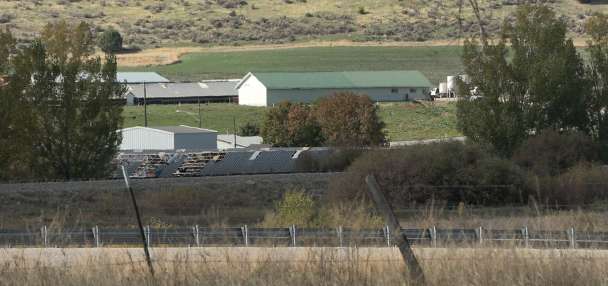
The most was at Dutch John in eastern Daggett County. Researchers found 39 million gene copies/per person/per day, which they describe as a moderate amount. They also found 36 million gene copies/per person/per day at a facility in Roosevelt in Duchesne County, which was also described as moderate, and 6 million gene copies/per person/per day at an Ashley Creek facility in Uintah County, which was described as low but detectable.
The virus was not detected at a Manila, Daggett County, facility that was also tested.
“It is concerning because we do not have any laboratory confirmed cases in the Dutch John area but we are seeing the same levels of virus as we are seeing in Roosevelt’s sewage treatment facility where we are seeing most of our laboratory confirmed cases at the moment,” said TriCounty Health Department officer Jordan Mathis, in a news release.
Similar studies looking for the coronavirus in sewage were conducted earlier this year. Scientists said the virus is shed in feces from infected people, including those who are asymptomatic. It’s how it gets into the sewage systems.
TriCounty health officials worked in coordination with the Utah Department of Environmental Quality to conduct the study of sewage in their jurisdiction. Jeffrey Ostermiller, a state environmental scientist, said the SARS-CoV-2 percentages found at Dutch John and Roosevelt were similar to numbers found at facilities in Logan and Park City on a per capita scale.
Due to the findings, TriCounty health officials are advising anyone living near Dutch John or Roosevelt to be “extra vigilant” regarding COVID-19 precautions. That may come as a surprise, considering Daggett, Duchesne and Uintah became three of 10 counties in the state to move to green on Utah’s color dial last month.
But earlier this month, Gov. Gary Herbert reflected on the state’s color-coded reopening dial system released in April and said the state erred by referring to the four colors by risk. Green was originally labeled as having virtually no risk for spreading COVID-19.
So when counties moved to yellow and green, people likely believed they didn’t need to follow precautions, Herbert said. The state experienced an uptick in COVID-19 cases not long after counties moved to yellow.
“A better way to have said it, I think, would have been restrictions,” he said during a July 9 press conference. “We had more restrictions under red, moderate restrictions under orange, low restrictions under yellow, and if we can get to green, virtually no restrictions under the ‘new normal.’”
In the news release, Daggett County Commissioner Jack Lytle said he wasn’t surprised by Wednesday’s findings, especially given the number of people who visit the area for outdoor activities during the summer months.
“Despite being in ‘green’ this reinforces each individual’s responsibility towards being diligent in following COVID guidelines,” he said.
Health officials say people should stay at home if they feel sick, wash their hands regularly, stay at least 6 feet apart from others while in public, wear a mask or face covering if they cannot maintain a 6-foot distance from others and seek testing if they are exhibiting symptoms.