Estimated read time: 3-4 minutes
This archived news story is available only for your personal, non-commercial use. Information in the story may be outdated or superseded by additional information. Reading or replaying the story in its archived form does not constitute a republication of the story.
IDAHO FALLS — The photos are chilling.
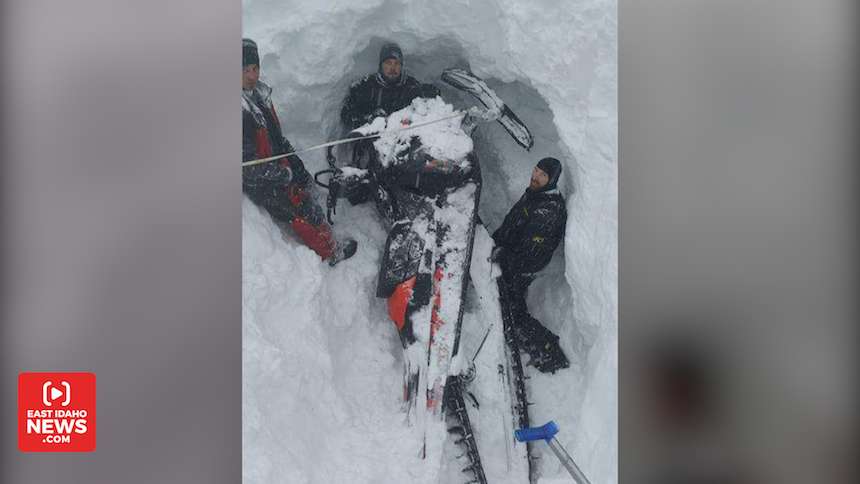
They show a man, trapped in the snow, barely breathing and unable to move. His friends are frantically digging and know that every second matters, EastIdahoNews.com reported.
For 34-year-old Kyle Pratt, it’s a nightmare he has thought about nearly every day since he was buried in an avalanche two years ago.
“It’s just like drowning. It’s pitch black, you inhale plenty of snow and you can’t hear a thing. Nothing. It’s just as black as can be,” Pratt tells EastIdahoNews.com. “Until you experience it, you can’t mentally understand how it is.”
Pratt was snowmobiling with six friends in Island Park that January 2016 day. They were in the same area where two men died in separate avalanches earlier this month.
As he stopped near some trees, he saw a mountain of snow barreling toward him.
“I looked up and saw a patch of snow in the trees broke free,” Pratt recalls. “Because I was in the bottom of the canyon, it just blew over and filled up the canyon.”
Pratt’s six friends were fine. They rushed over to him, grabbed shovels from their emergency kits and began digging. Pratt says he quickly blacked out.
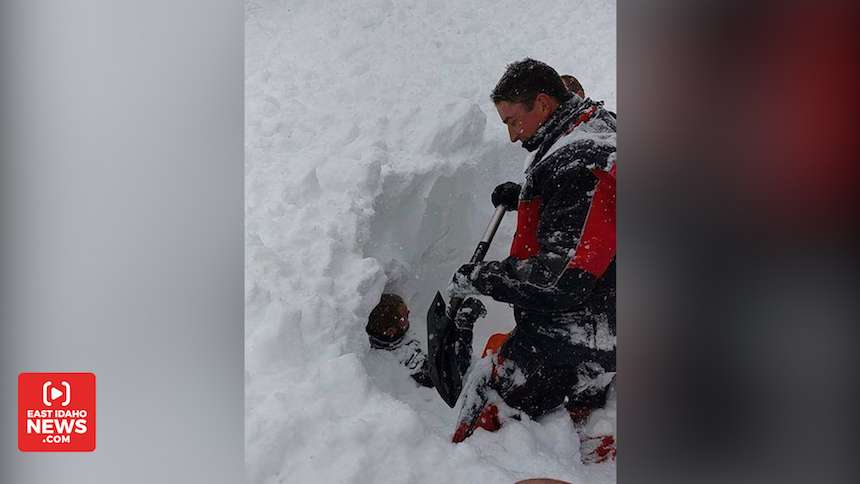
“Until you’re in an avalanche you don’t believe that it flows like water and sets up like concrete,” Pratt explains. “Snow fills up your helmet and fills everything up. Whatever position you’re in, you’re stuck.”
After three minutes of digging, Pratt’s friends were able to uncover his head and, eventually, his entire body. His feet were around 10 feet under ground.
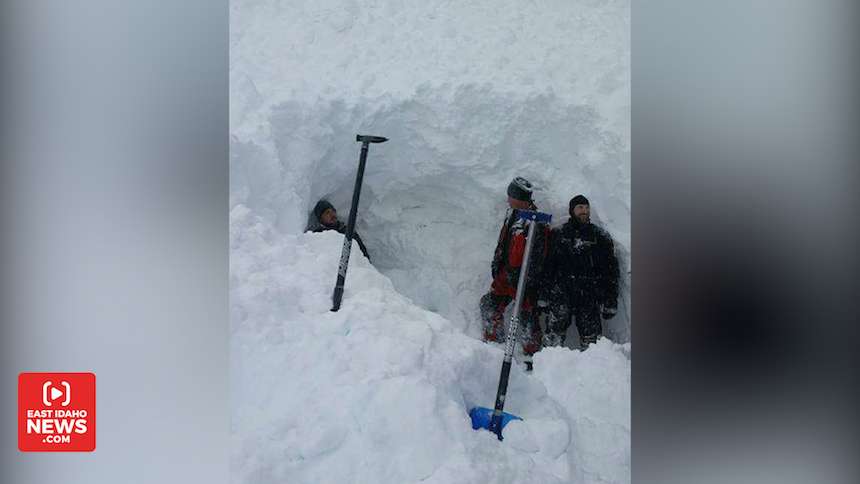
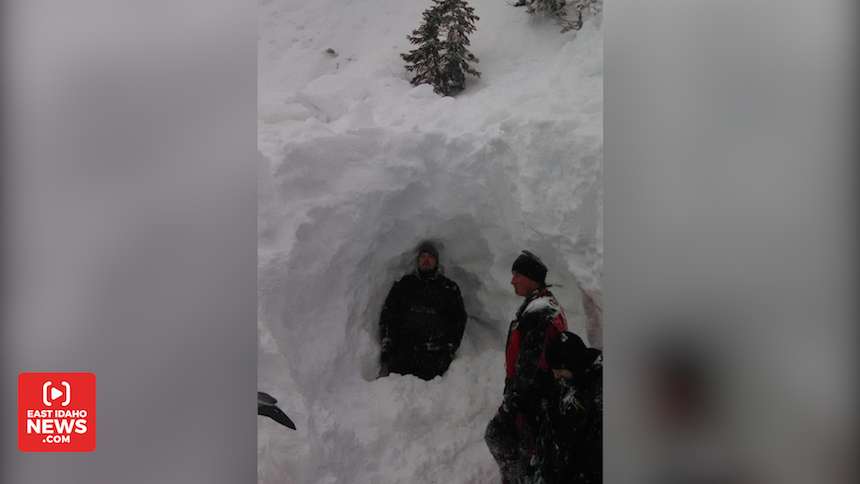
“Once they got me out, it took seven of us nonstop digging about two hours to get my sled out,” Pratt says. “We had the whole sled undone, had ropes tied to it at the same time and all seven guys heaved. It didn’t move so we had to keep digging.”
An average of 27 people die in avalanches every year in the United States, according to the Colorado Avalanche Information Center. Seven fatalities have been reported in the 2017-2018 season with four being snowmobilers and three being skiers.
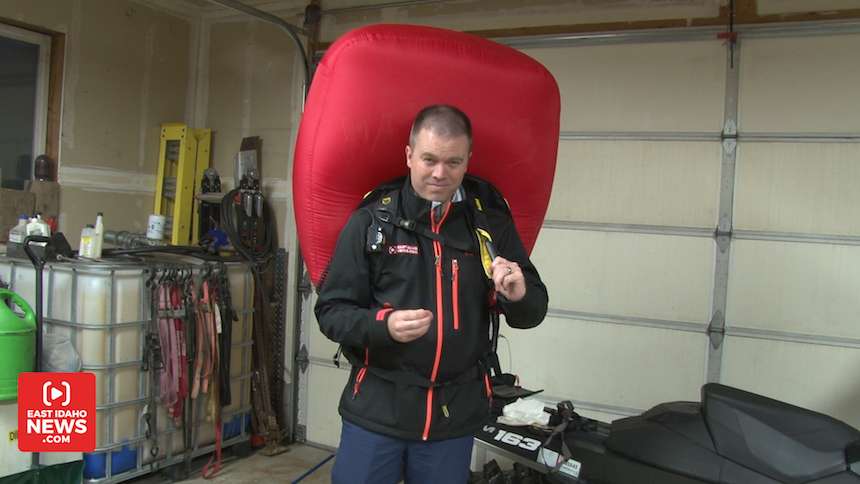
Experts say some of those deaths could be prevented if snowmobilers, skiers and snowboarders in the backcountry carried safety gear like beacons, shovels, probes and air bags.
Beau Stoddart, one of Pratt’s friends, has been snowmobiling for years. He carries emergency gear with him and says safety is nothing to mess around with.
“It’s buy the gear or die. This is life or death,” Stoddart says. “If you don’t want to spend the money and do what it takes to be in back country, then find a different hobby. Find a better sport.”
Ironically, the avalanche wasn’t Pratt’s first near-death experience.
In 2012, he was recording a video while snowmobiling when the snow beneath him suddenly cracked and he nearly fell off a 1,500 foot cliff. Within 24 hours, the video went viral and has now been viewed over three million times on YouTube.
“Probably 15 foot from the edge (of the cliff), a chunk of snow broke off,” Pratt remembers. “My skis were hanging over the edge and I was gonna bail.”
Fortunately he was able to slowly back away from the cliff with his machine and make it to safety.
After defying death twice on a snowmobile, Pratt says he’s learned his lesson. He always wears safety gear whenever he rides knowing that life can change in a split second.
“If you’re out in the back country on a snow machine and you don’t have the equipment, you shouldn’t be there. It’s as simple as that,” he says.
The key to avoiding avalanches is to avoid terrain where avalanches can occur.
Avalanche terrain is any slope steeper than 30 degrees. It doesn’t matter if it is a big or a very small slope. It doesn’t matter if it is an open slope or one with trees. If it is steeper than 30 degrees, it can produce an avalanche.
Check current conditions and get avalanche danger ratings from a regional avalanche center. Find out the forecast for Utah from the Utah Avalanche Center, utahavalanchecenter.org. Find other regional avalanche centers at avalanche.org.
The National Avalanche Center also advises you to:
- Get the Training: Take training online from the National Avalanche Center.
- Get the Forecast: Be aware of avalanche conditions in your destination area.
- Get the Gear: Buy it and keep it on your body.
- Get the Picture: Recognize red flags and consequences.
- Get Out of Harm’s Way: Limit your exposure and practice safe travel in avalanche zones.
Source: recreation.gov
KSL's Idaho News Section
Looking for more news about the Gem State? Visit KSL's Idaho news section for more stories about Idaho politics, events, and features.