
Estimated read time: 5-6 minutes
This archived news story is available only for your personal, non-commercial use. Information in the story may be outdated or superseded by additional information. Reading or replaying the story in its archived form does not constitute a republication of the story.
SALT LAKE CITY — Once acquitted by a jury in state court of murdering a Millard County sheriff's deputy, Roberto Miramontes Roman is now awaiting a decision from a federal jury regarding similar charges.
Testimony in the trial for Roman, 44, ended Monday with federal prosecutors insisting that the explanation for deputy Josie Greathouse Fox's death that Roman first told a jury two years after the fact does not line up with evidence in the case, but his confession to police just hours after the shooting death does.
Jurors deliberated nearly four hours before recessing Monday evening and will resume deliberations Tuesday morning.
Assistant U.S. attorney Trina Higgins told the eight-woman, four-man jury that all the evidence collected in the case indicates that Roman was alone on Jan. 5, 2010, when Fox learned of reports of suspected drug activity and pulled over the Cadillac DeVille that Roman was driving on a dark road outside Delta.
Just days before, Higgins said, Roman had told an acquaintance that "he would do whatever it takes" to not go back to jail.
And so as Fox approached the driver's side window, Higgins said, Roman grabbed the AK-47 he had taken from Fox's brother as payment for methamphetamine, pointed it backward over his shoulder, and fired twice through the window, killing the deputy.
"He killed her because she was attempting to stop his vehicle to investigate drug activity, just as she was asked to do by her sergeant," Higgins said. "She did it because it was her job. She was killed in the line of duty."
Following nearly two days on the run, Roman and another man who had helped him flee were arrested hiding in a shed in Beaver. Cold, tired and out of money, Roman was taken to be interviewed by police, explaining in detail the drug deal with Fox's brother, Ryan Greathouse, the traffic stop by Fox and the shooting.
A portion of that video, presented to jurors during the trial, was replayed Monday, showing Roman in handcuffs talking to police.
"Something shifted and I knew I had to shoot her," Roman told police.
Roman later walked back from the confession when he testified at his trial, laying blame instead on Greathouse, whom he had sold drugs to shortly before Fox was shot. Greathouse was found dead in Las Vegas of an accidental overdose about four months after his sister's death.
Roman's attorney, Jeremy Delicino, told jurors the facts in the case are too thin to convict Roman.
"It's not about being swayed by sympathy, it's about being persuaded by proof," Delicino said.
"He is presumed innocent," Delicino emphasized, gesturing back toward Roman.
Delicino criticized evidence presented by prosecutors of "cartridge case smudges" left along the fabric roof lining inside the car, indicating that shell casings fired from the AK-47 would have come in contact with the roof before landing in the back seat where they were found.
The location of those smudges, found following Roman's acquittal, and the trajectory the shell casings would have made to leave them showed that the gun was fired in the driver's seat, Higgins explained.
Calling the smudges the government's "most important piece of evidence," Delicino questioned how reliable the late-discovered evidence could really be, and how conclusive the finding was. Any gaps in the prosecution's story, he said, leave room for reasonable doubt.
On the stand in 2012 as he faced a state charge of aggravated murder, Roman changed his story from the one he told police following his arrest.
Instead, Roman said that Greathouse was in the car with him that night, and when a police officer approached them in the car, Greathouse grabbed the gun and fired from the passenger seat. He repeated that account on the witness stand last week.
Related
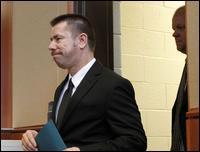
When Greathouse realized the police officer had been his sister, Roman said he was distraught and Roman offered to take the blame, Delicino said.
"As foolhardy as it may sound, (Roman) was covering for (Greathouse)," Delicino told jurors.
Higgins called the explanation "simply nonsense."
"It doesn't fit with the evidence, it doesn't fit with common sense," Higgins said, noting that an expert witness who testified at the trial said the shooting could not be re-created the way Roman describes it.
Higgins disputed Roman's explanation that he had falsely confessed to the killing because Greathouse had threatened to harm his children, and that Roman had made up a third "mystery man" who was present for the drug deal in order to make his story fit.
Fox and another deputy had been surveiling two vehicles — Greathouse's truck and Roman's Cadillac — and had watched the Cadillac return to the truck before someone drove it off, Higgins said. The other officer followed the truck before returning to where Fox had stopped the Cadillac, finding her body lying in the road.
The truck was returned to Greathouse's home, where deputies later found him calmly spending his evening, and informed him of his sister's death, Higgins said. Roman had claimed that the "mystery man" returned Greathouse's truck for him, and that he had dropped Greathouse off at home following the shooting.
An eight-person jury found Roman not guilty of aggravated murder but convicted him of tampering with evidence and possession of a dangerous weapon in connection with the shooting in 2012. He was later sentenced to 10 years in prison.
A federal grand jury returned an 11-count indictment against Roman last September, including a charge of intentionally killing a local law enforcement officer engaged in the performance of official duties.
Roman admitted last month to illegally possessing an AK-47 and a handgun, being in the country illegally and re-entering the country after being deported. The first two crimes carry a 10-year prison sentence, while the third has a 20-year term.
He still faces charges of intentionally killing a law enforcement officer, discharging a firearm in connection with a violent crime, three counts of possessing a firearm in the commission of a drug trafficking crime, and three counts of distributing methamphetamine.