Estimated read time: 2-3 minutes
This archived news story is available only for your personal, non-commercial use. Information in the story may be outdated or superseded by additional information. Reading or replaying the story in its archived form does not constitute a republication of the story.
SALT LAKE CITY — Food and beverage waste could shine in the LED lights of the future, thanks to researchers at the University of Utah.
Two professors made carbon quantum dots — the tiny luminescent crystals that give LEDs their light — out of discarded bread, tortillas and soft drinks, according to a recently published report. Researchers said using food waste as material for LEDs could reduce costs and eliminate the need for toxic chemicals while benefitting the environment
Prashant Sarswat, a research assistant professor in the department of metallurgical engineering, said he was walking on campus when he saw people throwing away food waste and got the idea for the project.
"I thought, 'why should I not utilize this material as a resource?" he said. "Everything we are eating contains carbon products... so I thought that I should take (the waste) back and I'll process that."
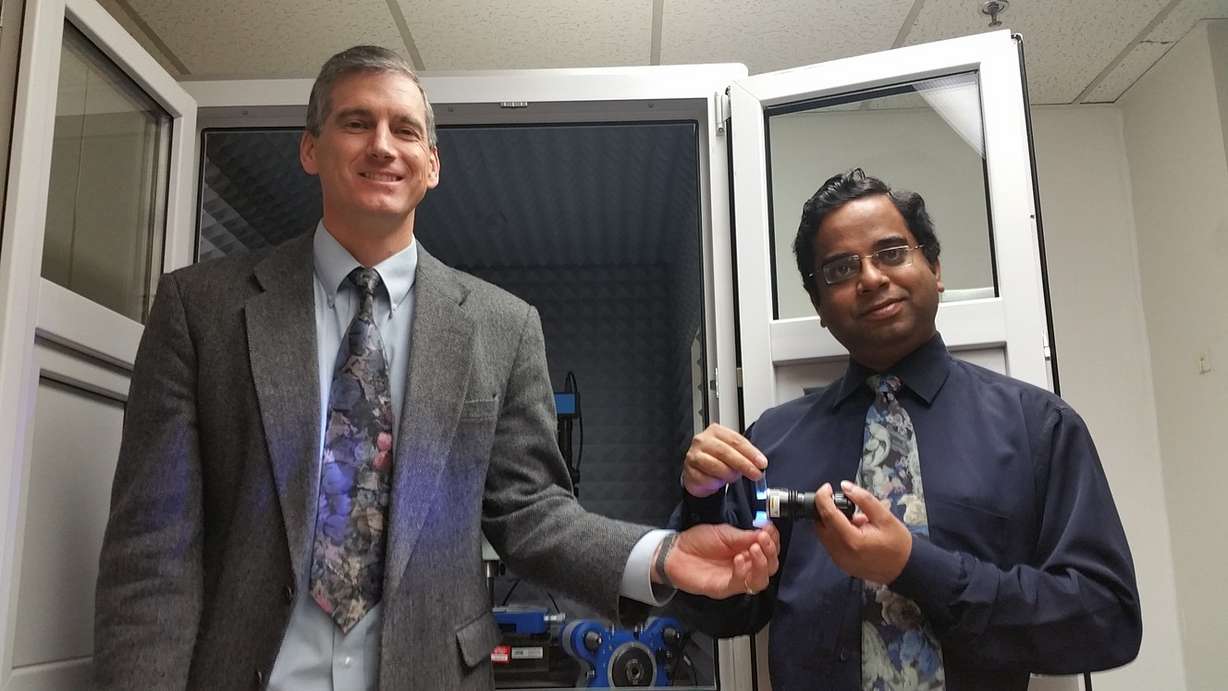
Sarswat conducted experiments with professor Michael Free, turning discarded food and beverages into quantum dots by placing the waste into a solvent under pressure and then heating the mixture for 30 to 90 minutes. Then, they tested the size of the quantum dots before suspending the dots in epoxy resins to harden and be ready for use.
Eventually, U. researchers hope their LEDs could be used for display purposes on TVs and in other devices. The team plans to continue research to determine which types of food and beverage waste produces the most light. Sarswat said liquids are easier to process, but food waste contains more carbon.
The base materials most frequently used to make LEDS are both toxic and expensive, according to Sarswat. He said food and beverage waste, on the other hand, is easy and inexpensive to synthesize and safer to handle.
"QDs derived from food and beverage waste are not based on common toxic elements such as cadmium and selenium, which makes their processing and disposal more environmentally friendly than it is for most other QDs," Free said in a statement. "In addition, the use of food and beverage waste as the starting material for QDs allows for reduced waste and cost to produce a useful material."
Since greenhouse gases come from dumps and other areas where food and beverage waste is disposed, reducing the waste could help the environment, according to Sarswat.
The research was published in the Royal Society of Chemistry journal Physical Chemistry Chemical Physics.