'%3e%3cpath%20d='M34.1406%205.85938C30.3906%202.10547%2025.3047%200%2020%200C14.6953%200%209.60938%202.10547%205.85938%205.85938C2.10938%209.61328%200%2014.6953%200%2020C0%2025.3047%202.10547%2030.3906%205.85938%2034.1406C9.61328%2037.8906%2014.6953%2040%2020%2040C25.3047%2040%2030.3906%2037.8945%2034.1406%2034.1406C37.8906%2030.3906%2040%2025.3047%2040%2020C40%2014.6953%2037.8945%209.60938%2034.1406%205.85938ZM37.0117%2023.543H31.1602V13.5391H27.6328V19.9414C28.1211%2020.6914%2028.3711%2021.582%2028.3711%2022.5625V22.625C28.3711%2023.668%2028.1172%2024.6055%2027.6328%2025.4297V26.6094H36.082C33.4883%2032.9375%2027.2891%2037.3789%2020.0039%2037.3789C10.3711%2037.3789%202.62109%2029.6289%202.62109%2020C2.62109%2010.3711%2010.3711%202.62109%2020%202.62109C29.6289%202.62109%2037.3789%2010.3711%2037.3789%2020C37.3789%2021.1484%2037.2617%2022.2656%2037.0508%2023.3477C37.0391%2023.4141%2037.0234%2023.4766%2037.0117%2023.543Z'%20fill='white'/%3e%3cpath%20d='M22.3086%2018.5352C20.4336%2018.125%2019.9531%2017.8398%2019.9766%2017.1836V17.1406C19.9766%2016.6992%2020.3477%2016.2148%2021.4023%2016.2148C22.582%2016.2148%2023.8867%2016.6797%2025.0781%2017.4766L26.8516%2015.0195C25.4453%2013.8906%2023.707%2013.3398%2021.5547%2013.3398C18.5195%2013.3398%2016.4375%2015%2016.4063%2017.4766V17.5352C16.3633%2020.2617%2018.5859%2020.9805%2021.293%2021.6016C23.0391%2021.9766%2023.5703%2022.3164%2023.5703%2022.9609L23.5469%2022.9766C23.5469%2023.3906%2023.2578%2023.7031%2022.7852%2023.8359C22.5742%2023.9062%2022.1289%2023.9727%2021.5156%2023.9727C20.7617%2023.9727%2019.7539%2023.8633%2018.6328%2023.4844C18.0898%2023.2891%2017.4727%2023.0039%2016.8047%2022.6133L20.1406%2026.625C20.2813%2026.6602%2021.0977%2026.8516%2021.7734%2026.8516C25.0039%2026.8516%2027.0859%2025.2461%2027.1094%2022.6328V22.5703C27.1602%2020.1133%2025.2148%2019.1719%2022.3086%2018.5352Z'%20fill='white'/%3e%3cpath%20d='M5.24219%2013.5664V26.6133H8.75391V23.7578L10.2969%2021.9531L14.2031%2026.6133H18.3867L12.3555%2019.5195L17.4023%2013.5664H13.4531L8.75391%2019.0586V13.5664H5.24219Z'%20fill='white'/%3e%3c/g%3e%3cdefs%3e%3cclipPath%20id='clip0_97_2430'%3e%3crect%20width='40'%20height='40'%20fill='white'/%3e%3c/clipPath%3e%3c/defs%3e%3c/svg%3e)


Estimated read time: 2-3 minutes
This archived news story is available only for your personal, non-commercial use. Information in the story may be outdated or superseded by additional information. Reading or replaying the story in its archived form does not constitute a republication of the story.
SALT LAKE CITY -- A local author and child advocate says more attention needs to be paid to pediatric cancers. He says not enough money is going into researching these deadly diseases.
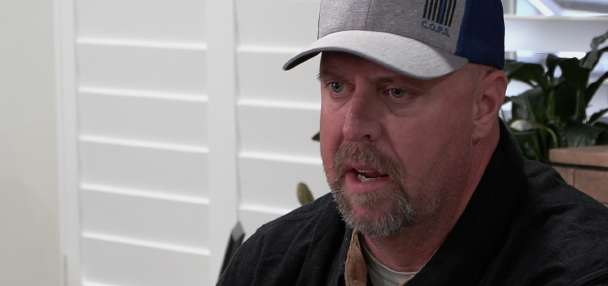
"To tell your child, or, tell my child that she's going to die - how do you do that? How do you prepare yourself? How do you prepare your own child to tell them that they're going to die?" said Stephen Havertz whose child died of a kind of cancer normally seen in adults cancer.
Havertz remembers the look on his daughter's face when he told her doctors couldn't cure her cancer. She started shaking her head since the tubes in her throat kept her from speaking.
"I knew what she was saying. She said, ‘Dad, please, don't let me die,'" he said.
Emmalee was diagnosed with hepatocellular carcinoma, a cancer of the liver that normally affects adults that are heavy drinkers or children in third world countries. By the time she started feeling stomach pains, a grapefruit-sized tumor already had encompassed around her liver. The only cure for her would be either a resection of the tumor or a liver transplant.
I knew what she was saying. She said, ‘Dad, please, don't let me die.'
–Stephen Havertz
"She was ineligible for either one of those because the tumor was too large," Havertz said. "It was encompassing her entire liver and there was piece of the tumor that was actually outside of the liver in the portal vein."
Emmalee died early October 2009. She went to school the previous Friday, felt very sick on Monday, went to the hospital on Tuesday and passed away on Thursday. Havertz said she tried to live as normally as possible, despite her grim diagnosis.
Now, Havertz is advocating that more attention and more money go into all forms of pediatric cancer. He was frustrated by an article in Forbes stating $26.4 million went into pediatric clinical trials in 2008, compared to $584 million for breast cancer trials in 2006.
"That's what's frustrating, is [that] there's not that awareness, so, people aren't willing to fund it."
He's not advocating that money be taken away from research into other deadly diseases, but, he said there's a major gap in funding when it comes to pediatric cancers. Even if a child survives the cancer, chemotherapy treatments cause a lot of other problems.
"Sixty percent of the kids who survive cancer have long-term, chronic health problems because of chemotherapy and radiation. So, chemotherapy is not the answer."