
Estimated read time: 4-5 minutes
This archived news story is available only for your personal, non-commercial use. Information in the story may be outdated or superseded by additional information. Reading or replaying the story in its archived form does not constitute a republication of the story.
SALT LAKE CITY — Apparently making public how much state government spends on bottled water left it a lot less thirsty.
Once Utah's transparency website revealed the state was spending $294,000 on bottled water each year, the annual expense dropped to about $85,000.
Residents' ability to track government spending online helps reduce waste, according to the U.S. Public Interest Research Group. In its "Follow the Money 2012" report, Utah received a B+ for government spending transparency. That's up from a C last year, putting Utah among the 10 states showing the most progress.
Also, Utah went from a black hole to a shining light the past year in public access to government records.
Utahns have a right to know where every tax dollar goes and how it's spent, and the state has a responsibility to be accountable and open, said Gov. Gary Herbert. While pleased with the grade, he challenged state agencies to strive for a higher mark next year.
Two state websites — transparent.utah.gov and performance.utah.gov — document how tax dollars are spent and how agencies are being held accountable. Utah spent $192,800 to start the sites and spends about $100,000 a year to maintain them.
U.S. PIRG lists Utah among "advancing" states in terms of online access to government spending data. Utah scored higher this year because it consolidated spending information from various state agencies and worked with local governments to post their revenues and expenditures to the state site.
The Utah Transparency Advisory Board was focused on getting financial data from all levels of government on the state's website, said John Reidhead, state finance division director.
The state also started posting tax expenditures such as sales tax exemptions for economic development, costs that according to the report often escape oversight because they don't appear as budget line items.
The report also noted that the State Office of Education and the Utah Tax Commission save about $15,000 a year from reduced public information requests due to the transparency website.
The report also noted that the State Office of Education and the Utah Tax Commission save about $15,000 a year from reduced public information requests due to the transparency website.
State lawmakers this year approved a bill to create a government records ombudsman to act as a gatekeeper for requests under Utah's Government Records Access and Management Act. The ombudsman would work out of the Division of Archives and Records Service as a resource for people making or responding to records requests and mediate disputes between requestors and responders.
The Utah Media Coalition awarded Sen. Curt Bramble, R-Provo, its "Shining Light" award for his work on the bill. In addition to creating the ombudsman job, it made minor changes to GRAMA.
Last year, lawmakers passed and Herbert signed legislation that severely restricted access to many government records, earning them the Society of Professional Journalists' national "Black Hole Award."
After overwhelming public outcry, lawmakers reversed course and repealed the bill. They also set up a working group to study GRAMA. As a member of the group, Bramble reached out to various interests to craft legislation that honor's the public insistence on transparency, according to the Utah Media Coalition.
State integrity study
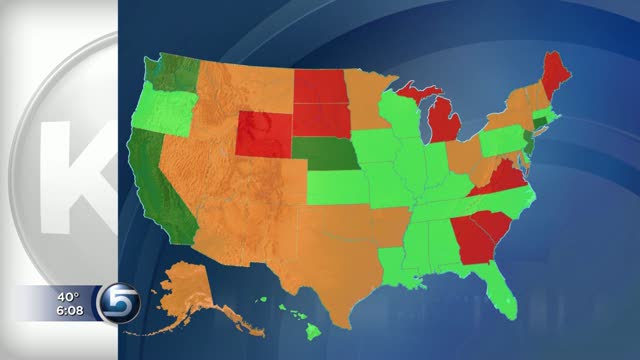
A Washington-based study on public integrity puts Utah's state government at 'below average' in corruption risk. The study also shows all 50 states have a long way to go to clean up corruption risk and increase transparency.
The State Integrity Investigation looked at things like open meetings and records, and ethics in general. The group gives Utah a D
The Center for Public Integrity, Global Integrity and Public Radio International, who conducted the study, gave the best state, New Jersey, a B+. Five states earned a B, 19 earned C's, and 18 D's, including Utah. Eight "flunked", with an F when it comes to transparency, accountability and efforts to weed out corruption.
Utah's less-than-stellar results came from incidents like those at the Department of Alcoholic Beverage Control, where an executive director was accused of funneling contracts to his son for more than a decade
Utah has no state ethics agency, and legislators can still become lobbyists within a year, thanks to a loophole in a law attempting reform.
Government watchdogs said the results are a huge heads up for the public.
"They ought to be as concerned about that D from the state government as they would be about a D one of their kids gets in school," said David Irvine with Utahns for Ethical Government.
Utah does well when it comes to things like internal auditing and the state budget process. But the rankings fall fast when it comes to accountability, public access to information, and disclosure from lobbyists.
According to the study, Utah fails when it comes to political financing, legislative accountability, ethics enforcement and redistricting.
"You find the abuses, and Utah has had its share of abuses, every state has," said Kirk Jowers with the Hinckly Institute of Politics. "And so you need to legislate around that. At least give honest people a chance to remain honest."
KSL-TV/Deseret News reporter John Daley helped gather information and wrote the overview for the State Integrity Investigation project.