'%3e%3cpath%20d='M34.1406%205.85938C30.3906%202.10547%2025.3047%200%2020%200C14.6953%200%209.60938%202.10547%205.85938%205.85938C2.10938%209.61328%200%2014.6953%200%2020C0%2025.3047%202.10547%2030.3906%205.85938%2034.1406C9.61328%2037.8906%2014.6953%2040%2020%2040C25.3047%2040%2030.3906%2037.8945%2034.1406%2034.1406C37.8906%2030.3906%2040%2025.3047%2040%2020C40%2014.6953%2037.8945%209.60938%2034.1406%205.85938ZM37.0117%2023.543H31.1602V13.5391H27.6328V19.9414C28.1211%2020.6914%2028.3711%2021.582%2028.3711%2022.5625V22.625C28.3711%2023.668%2028.1172%2024.6055%2027.6328%2025.4297V26.6094H36.082C33.4883%2032.9375%2027.2891%2037.3789%2020.0039%2037.3789C10.3711%2037.3789%202.62109%2029.6289%202.62109%2020C2.62109%2010.3711%2010.3711%202.62109%2020%202.62109C29.6289%202.62109%2037.3789%2010.3711%2037.3789%2020C37.3789%2021.1484%2037.2617%2022.2656%2037.0508%2023.3477C37.0391%2023.4141%2037.0234%2023.4766%2037.0117%2023.543Z'%20fill='white'/%3e%3cpath%20d='M22.3086%2018.5352C20.4336%2018.125%2019.9531%2017.8398%2019.9766%2017.1836V17.1406C19.9766%2016.6992%2020.3477%2016.2148%2021.4023%2016.2148C22.582%2016.2148%2023.8867%2016.6797%2025.0781%2017.4766L26.8516%2015.0195C25.4453%2013.8906%2023.707%2013.3398%2021.5547%2013.3398C18.5195%2013.3398%2016.4375%2015%2016.4063%2017.4766V17.5352C16.3633%2020.2617%2018.5859%2020.9805%2021.293%2021.6016C23.0391%2021.9766%2023.5703%2022.3164%2023.5703%2022.9609L23.5469%2022.9766C23.5469%2023.3906%2023.2578%2023.7031%2022.7852%2023.8359C22.5742%2023.9062%2022.1289%2023.9727%2021.5156%2023.9727C20.7617%2023.9727%2019.7539%2023.8633%2018.6328%2023.4844C18.0898%2023.2891%2017.4727%2023.0039%2016.8047%2022.6133L20.1406%2026.625C20.2813%2026.6602%2021.0977%2026.8516%2021.7734%2026.8516C25.0039%2026.8516%2027.0859%2025.2461%2027.1094%2022.6328V22.5703C27.1602%2020.1133%2025.2148%2019.1719%2022.3086%2018.5352Z'%20fill='white'/%3e%3cpath%20d='M5.24219%2013.5664V26.6133H8.75391V23.7578L10.2969%2021.9531L14.2031%2026.6133H18.3867L12.3555%2019.5195L17.4023%2013.5664H13.4531L8.75391%2019.0586V13.5664H5.24219Z'%20fill='white'/%3e%3c/g%3e%3cdefs%3e%3cclipPath%20id='clip0_97_2430'%3e%3crect%20width='40'%20height='40'%20fill='white'/%3e%3c/clipPath%3e%3c/defs%3e%3c/svg%3e)



Estimated read time: 2-3 minutes
This archived news story is available only for your personal, non-commercial use. Information in the story may be outdated or superseded by additional information. Reading or replaying the story in its archived form does not constitute a republication of the story.
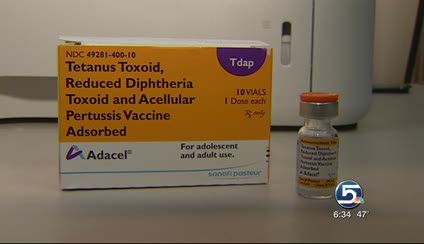
NORTHERN UTAH -- West Valley City Resident Kelley Kramer spent Thursday afternoon getting poked and prodded at the Salt Lake Valley Health Department.
She's getting ready for an upcoming work trip to India, and she listed all the vaccines she needed before international travel.
"Hepatitis A and B, typhoid, tetanus, measles and polio. That's six, right?" she said with a smile on her face. "My girlfriend had more, so I'm glad I only had six."
If you're planning on leaving the country -- whether it's for work or play -- health experts say there are potential health risks.
There were 3,749 cases of measles in France and 400 cases in Spain in January and February of 2011.
Officials say the recent outbreak of measles in the Granite School District is a classic example of what can happen when you're not immunized.
Travel nurses say they've seen people come back from trips with serious diseases like polio and tuberculosis.
"Other countries have polio, and because we do vaccinate pretty well here we don't really see a whole lot of people come back with that but those are all issues," said Holly Birich, clinical director for the health department's International Travel Clinic.
Birich says people headed for underdeveloped countries like India should visit a travel clinic to get information on required vaccinations and potential health risks, including malaria and dengue fever. If you're headed for a country in Eastern Europe, like Russia, you'll also need the polio vaccine, too.
Whether the trip is for a week or a year, they say you should be properly immunized.
The requirements differ for each country. For example, visitors to Mexico are urged to have the routine vaccinations like MMR as well as shots for hepatitis A and B, typhoid and rabies.
Well-developed countries have health risks, too. On Thursday, Birich got a travel alert from the World Health Organization (WHO) warning of a large measles outbreak this year in France and Spain. The alert said there were 3,749 cases of measles in France in January and February of 2011. There were more than 400 cases of measles in Spain in the same time period. The WHO says the numbers are a significant increase over average incidences.
Kelley Kramer, who is also going to Germany soon, isn't too concerned about getting sick during her trip. She didn't need any vaccines to go to Europe and she got all the needed immunizations for India.
She also got some information about food, repellents and what to avoid while in India. Birich told Kramer about a high risk for rabies in India. "Please do not touch the animals," she said.
Email: syi@ksl.com