
Estimated read time: 3-4 minutes
This archived news story is available only for your personal, non-commercial use. Information in the story may be outdated or superseded by additional information. Reading or replaying the story in its archived form does not constitute a republication of the story.
TOOELE COUNTY -- The Big Pole Fire devastated parts of Tooele County in August of 2009. The Bureau of Land Management has been re-seeding a lot of the area so ranchers can get back their pasture land.
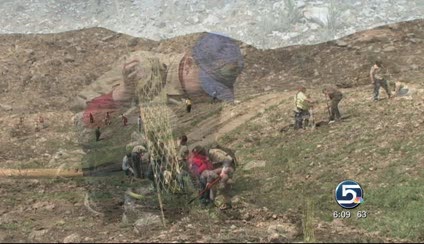
Saturday, the BLM teamed up with the Boy Scouts to plant new trees there.
Jerry and Dee Jensen say they'll never forget the sight of a wildfire roaring towards their home last summer. "It scared the hell out of us," says Jerry.
The Jensens own Lone Rock Ranch in Skull Valley, which is north of Dugway in Tooele County. The Big Pole Fire burned close to 45,000 acres there in August of 2009.
At one point, the fire was the number one priority fire in Utah, eventually bringing in firefighters from out of state to fight it.
"Those guys don't get paid enough," says Jerry. "That's a risky job as far as I'm concerned."
The Jensens almost lost their home in the fire, but did lose 13 of their cattle. Some of their calves died later from injuries they suffered in the fire.
"They just couldn't get out," says Jerry. "That fire just roared across there."
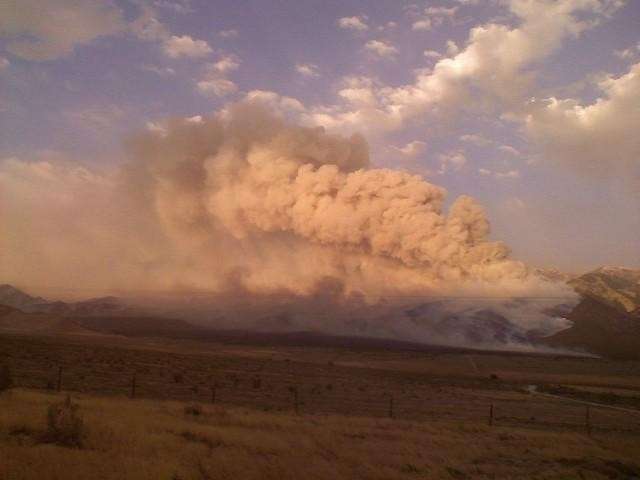
After the fire was put out, the Jensens say most of their land they use for cattle grazing was burned.
"The fire took out all of our winter pasture," says Dee. "We had to go to Morgan County to bring our cattle to graze."
Jerry says the hit they took was devastating. "We paid $20 a month per head to put them on private ground," says Jerry. "It cost us a lot of money. It takes the profit out of the cow business."
Many ranchers in Skull Valley were wondering how long it would be before they could let their cattle graze their again. It turns out, it wasn't long at all.
After the BLM re-seeds all this, it'll come back and be better range than it was before they started.
–Jerry Jensen.
Some cows are already grazing in the area again. Ranchers say it's all thanks to the re-seeding efforts done by the Bureau of Land Management.
"We started the re-seeding almost immediately after the fire. Timing is critical," says Marshall Thompson with the BLM. "Getting the grasses out, it's great for the range and the wildlife to get back out there and have some food."
Saturday afternoon, the BLM and Boy Scouts also started planting some trees in areas where trees were burned down from the fire.
"It speaks to the good things Boy Scouts do, and being good citizens and being involved in the community," says Rick Mendisabal of the Boy Scouts Granger District 13 in West Valley City, "I hope the scouts get the feeling that they're making a difference."
The BLM says planting new trees will also help the land with future thunderstorms. "With getting the grass and plants in there, it'll stabilize the ground and the soil and cause any rain that comes down, it'll eliminate the erosion of run-off occurring," says Thompson.
There are still plenty of places in the area where you can see burned land and burned trees. The BLM says it'll probably be that way for at least the next couple of years, but officials hope all the new growth will eventually turn all the black into green.
"It's going to take a few years before you start seeing some of the major growth come back in the larger plants," says Thompson. "But you can already start seeing some growth."
In many places where the land is burned, new grass is coming through. It's exactly what the Jensens have been hoping for.
"It's wonderful because our land out here was devastated," says Dee.
They are hoping for an even better future. "After the BLM re-seeds all this, it'll come back and be better range than it was before they started," says Jerry.
E-mail: acabrero@ksl.com