
Estimated read time: 3-4 minutes
This archived news story is available only for your personal, non-commercial use. Information in the story may be outdated or superseded by additional information. Reading or replaying the story in its archived form does not constitute a republication of the story.
SALT LAKE CITY -- Utah is slowly losing its capacity to store water, even as our population keeps growing.
That's the conclusion of a new report from the state. Some call it a slow-moving crisis that needs urgent attention.
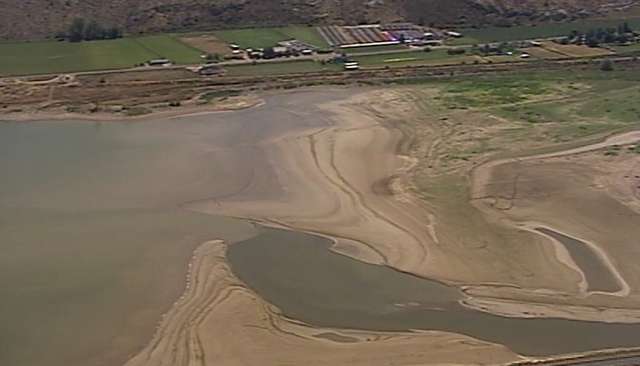
In Utah, we are almost totally dependent on water stored in reservoirs. But for the first time since pioneer days, we've crossed a threshold: The total volume of our reservoirs is actually declining.
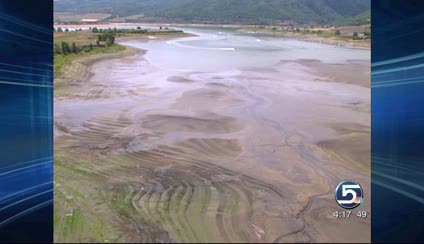
The thief taking away our water storage is sediment backing up in our reservoirs, occupying space designed to hold water.
It's certainly no surprise sediment builds up behind dams. That's been known for centuries. Ever since dams were built, silt, mud, sand and gravel have been pouring in from rivers and streams the dams have blocked.
"That means it's displacing water in our reservoirs and we're losing capacity over time," said Todd Stonely with the Utah Division of Water Resources.
For the first time, a state report quantifies the problem.
Statewide -- not counting Lake Powell -- we're losing 0.2 percent a year of our storage. Capacity is already down about 15 percent overall, a loss that will nearly double in the next 50 years.
"If we were to lose all that capacity at once, it would be a catastrophe. But because it's happening so slowly we don't give it much thought. And it's maybe been neglected," Stonely said. "Ultimately we'll have to do something about it. We can't ignore it forever."
Since pioneer times, we've been building dams and reservoirs to keep up with population growth. But the last major project was finished in 2002.
Because of sediment buildup, actual water storage has always fallen short. Now it's declining for the first time, even as population and water demand keep rising.
Professor Dan McCool with the University of Utah Department of Political Science says the trend is doubly bad because scientists expect less rain and snow far into the future.
"It's urgent," McCool said. "People don't like to use the word 'crisis,' but in this case I think we need to do something about this now."
McCool wants conservation and water law reform, including water sales across state lines so prices are set by market forces.
"You raise prices of water, but you also use government incentives for everyone to use water more wisely," he said.
There are practical but expensive methods to prevent sediment buildup.
Stonely said, "We also probably need to build more storage to meet those growing demands."
"That would make us even more dependent on water with a questionable future," McCool counters.
Lake Powell was left out of the estimates because it's so big it would skew the data. It gets a tremendous amount of sediment each year, but it's volume is so great it actually lasts longer than many other reservoirs.
Some reservoirs will last hundreds of years, others will be useless in just a few decades.
E-mail: hollenhorst@ksl.com