

- Research shows that women in higher education leadership positions improve outcomes, but they remain underrepresented.
- In Utah, women hold 18.8% of higher education presidencies, below the national average of 33%.
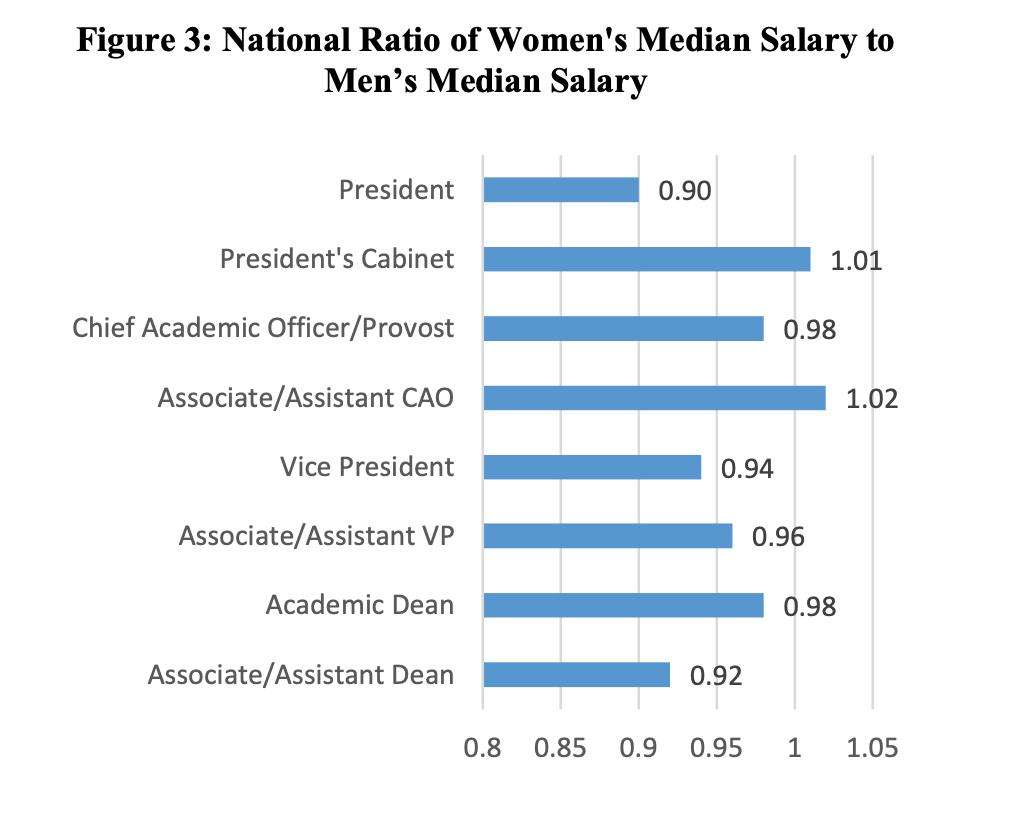
- Women leaders, on average, earn less than men nationally and in Utah.
LOGAN — For the last decade-plus, research has shown that women serving in higher education-based leadership roles lead to improved outcomes for students, faculty, staff and communities as a whole.
The catch?
Women remain underrepresented in many of higher education's most influential and important roles — presidencies, chief academic officer positions and key pipeline roles that lead to senior leadership positions, according to research released Thursday by Utah State University's Utah Women and Leadership Project.
And in the Beehive State, women are represented at a lower rate than the national average, despite making strides to start closing the gap in recent years.
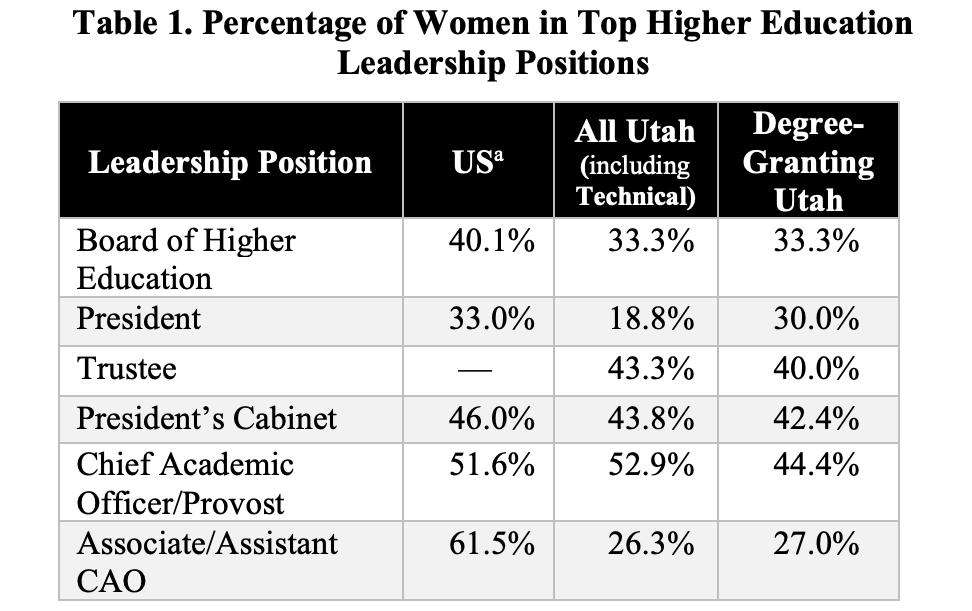
Starting at the top with state-level governance, Utah's 10-member board of higher education is composed of 30% women, lower than the national average of 40% and down from what it was in 2021 (44.4%), according to the report.
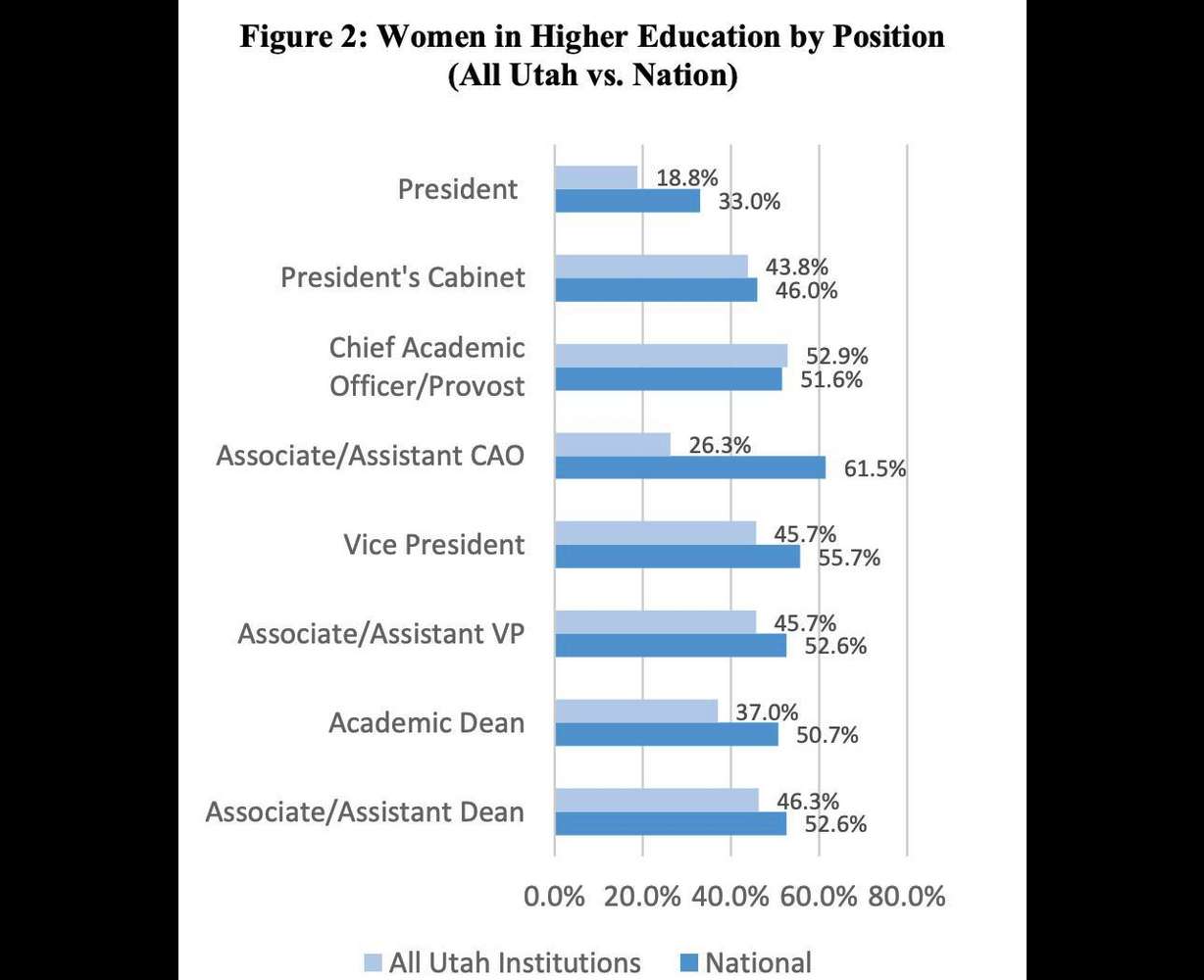
At the presidential level, data from the College and University Professional Association for Human Resources showed that in 2026, women make up 33% of college and university presidencies nationwide.
Across Utah's entire higher education landscape, including technical colleges and private institutions, women make up 18.8% of presidents.
That number is higher (30%) for the state's eight public degree-granting institutions — represented by Southern Utah University President Mindy Benson and Snow College President Stacee McIff — but down from 50% in 2021.
The report also said that nationally, women leaders are generally paid less than men. Specifically, women presidents earn 90% of what their male counterparts earn, and women leaders overall earn 94.0% of what men in higher education leadership roles earn.
"More importantly, women in the leadership pipeline at institutions with women presidents earn more and are more represented in leadership positions than those at institutions with presidents who are men," the report said.
At degree-granting institutions in the Utah System of Higher Education, the average base salaries of male presidents are $265,061 higher than the base salaries of women presidents — although this gap is largely due to University of Utah President Taylor Randall's salary being nearly double that of the next highest-paid president.
Without the U. as an outlier, women presidents in Utah earn $39,973 more than men.
Despite Utah's progress since 2021 — with increases in women serving as vice presidents, academic deans, trustees, and cabinet members — the report noted that women are still underrepresented in top leadership roles.
In particular, the report said the state should focus on preparing, supporting and retaining more women in educational leadership positions.
"These gaps matter. As Utah navigates demographic shifts, workforce needs, and changes in the higher education landscape, the state must ensure that leadership teams reflect the full range of talent and perspectives within its communities," the report reads. "Doing so will strengthen institutions, bolster Utah's economy, and expand opportunities for students across the state."
The full report can be found here.