'%3e%3cpath%20d='M34.1406%205.85938C30.3906%202.10547%2025.3047%200%2020%200C14.6953%200%209.60938%202.10547%205.85938%205.85938C2.10938%209.61328%200%2014.6953%200%2020C0%2025.3047%202.10547%2030.3906%205.85938%2034.1406C9.61328%2037.8906%2014.6953%2040%2020%2040C25.3047%2040%2030.3906%2037.8945%2034.1406%2034.1406C37.8906%2030.3906%2040%2025.3047%2040%2020C40%2014.6953%2037.8945%209.60938%2034.1406%205.85938ZM37.0117%2023.543H31.1602V13.5391H27.6328V19.9414C28.1211%2020.6914%2028.3711%2021.582%2028.3711%2022.5625V22.625C28.3711%2023.668%2028.1172%2024.6055%2027.6328%2025.4297V26.6094H36.082C33.4883%2032.9375%2027.2891%2037.3789%2020.0039%2037.3789C10.3711%2037.3789%202.62109%2029.6289%202.62109%2020C2.62109%2010.3711%2010.3711%202.62109%2020%202.62109C29.6289%202.62109%2037.3789%2010.3711%2037.3789%2020C37.3789%2021.1484%2037.2617%2022.2656%2037.0508%2023.3477C37.0391%2023.4141%2037.0234%2023.4766%2037.0117%2023.543Z'%20fill='white'/%3e%3cpath%20d='M22.3086%2018.5352C20.4336%2018.125%2019.9531%2017.8398%2019.9766%2017.1836V17.1406C19.9766%2016.6992%2020.3477%2016.2148%2021.4023%2016.2148C22.582%2016.2148%2023.8867%2016.6797%2025.0781%2017.4766L26.8516%2015.0195C25.4453%2013.8906%2023.707%2013.3398%2021.5547%2013.3398C18.5195%2013.3398%2016.4375%2015%2016.4063%2017.4766V17.5352C16.3633%2020.2617%2018.5859%2020.9805%2021.293%2021.6016C23.0391%2021.9766%2023.5703%2022.3164%2023.5703%2022.9609L23.5469%2022.9766C23.5469%2023.3906%2023.2578%2023.7031%2022.7852%2023.8359C22.5742%2023.9062%2022.1289%2023.9727%2021.5156%2023.9727C20.7617%2023.9727%2019.7539%2023.8633%2018.6328%2023.4844C18.0898%2023.2891%2017.4727%2023.0039%2016.8047%2022.6133L20.1406%2026.625C20.2813%2026.6602%2021.0977%2026.8516%2021.7734%2026.8516C25.0039%2026.8516%2027.0859%2025.2461%2027.1094%2022.6328V22.5703C27.1602%2020.1133%2025.2148%2019.1719%2022.3086%2018.5352Z'%20fill='white'/%3e%3cpath%20d='M5.24219%2013.5664V26.6133H8.75391V23.7578L10.2969%2021.9531L14.2031%2026.6133H18.3867L12.3555%2019.5195L17.4023%2013.5664H13.4531L8.75391%2019.0586V13.5664H5.24219Z'%20fill='white'/%3e%3c/g%3e%3cdefs%3e%3cclipPath%20id='clip0_97_2430'%3e%3crect%20width='40'%20height='40'%20fill='white'/%3e%3c/clipPath%3e%3c/defs%3e%3c/svg%3e)




- Josh Nielsen and Louis Williams guide tours in Bears Ears, sharing differing views.
- Nielsen supports local input on land use, emphasizing multiple uses for public lands.
- Williams values monument protection for cultural preservation, wary of potential land leases.
BLANDING — Before Bears Ears gained its monument designation in 2016, by President Barack Obama, Josh Nielsen said the area drew very few tourists.
"Despite their best intentions, more and more people were coming to this area because it's a monument," Nielsen explained. "'It's got to be special.' And it is, but it's just so big. There's not like an entry gate and a set path."
Seeing a need and an opportunity, Nielsen eventually joined forces with his father's company, Sunrise Outfitting - Scenic Adventures, helping people navigate the rugged landscape. Recently, Nielsen showed KSL some of the sites of Bears Ears, and the new monument boundaries, along with another guide and friend, Louis Williams. Williams, who is of Navajo descent, takes groups on hikes and river tours with another company, Ancient Wayves. The two share a love for the land, though their visions for preservation may differ.
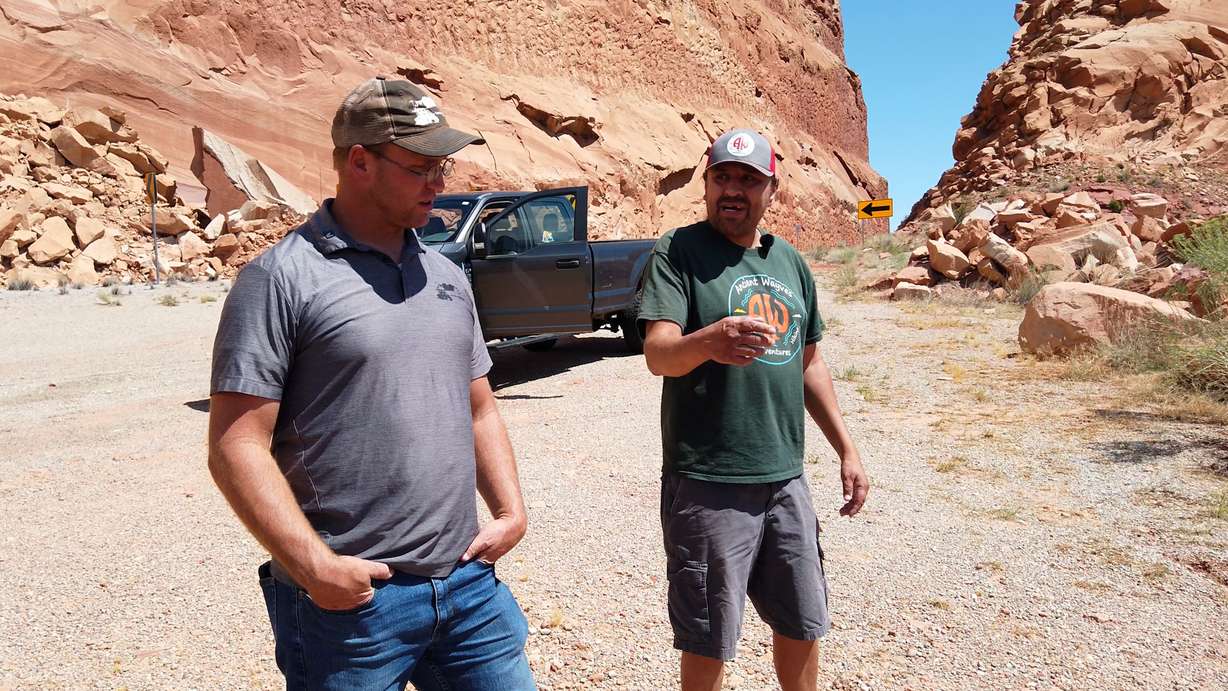
"What I see out here is really a place of healing, a place of protection," Williams said. "When I first heard of this place becoming a monument, I was actually really happy because I was thinking, this place is going to be protected."
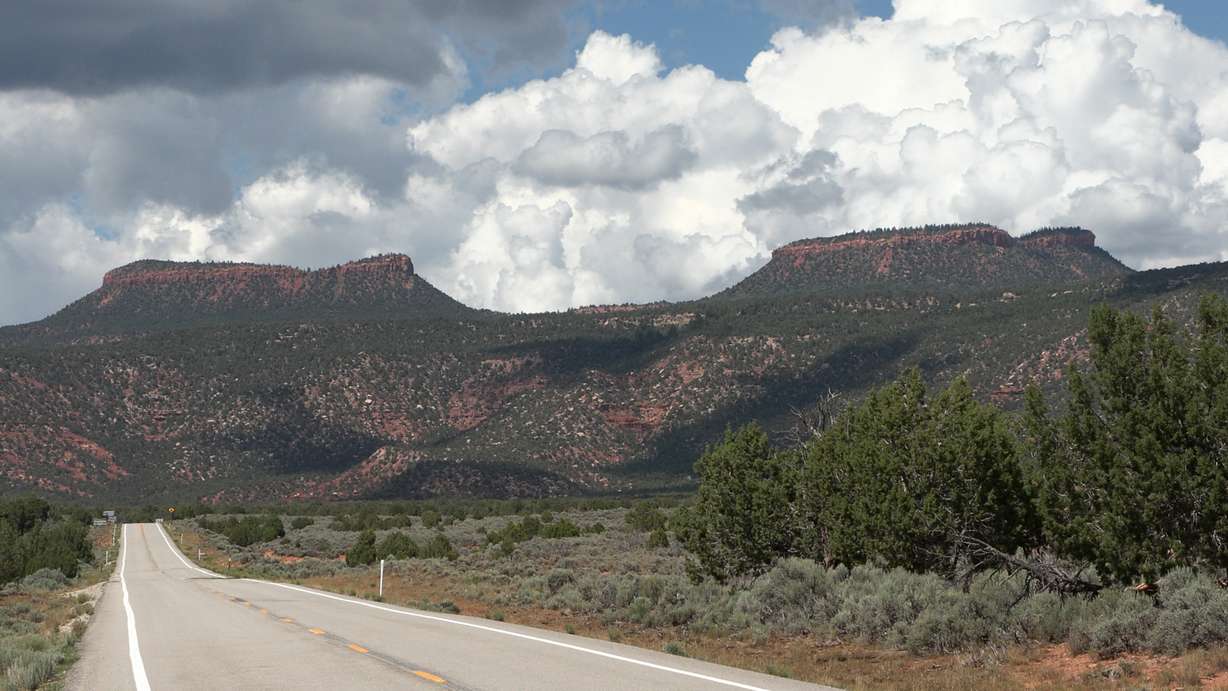
But looking out to the Dark Canyon Wilderness, from just below Bears Ears, Nielsen points out one reason why he believes the area will remain untouched, regardless of designation.
"It's just massive. Dark Canyon Wilderness itself is bigger than some states," Nielsen explained. "It's so remote and so rugged that it's going to take care of itself in a lot of cases."
Nielsen believes that the local communities and leaders should have input on how the land is protected and handled.
"I am a firm believer in multiple use. Public lands (are) for public use," he said. "To me, 1.4 million (acres) was too big. There's just so many other uses. And just because I say there's other uses, it doesn't mean we want people to come in and destroy this. This is our home. We love our home. We want it to be here forever."
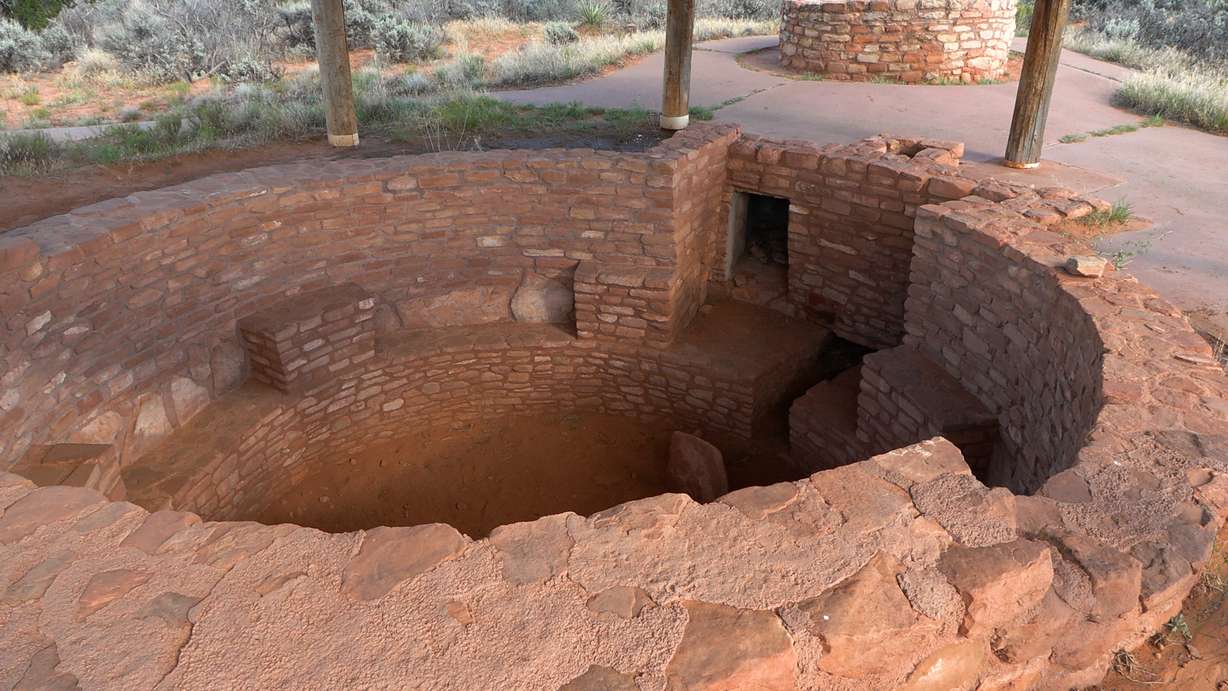
Walking around an ancient kiva, a rock structure used by the Pueblo for religious ceremonies, Williams points out what looks like a small shard of pottery.
"That's Mesa Verde grayware. That was made about 700 A.D," Williams said, adding that he won't even touch the pieces of relics. "As a visitor, I want to be respectful and not tarnish that. I just want to leave it as is."
That deep reverence is in part why he welcomed the larger monument designation, at about 1.36 million acres, instead of the now 120,000 acres as specified in executive order by President Donald Trump.
"I can't tell you the exact amount of land that should be designated," Williams explained. "But I know for me, from my heart, the more that's protected is so important because those places have stories of the different cultures out there."
Pointing to the expanse to the east of the kiva, Williams mentioned some other hundreds of thousands of similar structures that are likely out in the lands, many still uncovered.
"We cannot tell unless we were to do a little bit of digging, (if) we'd find another Kiva," Williams mused. "That just gives you an idea of what's out there in the Bears Ears area."
Williams adds that he holds some suspicion and mistrust towards interested parties who may want to see the land become available to leases through the Bureau of Land Management.
"That monument is a protective cover. And when you remove that cover, there's people that are looking at this place," Williams said. "The Cold War was the last time when this place was mined for uranium. Times have changed, and we're in a different time where that uranium is in demand now."
Nielsen, however, has faith that the processes in place to use the land will protect it, citing safeguards like the National Environmental Policy Act, or NEPA.
"This is still our home," Nielsen said. "It's our watershed. It's our food source. It's our lumber source. It's very important to us. Yes, we want to be able to use the lands. We want less restrictions, but we're not just going to destroy it, nor do we want people coming here to destroy it."
Both of the friends add that they are tired of the political tug of war that seems to happen with each new administration.
"As a person who really loves the landscape, I worry," Williams said. "All I can do is just do my best and show the goodness of the landscape and how important it is to our younger generations, and just let the people decide on what's important, because the land speaks and I want the people to listen to the land."
"If we don't work together, if we don't come together with an idea that works for everybody, half the people are going to be angry," Nielsen added.