'%3e%3cpath%20d='M34.1406%205.85938C30.3906%202.10547%2025.3047%200%2020%200C14.6953%200%209.60938%202.10547%205.85938%205.85938C2.10938%209.61328%200%2014.6953%200%2020C0%2025.3047%202.10547%2030.3906%205.85938%2034.1406C9.61328%2037.8906%2014.6953%2040%2020%2040C25.3047%2040%2030.3906%2037.8945%2034.1406%2034.1406C37.8906%2030.3906%2040%2025.3047%2040%2020C40%2014.6953%2037.8945%209.60938%2034.1406%205.85938ZM37.0117%2023.543H31.1602V13.5391H27.6328V19.9414C28.1211%2020.6914%2028.3711%2021.582%2028.3711%2022.5625V22.625C28.3711%2023.668%2028.1172%2024.6055%2027.6328%2025.4297V26.6094H36.082C33.4883%2032.9375%2027.2891%2037.3789%2020.0039%2037.3789C10.3711%2037.3789%202.62109%2029.6289%202.62109%2020C2.62109%2010.3711%2010.3711%202.62109%2020%202.62109C29.6289%202.62109%2037.3789%2010.3711%2037.3789%2020C37.3789%2021.1484%2037.2617%2022.2656%2037.0508%2023.3477C37.0391%2023.4141%2037.0234%2023.4766%2037.0117%2023.543Z'%20fill='white'/%3e%3cpath%20d='M22.3086%2018.5352C20.4336%2018.125%2019.9531%2017.8398%2019.9766%2017.1836V17.1406C19.9766%2016.6992%2020.3477%2016.2148%2021.4023%2016.2148C22.582%2016.2148%2023.8867%2016.6797%2025.0781%2017.4766L26.8516%2015.0195C25.4453%2013.8906%2023.707%2013.3398%2021.5547%2013.3398C18.5195%2013.3398%2016.4375%2015%2016.4063%2017.4766V17.5352C16.3633%2020.2617%2018.5859%2020.9805%2021.293%2021.6016C23.0391%2021.9766%2023.5703%2022.3164%2023.5703%2022.9609L23.5469%2022.9766C23.5469%2023.3906%2023.2578%2023.7031%2022.7852%2023.8359C22.5742%2023.9062%2022.1289%2023.9727%2021.5156%2023.9727C20.7617%2023.9727%2019.7539%2023.8633%2018.6328%2023.4844C18.0898%2023.2891%2017.4727%2023.0039%2016.8047%2022.6133L20.1406%2026.625C20.2813%2026.6602%2021.0977%2026.8516%2021.7734%2026.8516C25.0039%2026.8516%2027.0859%2025.2461%2027.1094%2022.6328V22.5703C27.1602%2020.1133%2025.2148%2019.1719%2022.3086%2018.5352Z'%20fill='white'/%3e%3cpath%20d='M5.24219%2013.5664V26.6133H8.75391V23.7578L10.2969%2021.9531L14.2031%2026.6133H18.3867L12.3555%2019.5195L17.4023%2013.5664H13.4531L8.75391%2019.0586V13.5664H5.24219Z'%20fill='white'/%3e%3c/g%3e%3cdefs%3e%3cclipPath%20id='clip0_97_2430'%3e%3crect%20width='40'%20height='40'%20fill='white'/%3e%3c/clipPath%3e%3c/defs%3e%3c/svg%3e)


- Salt Lake City's Liberty Park Vision Plan focuses on preserving existing features.
- New proposals include a path around the pond and a new greenhouse.
- The plan, 95% complete, will be reviewed by city leaders before it is finalized.
SALT LAKE CITY — Liberty Park has been a cherished outdoor treasure in Salt Lake City for nearly 150 years, and Utah's capital city doesn't plan on making too many major changes as it maps out its future.
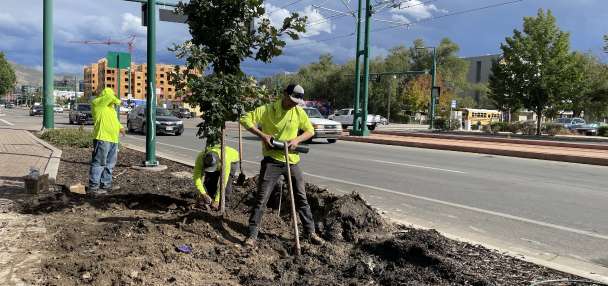
The city unveiled its key pieces of the proposed Liberty Park Vision Plan to parkgoers on Wednesday. The document outlines project goals for the next few decades, but those goals mostly rely on maintaining beloved park features by planting new trees that will ultimately replace the park's older ones.
However, it also proposes new elements, like a path around the park's pond and a new greenhouse after the city determined that its historic one is unlikely to be preserved.
"It's really a balance of highlighting the features that the public really loves and keeping them pristine and maintained, as well as looking at potentially new features," said Kathryn Sonntag, associate landscape architect for Salt Lake City Public Lands.
Salt Lake City regularly updates plans for its parks. The new document was pieced together after the city first compiled a cultural landscape report last year, which recorded significant elements from the long history of the park's landscape features.
Planners then merged that with feedback on what residents want for the future, gathering over 1,000 comments or survey responses from online and in-person events. What they found is that most people didn't want drastic changes for the city's oldest park.
Unlike other recent plans, like ones for Glendale or Fairmont parks, it focuses more on deferred maintenance, repairs or enhancements of existing features than new projects.
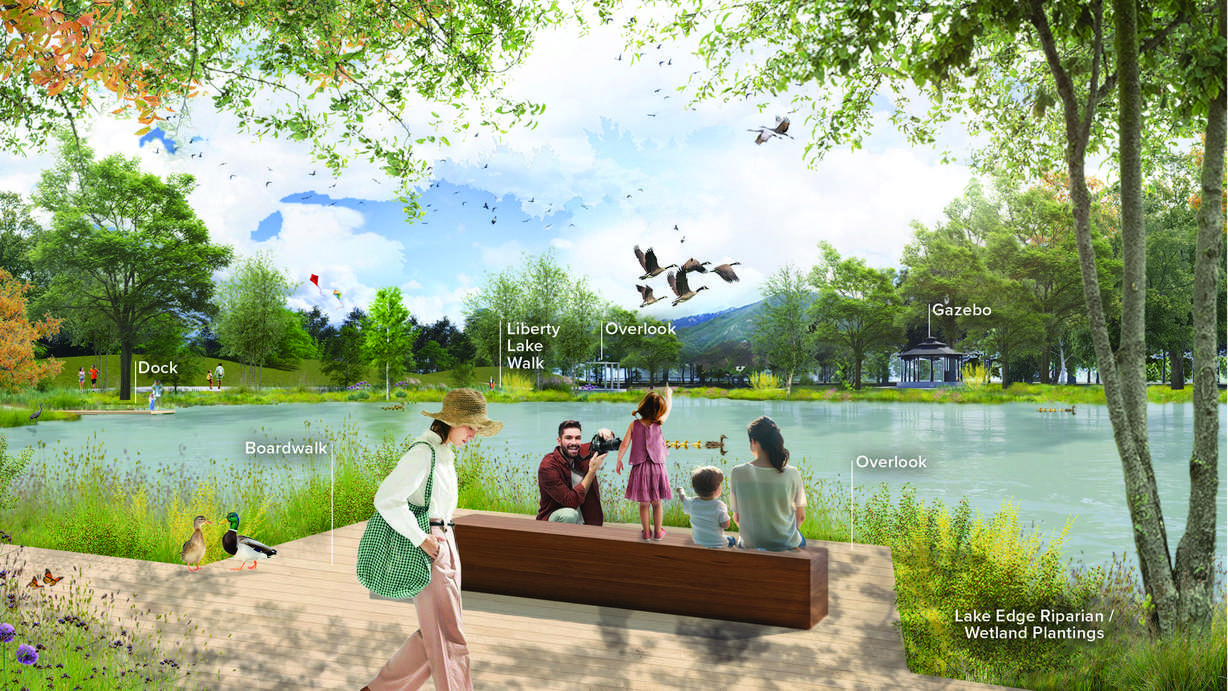
The city will dredge the park pond soon, but the plan outlines ideas for after that. Those include adding new riparian vegetation and a new boardwalk for birdwatching, which could set up future partnerships with Tracy Aviary located west of the pond.
A new path could be built around it from an informal one that's emerged over the years from visitors, which Sonntag refers to as "desire lines." It also calls for planting new trees to preserve one of the park's iconic elements.
"The trees are very old, and many of them are declining, so we wanted to incorporate a tree succession plan that would allow for the designing and planning of new trees to grow under the canopy of the mature trees so when the mature trees decline, there are trees in place to help provide the wonderful shade that we find at Liberty Park," she told KSL.
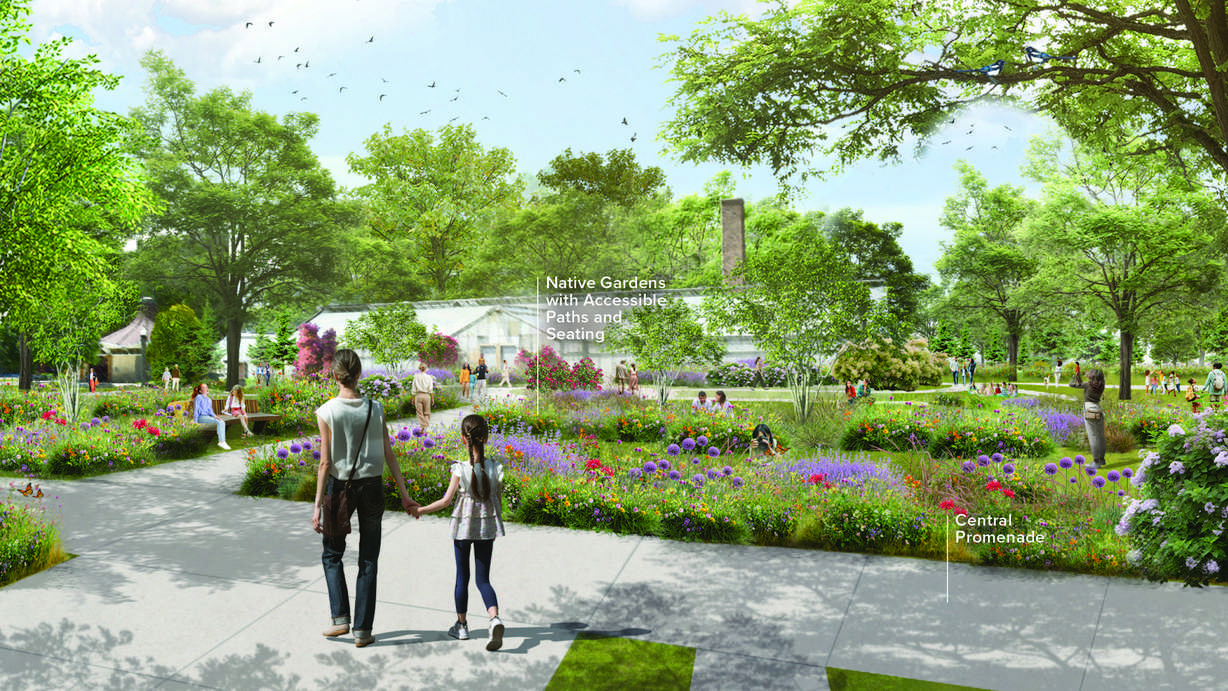
The biggest change might be the greenhouse. The plan outlines a new building that would replace the current one that was constructed in 1903, after a review of the historic building's structural integrity yielded multiple concerns.
The new building would honor the old one, setting aside a new way to offer education of native and water-wise plants, while also adding new cafe and event space, Sonntag said.
Those who stopped by to view the renderings were mostly supportive of it. Cindy Cromer, a Salt Lake resident and part of a community advisory committee that contributed to the report, said she was unhappy that the historic greenhouse was deemed a noncontributing feature, which she believes was meant to make it easier to demolish and replace rather than preserve.
She also believes maintenance should be more prominently displayed in the report, underscoring its importance.
"People get distracted by flashy projects, but what people love is what's already here and what's been here," she said. "It takes a lot of vigilance to keep trendy changes from intruding into this historic place, and maintenance is key."
The plan is 95% complete, meaning it might get some final tweaks before being enacted.
It will be presented to the Salt Lake City Historic Landmark Commission and to city leaders after that. It doesn't have to be formally approved by the City Council, but Sonntag said the department would like to have additional eyes on it because of the park's importance.
Seeking exact project costs and funding sources would begin after that, as certain features are closer to development.
Correction: An earlier version incorrectly referred to Sugarmont Park instead of Fairmont Park.