'%3e%3cpath%20d='M34.1406%205.85938C30.3906%202.10547%2025.3047%200%2020%200C14.6953%200%209.60938%202.10547%205.85938%205.85938C2.10938%209.61328%200%2014.6953%200%2020C0%2025.3047%202.10547%2030.3906%205.85938%2034.1406C9.61328%2037.8906%2014.6953%2040%2020%2040C25.3047%2040%2030.3906%2037.8945%2034.1406%2034.1406C37.8906%2030.3906%2040%2025.3047%2040%2020C40%2014.6953%2037.8945%209.60938%2034.1406%205.85938ZM37.0117%2023.543H31.1602V13.5391H27.6328V19.9414C28.1211%2020.6914%2028.3711%2021.582%2028.3711%2022.5625V22.625C28.3711%2023.668%2028.1172%2024.6055%2027.6328%2025.4297V26.6094H36.082C33.4883%2032.9375%2027.2891%2037.3789%2020.0039%2037.3789C10.3711%2037.3789%202.62109%2029.6289%202.62109%2020C2.62109%2010.3711%2010.3711%202.62109%2020%202.62109C29.6289%202.62109%2037.3789%2010.3711%2037.3789%2020C37.3789%2021.1484%2037.2617%2022.2656%2037.0508%2023.3477C37.0391%2023.4141%2037.0234%2023.4766%2037.0117%2023.543Z'%20fill='white'/%3e%3cpath%20d='M22.3086%2018.5352C20.4336%2018.125%2019.9531%2017.8398%2019.9766%2017.1836V17.1406C19.9766%2016.6992%2020.3477%2016.2148%2021.4023%2016.2148C22.582%2016.2148%2023.8867%2016.6797%2025.0781%2017.4766L26.8516%2015.0195C25.4453%2013.8906%2023.707%2013.3398%2021.5547%2013.3398C18.5195%2013.3398%2016.4375%2015%2016.4063%2017.4766V17.5352C16.3633%2020.2617%2018.5859%2020.9805%2021.293%2021.6016C23.0391%2021.9766%2023.5703%2022.3164%2023.5703%2022.9609L23.5469%2022.9766C23.5469%2023.3906%2023.2578%2023.7031%2022.7852%2023.8359C22.5742%2023.9062%2022.1289%2023.9727%2021.5156%2023.9727C20.7617%2023.9727%2019.7539%2023.8633%2018.6328%2023.4844C18.0898%2023.2891%2017.4727%2023.0039%2016.8047%2022.6133L20.1406%2026.625C20.2813%2026.6602%2021.0977%2026.8516%2021.7734%2026.8516C25.0039%2026.8516%2027.0859%2025.2461%2027.1094%2022.6328V22.5703C27.1602%2020.1133%2025.2148%2019.1719%2022.3086%2018.5352Z'%20fill='white'/%3e%3cpath%20d='M5.24219%2013.5664V26.6133H8.75391V23.7578L10.2969%2021.9531L14.2031%2026.6133H18.3867L12.3555%2019.5195L17.4023%2013.5664H13.4531L8.75391%2019.0586V13.5664H5.24219Z'%20fill='white'/%3e%3c/g%3e%3cdefs%3e%3cclipPath%20id='clip0_97_2430'%3e%3crect%20width='40'%20height='40'%20fill='white'/%3e%3c/clipPath%3e%3c/defs%3e%3c/svg%3e)




Estimated read time: 4-5 minutes
If you're increasingly interested in food production, you're not alone.
In fact, according to the International Food Information Council, nearly 60% of Americans want to know where their food comes from – and that means the people and practices behind everyday staples like dairy.
For dairy farmers, feeding families — including their own — high-quality food is top of mind. According to the U.S. Department of Agriculture, more than 95% of U.S. farms are family-owned, a statistic that underscores the deeply personal nature of agriculture.
In dairy farming, that legacy often spans generations, shaping not only how farms operate today but how they are preserved for the future.
A legacy rooted in stewardship
For many dairy farmers, the work is about far more than milk production — it's about responsibility.
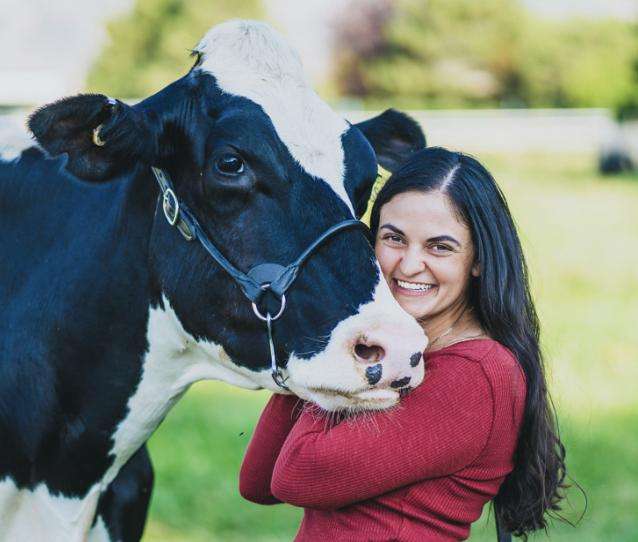
"Dairy farming is really about stewardship," said Lacey Papageorge, a farmer relations manager with Dairy West. "Farmers are caring for their animals, their land and their communities every single day, and there's a strong sense of responsibility to make sure those resources are taken care of for the future."
In her role, Papageorge supports dairy farmers across Idaho, Oregon, Utah and Washington.
She also brings a personal perspective as a fourth-generation dairy farmer, working on her family's farm near Farr West, Utah.
That sense of responsibility is often tied to family history.
Many dairy farms are passed down through generations, creating a long-term perspective that influences daily decision-making. Farmers aren't just managing a business — they're preserving a way of life.
"Most dairy farms are family farms," Papageorge said. "The decisions being made aren't just about today — they're about making sure the farm can continue for the next generation. That long-term mindset naturally shapes farmers' approach to sustainable farming."
Farming for the future
The concept of responsible dairy farming — sometimes associated with broader approaches like regenerative agriculture — can sound complex, but at its core, it is rooted in practical, everyday actions.
Rather than relying on a single solution, farmers often focus on continuous improvement: Finding ways to use resources more efficiently, reduce waste and strengthen the resilience of their operations over time.
"Keeping your dairy farm sustainable doesn't come from one big change — it's a lot of small, intentional decisions over time," Papageorge said. "Farmers are always looking for ways to improve how they use resources and make their operations more efficient."
These efforts can take many forms, depending on the farm, its location and available resources.
Practices may include improving soil health, carefully managing water use, and finding innovative ways to repurpose byproducts as feed — all with the goal of doing more with less.
Because no two farms are alike, solutions are rarely one-size-fits-all. What works in one region may not apply in another, making adaptability a key part of responsible farming.
Innovation meets tradition
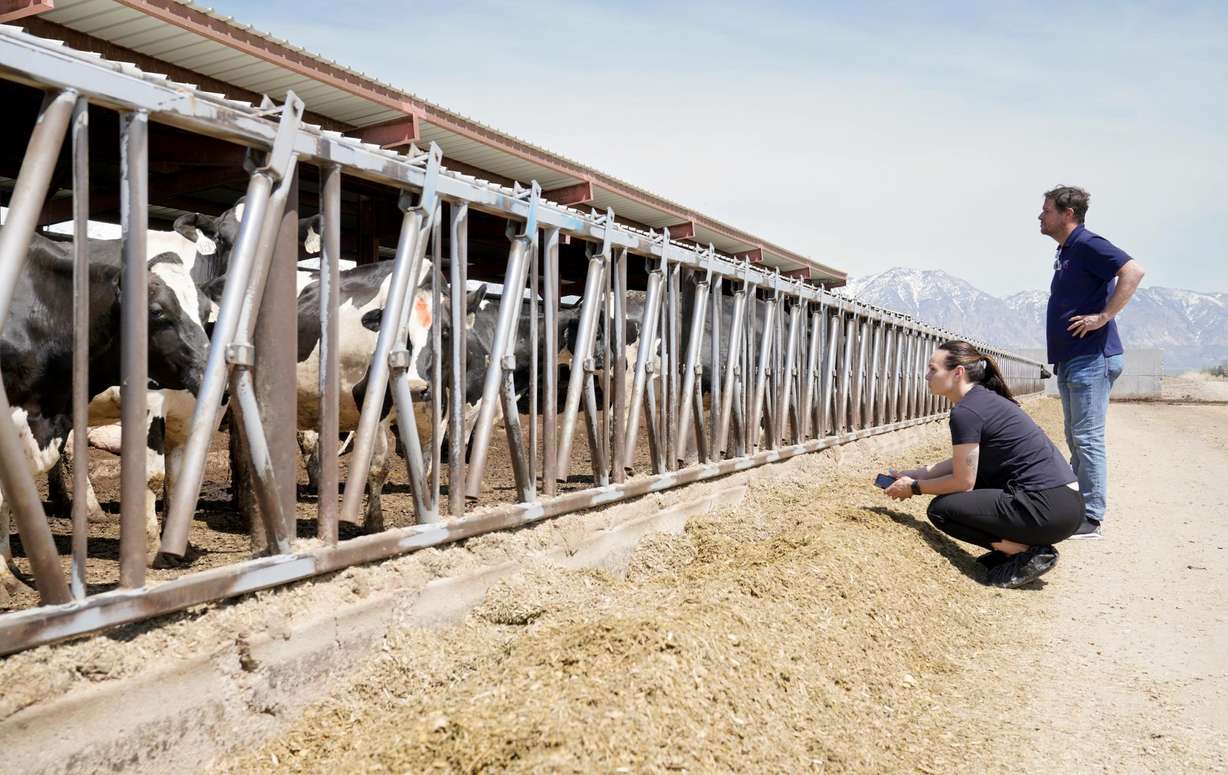
While dairy farming is deeply rooted in tradition, it is also an evolving industry.
Farmers increasingly partner with researchers, organizations and local communities to explore new approaches that can improve both efficiency and environmental outcomes.
Technology plays a growing role as well, helping farmers monitor animal health, optimize feed and track resource use with greater precision.
These tools support better decision-making while allowing farmers to respond quickly to changing conditions.
At the same time, innovation doesn't replace the human element — it complements it. Farmers' day-to-day knowledge of their land and animals remains central to how decisions are made.
"Dairy farmers make intentional decisions over time to prioritize continuous improvement on their farms," Papageorge said. "They focus on how they utilize resources with a goal of efficiency and ultimately passing the farm to the next generation."
Caring for animals, land and community
Responsible dairy farming extends beyond environmental practices to include animal care and community relationships.
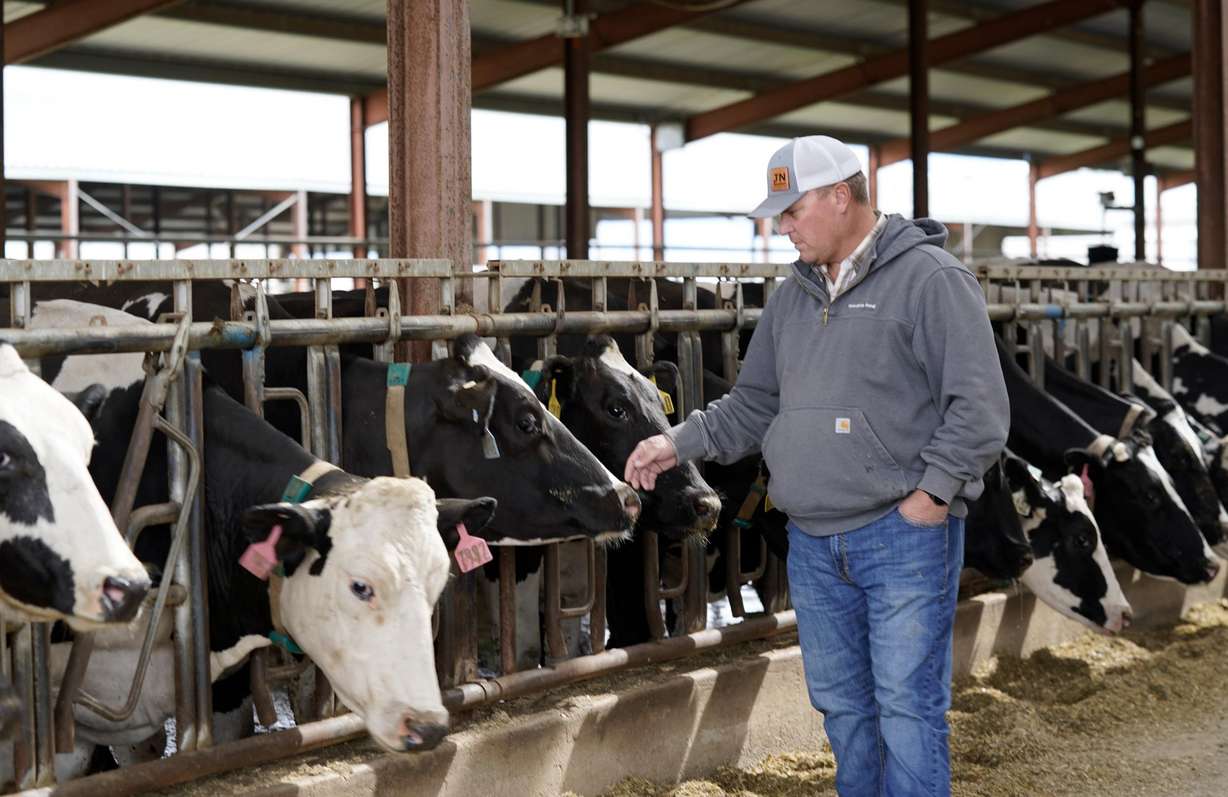
Healthy animals are essential to a successful dairy operation, and farmers invest significant time and attention into ensuring their well-being.
This includes proper nutrition, comfortable living conditions and regular health monitoring.
At the same time, farms often play a vital role in their local communities, supporting jobs, contributing to local economies and maintaining open spaces.
This interconnected approach — caring for animals, land and people — reflects a broader view of sustainability, one that recognizes the importance of balance across all aspects of the farm.
Building trust through transparency
As consumers become more interested in how food is produced, transparency has become an increasingly important part of agriculture.
Organizations like Dairy West aim to help bridge the gap between farmers and the public by sharing information about farming practices in a clear and approachable way.
Through its sustainability initiatives page, Dairy West highlights the ways farmers across the region are working toward long-term environmental goals, including improving efficiency and reducing their overall footprint.
The goal is not to present farming as perfect, but to show the ongoing effort and intention behind it.
Looking ahead
For farmers, the connection between food, people and the environment is deeply personal — shaped by family legacy, daily responsibility and a commitment to the future.
"Dairy farming is about making sure the land, animals and resources are cared for in a way that allows the farm to continue," Papageorge said. "It's something farmers think about every day."