
Estimated read time: 7-8 minutes
For decades, employers have focused on rising healthcare premiums, mental health, and productivity. But one of the largest and most overlooked cost drivers has been sitting right in front of them – literally.
Spine-focused musculoskeletal conditions issues like back and neck pain have quietly become the No. 1 driver of disability and one of the most expensive health burdens in the workforce.
A $600 billion problem — driven largely by the spine
More than half of U.S. adults live with a musculoskeletal condition, making it one of the most widespread health issues in the country, according to information from Kaiser Permanente.
For employers, the impact goes far beyond discomfort:
- Musculoskeletal conditions cost the U.S. economy $600 billion annually. That's more than heart disease and cancer combined, reports a McGohan Brabender analysis.
- Employers spend more than $350 billion per year on Musculoskeletal-related care, according to the Orthopaedic Research Society.
- Musculoskeletal conditions account for about 30% of all workplace absence days, the U.S. Bureau of Labor Statistics reports.
- Nearly 290 million workdays are lost annually due to musculoskeletal conditions, according to research reported in the National Library of Medicine.
- Another National Library of Medicine study reports In 2021, the economic costs of chronic pain in the United States were estimated to be $722.8 billion, including $530.6 billion in medical care costs and $192.2 billion in lost work productivity.
Within that broad category, one area dominates:
Low back pain is the leading cause of disability worldwide, impacting more than 619 million people with an expected increase to 843 million by 2050, according to the World Health Organization.
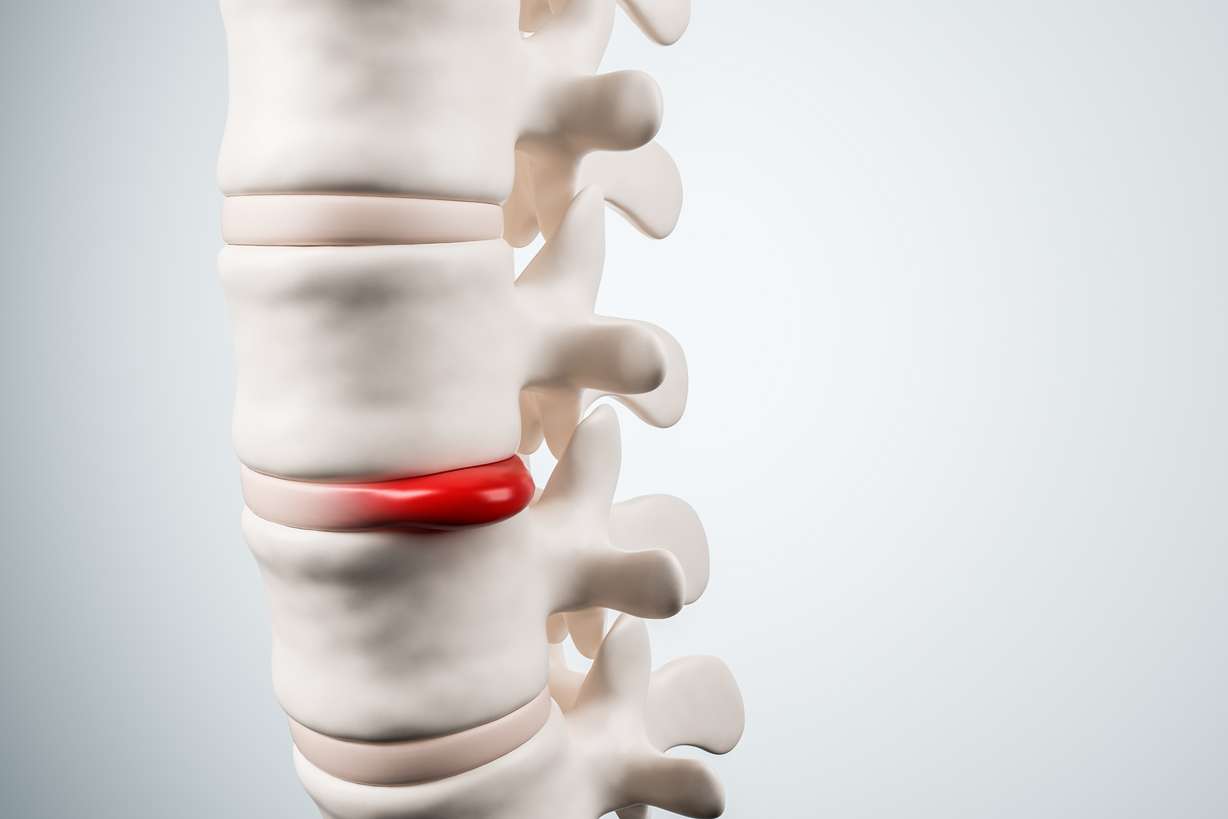
The real issue: Spinal disc failure
Most employers assume these problems come from old injuries, genetics, or aging. In reality, the damage is happening day by day with normal wear and tear that becomes concentrated and exaggerated with sedentary work. While ergonomic fads and furniture make claims to combat this, the return on investment for employers has been very hard to identify, until now.
Today's workforce spends the majority of the day sitting. But sitting is not this issue for spine health. It's when people sit with improper shape and balance, where forces over time introduce dozens of orthopedic conditions.
Office furniture and how it's used is a leading cause of spine and musculoskeletal conditions, making seated work something that is not passive or harmless.
Spinal discs:
- Act as shock absorbers.
- Maintain spacing between vertebrae.
- Depend on specific movements for turgor, hydration, and nutrient exchange.
Research has shown:
- Wolff's Law is an orthopedic principle that reveals poor spine shape (or posture) leads to Skeletal Degeneration Syndrome (SDS) and disc failure.
- Prolonged spinal loading contributes to disc degeneration, a major driver of chronic low back pain, according to research cited in an article for the National Library of Medicine.
- Sedentary behavior is strongly associated with higher rates of musculoskeletal disorders, according to the Centers for Disease Control and Prevention.
Over time, this can lead to:
- Disc dehydration and height loss.
- Bulging or herniation.
- Nerve irritation.
- Chronic pain cycles.
The good news is Uprightly, a Utah-based company with decades of experience in spine care, reports spine and disc conditions can be reversed at any age.
The biggest cost for employers: Employees working in pain
What makes this spine and musculoskeletal conditions issue even more costly is how it shows up in the workplace. Most productivity loss doesn't come from employees staying home.
It comes from employees showing up in pain.
This phenomenon — presenteeism — accounts for most of the annual productivity loss tied to pain.
Employees are physically present — but operating at reduced capacity with:
- Lower focus
- Decreased energy
- Reduced cognitive output.
Why traditional health and wellness programs miss the mark
Many employers have adopted musculoskeletal conditions solutions — virtual care platforms, physical therapy networks, or digital tools to provide genuine solutions for their employees. This admirable effort shows they have identified a real problem that deserves investment and attention.
But most approaches:
- Treat and only mask symptoms after they appear.
- Operate episodically (visit-based care).
- Take a broad, generalized Musculoskeletal conditions approach to prevention.
- Offer little long-term outcomes for root cause issues.
They largely ignore the primary mechanical cause: Chronic disc stress during the workday.

Uprightly spine care benefit: A spine-first approach to musculoskeletal conditions health
Uprightly's Corporate Spine Benefits Plan was built around a different idea:
If companies empower employees with the right tools, equipment, and knowledge to protect the spine — especially discs — employees can reverse and even prevent the majority of Musculoskeletal problems.
Rather than functioning as another generalized Musculoskeletal conditions platform, Uprightly focuses specifically on spine health and disc regeneration and preservation.
What makes it different
Employee empowerment
Employees receive everything they need to manage symptoms, rebuild spine and disc health, and stay protected throughout the workday with orthopedically tailored workstations.
Daily disc hydration and protection
Employees use onsite spine-focused exercise machines that are proven to rebuild and heal spine and discs, helping to reverse and prevent degeneration.
Virtual workplace and at-home delivery
Dedicated and licensed Uprightly Coaches virtually guide employees through a personalized program to overcome their spine and Musculoskeletal conditions issues with long-term success.
Spine-centered SaaS for employers and employees
Employers will see the highest-impact area of Musculoskeletal conditions costs, disability, turnover, work-loss, and performance metrics tracked and improved in a whole new way. Employees will track and monitor their spine and disc health with objective assessment and analysis.
Why employers are paying attention to Uprightly
For employers — especially those with desk-based teams — the opportunity is significant.
Improving spine health leads to:
- Better focus and productivity.
- Fewer chronic pain cycles & conditions.
- Reduced long-term healthcare claims and utilization.
- Reduced workers' compensation and disability claims
- Improved talent acquisition advantage.
- Improved retention, morale and satisfaction.
- A shift from business as usual – to controlling and preventing claims and performance loss with accountability and a measurable return on investment.
The bottom line
Musculoskeletal conditions are often treated as a broad category. But the problem is highly specific. The majority start with the spine, especially for seated workers with a slow breakdown of spinal discs under constant wear, tear, and compression from forward flexion.
For decades, this issue has smoldered in the modern workplace — going largely unnoticed. But now, employers have the opportunity to address the root cause directly to bring them significant benefits. Not with just another generalized musculoskeletal conditions solution, but with a spine-first approach designed to protect the body's most critical structure before and even after it fails.
The opinions and conclusions expressed in this article are the sponsor's own and do not reflect the views or opinions of KSL.com. This Site Does Not Provide Medical Advice. Any content on this Site, such as text, graphics, images, information obtained from, or contained on this Site are for informational purposes only. The content is not intended to be a substitute for professional medical advice, diagnosis, or treatment. Always seek the advice of your physician or other qualified health provider with any questions you may have regarding a medical condition. Never disregard professional medical advice or delay in seeking it because of something you have read on this site! The owner and operator of this site do not recommend or endorse any specific tests, physicians, products, procedures, opinions, or other information that may be mentioned on the site. Reliance on any information provided by the Operator, including their employees, contractors or others appearing on the Site at the invitation of the Operator, or other visitors to the Site is solely at your own risk. If you think you may have a medical emergency, call your doctor or 911 immediately.






