'%3e%3cpath%20d='M34.1406%205.85938C30.3906%202.10547%2025.3047%200%2020%200C14.6953%200%209.60938%202.10547%205.85938%205.85938C2.10938%209.61328%200%2014.6953%200%2020C0%2025.3047%202.10547%2030.3906%205.85938%2034.1406C9.61328%2037.8906%2014.6953%2040%2020%2040C25.3047%2040%2030.3906%2037.8945%2034.1406%2034.1406C37.8906%2030.3906%2040%2025.3047%2040%2020C40%2014.6953%2037.8945%209.60938%2034.1406%205.85938ZM37.0117%2023.543H31.1602V13.5391H27.6328V19.9414C28.1211%2020.6914%2028.3711%2021.582%2028.3711%2022.5625V22.625C28.3711%2023.668%2028.1172%2024.6055%2027.6328%2025.4297V26.6094H36.082C33.4883%2032.9375%2027.2891%2037.3789%2020.0039%2037.3789C10.3711%2037.3789%202.62109%2029.6289%202.62109%2020C2.62109%2010.3711%2010.3711%202.62109%2020%202.62109C29.6289%202.62109%2037.3789%2010.3711%2037.3789%2020C37.3789%2021.1484%2037.2617%2022.2656%2037.0508%2023.3477C37.0391%2023.4141%2037.0234%2023.4766%2037.0117%2023.543Z'%20fill='white'/%3e%3cpath%20d='M22.3086%2018.5352C20.4336%2018.125%2019.9531%2017.8398%2019.9766%2017.1836V17.1406C19.9766%2016.6992%2020.3477%2016.2148%2021.4023%2016.2148C22.582%2016.2148%2023.8867%2016.6797%2025.0781%2017.4766L26.8516%2015.0195C25.4453%2013.8906%2023.707%2013.3398%2021.5547%2013.3398C18.5195%2013.3398%2016.4375%2015%2016.4063%2017.4766V17.5352C16.3633%2020.2617%2018.5859%2020.9805%2021.293%2021.6016C23.0391%2021.9766%2023.5703%2022.3164%2023.5703%2022.9609L23.5469%2022.9766C23.5469%2023.3906%2023.2578%2023.7031%2022.7852%2023.8359C22.5742%2023.9062%2022.1289%2023.9727%2021.5156%2023.9727C20.7617%2023.9727%2019.7539%2023.8633%2018.6328%2023.4844C18.0898%2023.2891%2017.4727%2023.0039%2016.8047%2022.6133L20.1406%2026.625C20.2813%2026.6602%2021.0977%2026.8516%2021.7734%2026.8516C25.0039%2026.8516%2027.0859%2025.2461%2027.1094%2022.6328V22.5703C27.1602%2020.1133%2025.2148%2019.1719%2022.3086%2018.5352Z'%20fill='white'/%3e%3cpath%20d='M5.24219%2013.5664V26.6133H8.75391V23.7578L10.2969%2021.9531L14.2031%2026.6133H18.3867L12.3555%2019.5195L17.4023%2013.5664H13.4531L8.75391%2019.0586V13.5664H5.24219Z'%20fill='white'/%3e%3c/g%3e%3cdefs%3e%3cclipPath%20id='clip0_97_2430'%3e%3crect%20width='40'%20height='40'%20fill='white'/%3e%3c/clipPath%3e%3c/defs%3e%3c/svg%3e)


Estimated read time: 5-6 minutes
In today's job market, clear and strategic communication isn't just a bonus skill — it's a necessity. Companies are looking for people who can simplify complicated information, manage digital platforms with confidence and think carefully about how their messages land with different audiences.
That's exactly what Utah Tech University's Technical Writing & Digital Rhetoric master's program is designed to do. Instead of locking students into a rigid, one-track path, Utah Tech's TWDR program gives them room to shape the degree around their own career goals. Whether you're interested in UX writing, corporate communications, content strategy or digital media, you can tailor the coursework to fit your interests.
And the payoff can be significant. The U.S. Bureau of Labor Statistics consistently reports that people with master's degrees earn higher median wages and experience lower unemployment rates than those with only a bachelor's degree. But beyond the numbers, this program offers something just as valuable: practical skills that transfer across industries and grow with your career.
In other words, it might be the degree you didn't know you needed.
A program suited for multiple fields
Most schools make you choose. You can study technical writing or digital rhetoric — but rarely both.
Utah Tech does things differently. The Technical Writing & Digital Rhetoric master's program combines the two, giving students a broader and more powerful skill set. Instead of training for just one type of job, students learn how to think clearly, write effectively and communicate with purpose across many different industries.
"We see students from an English background, but also from engineering, the sciences and other humanities programs like history and psychology," program coordinator Dr. Joy McMurrin said. "What they are finding in the TWDR program is the ability to articulate their interests and specializations in a better way."
Nowhere is that more evident than in the students themselves. Each has a unique story and experience with the TWDR program that shows how this degree can benefit people from a wide range of backgrounds and career paths.
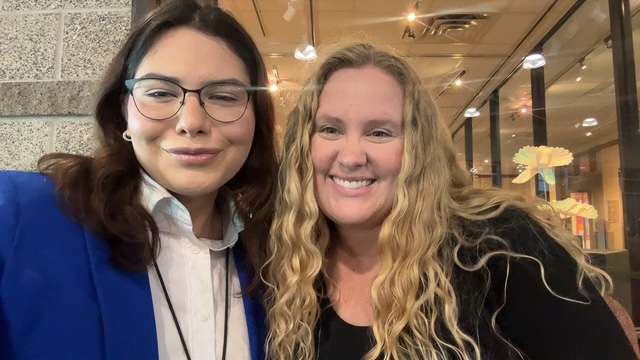
Turning research into advocacy: Mitski Avalōx
Before graduating, Mitski Avalōx began working as a case manager at Berry Law, a firm focused on veteran disability appeals. McMurrin recommended her for the job, where she completed certifications while finishing her final semester. She now works there full-time, regularly analyzing complex legal, medical and government documents.
"The program prepared me to research a topic in depth, and to translate legalese for clients who need to understand their cases in plain language," Avalōx said.
She credits coursework in critical theory and user-centered design with preparing her to read dense material, identify key points and write for specific audiences. In addition to her legal work, she owns Southern Utah Drag Stars and serves on the Utah LGBTQ+ Chamber of Commerce Board.
"The Technical Writing & Digital Rhetoric program has armed me with versatile skills that have allowed me to be effective in my job helping veterans and flourish in my volunteer work."
Applying skills in real time: Sam New
In just his second semester with the TWDR program, Sam New is already putting his coursework to use. As director of student development at NeuroDev — a mentoring program for autistic and neurodivergent young adults — he applies what he learns in real time. His job includes making onboarding materials, training documentation and multimedia resources for a range of audiences.
"My documents affect the entire team, so being able to study technical writing has made a big difference," he said.
He also shared that the program has strengthened his focus on accessibility, audience awareness and universal design.
"My time spent in the program has both improved my performance and grown my avenues at my job, but more importantly, it has given me a mindset that prioritizes audiences in all of my work."
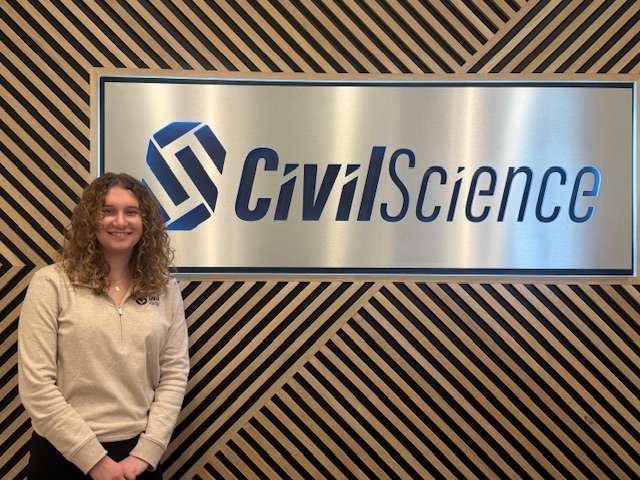
Coursework that moves careers: Alyssa Bayles
Soon after beginning the TWDR program, Alyssa Bayles started a new role at Civil Science, a Utah-based engineering firm. She was encouraged to align her coursework with workplace needs. Within months, she was promoted to Pursuit Coordinator.
"I am learning such a variety of skills that I can even see myself applying outside of work and the program," she shared. "I am getting to deepen and apply the skills that I learned as an undergrad more confidently."
Bayles also values the program's small class sizes, which cap at 10.
"Everyone is willing to discuss heavier topics, and nobody seems hesitant to express their thoughts. It's like we are less intimidated when we know everyone in the program because we feel connected."
From communication to innovation: Lea Hopkinson
After graduating from the TWDR program in May 2025, Lea Hopkinson stepped into a role she never expected.
Her major project in the program focused on improving user experience in electronic medical records. Soon after, she was promoted to lead technology transfer associate at Utah Tech's Atwood Innovation Plaza, where she now works with students, faculty and community inventors to help turn their ideas into protected intellectual property or business opportunities.
In simple terms, she helps people figure out whether their ideas can be patented, licensed or developed into startups — and how to communicate those ideas clearly.
"My TWDR experience led me to a new career as a technology transfer associate at the Utah Tech Atwood Innovation Plaza, somewhere I never imagined I'd be," Hopkinson said. "The program gave me confidence to take on complex challenges without always knowing the path forward, to seek expert feedback, and to persist through rejection and revision."
Today, she uses the communication, research and problem-solving skills she developed in the program to support innovation in the community.
Convenient, affordable and built for impact
For McMurrin, the program's greatest strength is its students.
"Each of our students brings unique perspectives, insights, and questions to the classroom," she said. "Working with our students has been a privilege, not only because they continually help me refine my own understanding of a discipline I have been studying for decades, but because I get to witness all the amazing ways they're contributing to the world."
Affordability is another clear advantage. The 30-credit program meets one evening a week per class (online or in person) and costs $401 per credit for Utah residents — about $12,030 total. Comparable programs in the region typically cost more than $14,000.
To learn more, visit Utah Tech's Technical Writing & Digital Rhetoric program page today.