'%3e%3cpath%20d='M34.1406%205.85938C30.3906%202.10547%2025.3047%200%2020%200C14.6953%200%209.60938%202.10547%205.85938%205.85938C2.10938%209.61328%200%2014.6953%200%2020C0%2025.3047%202.10547%2030.3906%205.85938%2034.1406C9.61328%2037.8906%2014.6953%2040%2020%2040C25.3047%2040%2030.3906%2037.8945%2034.1406%2034.1406C37.8906%2030.3906%2040%2025.3047%2040%2020C40%2014.6953%2037.8945%209.60938%2034.1406%205.85938ZM37.0117%2023.543H31.1602V13.5391H27.6328V19.9414C28.1211%2020.6914%2028.3711%2021.582%2028.3711%2022.5625V22.625C28.3711%2023.668%2028.1172%2024.6055%2027.6328%2025.4297V26.6094H36.082C33.4883%2032.9375%2027.2891%2037.3789%2020.0039%2037.3789C10.3711%2037.3789%202.62109%2029.6289%202.62109%2020C2.62109%2010.3711%2010.3711%202.62109%2020%202.62109C29.6289%202.62109%2037.3789%2010.3711%2037.3789%2020C37.3789%2021.1484%2037.2617%2022.2656%2037.0508%2023.3477C37.0391%2023.4141%2037.0234%2023.4766%2037.0117%2023.543Z'%20fill='white'/%3e%3cpath%20d='M22.3086%2018.5352C20.4336%2018.125%2019.9531%2017.8398%2019.9766%2017.1836V17.1406C19.9766%2016.6992%2020.3477%2016.2148%2021.4023%2016.2148C22.582%2016.2148%2023.8867%2016.6797%2025.0781%2017.4766L26.8516%2015.0195C25.4453%2013.8906%2023.707%2013.3398%2021.5547%2013.3398C18.5195%2013.3398%2016.4375%2015%2016.4063%2017.4766V17.5352C16.3633%2020.2617%2018.5859%2020.9805%2021.293%2021.6016C23.0391%2021.9766%2023.5703%2022.3164%2023.5703%2022.9609L23.5469%2022.9766C23.5469%2023.3906%2023.2578%2023.7031%2022.7852%2023.8359C22.5742%2023.9062%2022.1289%2023.9727%2021.5156%2023.9727C20.7617%2023.9727%2019.7539%2023.8633%2018.6328%2023.4844C18.0898%2023.2891%2017.4727%2023.0039%2016.8047%2022.6133L20.1406%2026.625C20.2813%2026.6602%2021.0977%2026.8516%2021.7734%2026.8516C25.0039%2026.8516%2027.0859%2025.2461%2027.1094%2022.6328V22.5703C27.1602%2020.1133%2025.2148%2019.1719%2022.3086%2018.5352Z'%20fill='white'/%3e%3cpath%20d='M5.24219%2013.5664V26.6133H8.75391V23.7578L10.2969%2021.9531L14.2031%2026.6133H18.3867L12.3555%2019.5195L17.4023%2013.5664H13.4531L8.75391%2019.0586V13.5664H5.24219Z'%20fill='white'/%3e%3c/g%3e%3cdefs%3e%3cclipPath%20id='clip0_97_2430'%3e%3crect%20width='40'%20height='40'%20fill='white'/%3e%3c/clipPath%3e%3c/defs%3e%3c/svg%3e)


- Eight skiers died in California's deadliest avalanche near Lake Tahoe, authorities reported on Wednesday.
- One skier remains missing, but is presumed dead, after the avalanche hit a 15-person backcountry group.
- Rescue efforts are continuing despite challenging weather conditions, with six survivors rescued so far.
TRUCKEE, Calif. — Eight skiers buried by snow and debris near California's Lake Tahoe amid dangerous conditions were killed in what is now the deadliest avalanche in the state's recorded history, authorities said Wednesday.
One skier is still missing and presumed dead, Nevada County Sheriff Shannan Moon said at a grim news conference.
The skiers were part of a 15-person group on a three‑day backcountry trip in northern California's Sierra Nevada mountains. Six of the members were previously rescued with "various injuries," the sheriff's office said, and two of them were taken to a hospital for treatment. One has since been released, Nevada County Police Capt. Rusty Greene said.
"We did have conversation with the families of the folks that are that are still outstanding and let them know that our mission has went from a rescue to a recovery," Moon said.
Of the nine skiers who were not rescued, seven are female and two are male, the sheriff's office said. Their names were not released.
"It's a difficult conversation to have with loved ones," Moon said. "I can't even imagine the amount of questions and stress that those families are going through right now."
3-day backcountry trip
The skiers, who are from multiple states, were on the final stretch of the trip and were returning to the trailhead Tuesday morning when a wave of ice, rocks and debris came crashing down on them.
The avalanche spanned about a football field's length of the mountain, according to Chris Feutrier, U.S. Department of Agriculture forest supervisor for the Tahoe National Forest.
The avalanche struck, he said, when "a persistent weak layer had a large load of snow over the top of it. That persistent weak layer is still there and has reloaded with another 3 feet of snow — so the hazard remains high."
Some of the survivors, who are four men and two women, said they were trying to go out as a group when someone saw the deluge of snow and yelled, "avalanche," Greene said. One of the guides was among the survivors, the sheriff said.
The disaster at Castle Peak set off a dangerous, hourslong rescue effort hampered by whiteout conditions and strong winds from the winter storm roaring through the rugged Sierra Nevada mountains. NOAA's Weather Prediction Center said 3-4 inches of snow an hour was possible Tuesday.
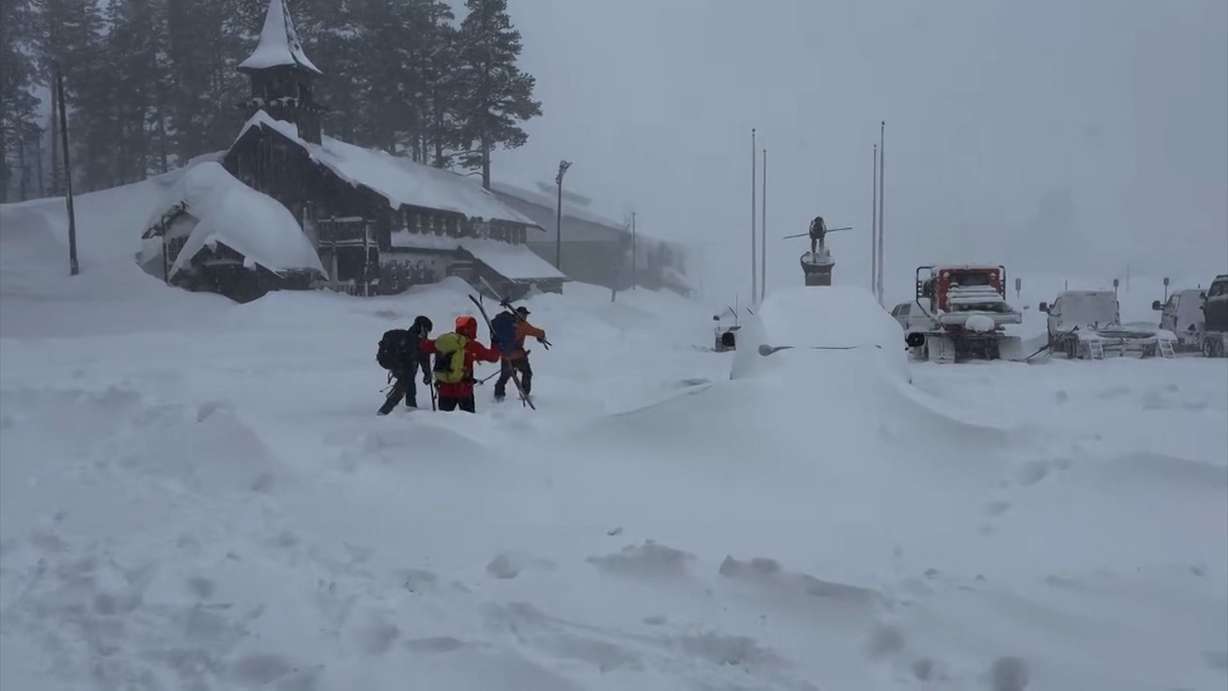
Emergency crews received reports of the avalanche about 11:30 a.m. Tuesday, and about 50 rescuers were deployed, Moon said.
The six survivors were rescued 11 hours later.
"Eight of the nine additional skiers have been located deceased. We are still looking for one of the members at this time. Due to the ongoing challenges of the weather, the avalanche conditions, the effort remains ongoing, as well as our search for the remaining skier," Moon said.
The victims' bodies were found "fairly close together," Greene said.
The spouse of a Tahoe Nordic Search and Rescue team member is among the dead, Placer County Sheriff Wayne Woo said, adding it's hitting the team hard.
"This has not only been challenging for our community, it's been a challenging rescue, but it's also been challenging emotionally for our team and our organization," he said.
Warning signs of an avalanche
The area was under the second highest level, a 4 of 5, of an avalanche threat Tuesday. An avalanche warning was in effect for the greater Lake Tahoe area through 5 a.m. Thursday, according to the Sierra Avalanche Center.
"Natural avalanches are likely, and human-triggered avalanches large enough to bury or injure people are very likely," the National Weather Service warned. "Traveling in, near, or below backcountry avalanche terrain is not recommended during high avalanche danger."
Remote, undeveloped and isolated areas of wilderness are often called "backcountry."
This has not only been challenging for our community, it's been a challenging rescue, but it's also been challenging emotionally for our team and our organization.
–Wayne Woo, Placer County sheriff
Early Sunday, the Sierra Avalanche Center issued an avalanche watch, indicating large avalanches were likely in the next 24 to 48 hours, The Associated Press reported.
The watch was increased to a warning hours before the avalanche hit, and it's unknown whether the guides knew about the warning before they took off, the AP reported.
When asked about the decision to proceed with the trip, Moon said it was up to the company.
"We're still in conversation with them on the decision factors that they made, but definitely a heat for everyone," she said. "So recognizing it's not just you — that you're impacting the potential for resources getting deployed somewhere else."
Snow blankets the roads, ground and treetops in video of the area released by the California Highway Patrol. The video warns drivers not to be fooled by the clear sky — the roads remain "covered in ice, cold, and slick."
Blackbird Mountain Guides updated the number in the group to 11 clients and four guides after initially saying there were 16 people on the trip. But only 11 of the 12 planned guests ended up going, Moon said Wednesday – one had backed out at the last minute.
"The leadership team at Blackbird Mountain Guides remains fully engaged in assisting the search and rescue efforts on the ground as we navigate this incredibly difficult situation alongside those involved," the tour company said late Tuesday.
California Gov. Gavin Newsom called the incident a "horrible tragedy" in a statement on X Wednesday.
"We mourn this profound loss," the governor said.
A race to reach the survivors
Following the first call for help Tuesday, dozens of first responders approached the scene from multiple directions. Search and rescue teams staged at Boreal Mountain Ski Resort and Tahoe Donner's Alder Creek Adventure Center, where they were dispatched along with rescue crews from surrounding counties. They approached the scene on skis and snowcats, with snowmobiles on standby.
The stranded skiers were communicating with rescuers through emergency beacons and iPhone SOS signals, including some with the ability to send text messages, officials said.
The group crafted a makeshift shelter from a tarp, "doing everything they can to survive," Greene said.