'%3e%3cpath%20d='M34.1406%205.85938C30.3906%202.10547%2025.3047%200%2020%200C14.6953%200%209.60938%202.10547%205.85938%205.85938C2.10938%209.61328%200%2014.6953%200%2020C0%2025.3047%202.10547%2030.3906%205.85938%2034.1406C9.61328%2037.8906%2014.6953%2040%2020%2040C25.3047%2040%2030.3906%2037.8945%2034.1406%2034.1406C37.8906%2030.3906%2040%2025.3047%2040%2020C40%2014.6953%2037.8945%209.60938%2034.1406%205.85938ZM37.0117%2023.543H31.1602V13.5391H27.6328V19.9414C28.1211%2020.6914%2028.3711%2021.582%2028.3711%2022.5625V22.625C28.3711%2023.668%2028.1172%2024.6055%2027.6328%2025.4297V26.6094H36.082C33.4883%2032.9375%2027.2891%2037.3789%2020.0039%2037.3789C10.3711%2037.3789%202.62109%2029.6289%202.62109%2020C2.62109%2010.3711%2010.3711%202.62109%2020%202.62109C29.6289%202.62109%2037.3789%2010.3711%2037.3789%2020C37.3789%2021.1484%2037.2617%2022.2656%2037.0508%2023.3477C37.0391%2023.4141%2037.0234%2023.4766%2037.0117%2023.543Z'%20fill='white'/%3e%3cpath%20d='M22.3086%2018.5352C20.4336%2018.125%2019.9531%2017.8398%2019.9766%2017.1836V17.1406C19.9766%2016.6992%2020.3477%2016.2148%2021.4023%2016.2148C22.582%2016.2148%2023.8867%2016.6797%2025.0781%2017.4766L26.8516%2015.0195C25.4453%2013.8906%2023.707%2013.3398%2021.5547%2013.3398C18.5195%2013.3398%2016.4375%2015%2016.4063%2017.4766V17.5352C16.3633%2020.2617%2018.5859%2020.9805%2021.293%2021.6016C23.0391%2021.9766%2023.5703%2022.3164%2023.5703%2022.9609L23.5469%2022.9766C23.5469%2023.3906%2023.2578%2023.7031%2022.7852%2023.8359C22.5742%2023.9062%2022.1289%2023.9727%2021.5156%2023.9727C20.7617%2023.9727%2019.7539%2023.8633%2018.6328%2023.4844C18.0898%2023.2891%2017.4727%2023.0039%2016.8047%2022.6133L20.1406%2026.625C20.2813%2026.6602%2021.0977%2026.8516%2021.7734%2026.8516C25.0039%2026.8516%2027.0859%2025.2461%2027.1094%2022.6328V22.5703C27.1602%2020.1133%2025.2148%2019.1719%2022.3086%2018.5352Z'%20fill='white'/%3e%3cpath%20d='M5.24219%2013.5664V26.6133H8.75391V23.7578L10.2969%2021.9531L14.2031%2026.6133H18.3867L12.3555%2019.5195L17.4023%2013.5664H13.4531L8.75391%2019.0586V13.5664H5.24219Z'%20fill='white'/%3e%3c/g%3e%3cdefs%3e%3cclipPath%20id='clip0_97_2430'%3e%3crect%20width='40'%20height='40'%20fill='white'/%3e%3c/clipPath%3e%3c/defs%3e%3c/svg%3e)


Estimated read time: 4-5 minutes
You've probably heard of the National Spelling Bee. You may also know about the National Geography Bee or the National Science Bee.
There are even competitions for math, academics and other subjects. These programs challenge students to study hard, sharpen their skills and compete with their peers.
But there's another bee you may not know as well, and its goal goes beyond memorizing facts or spelling words correctly.
The National Civics Bee invites young people to think about their communities, share ideas and show they care about making a difference.
Instead of asking students to recite dates or definitions, this competition asks them to look around, notice challenges and suggest solutions. It encourages kids to learn how their communities work and how they can help improve them.
In short, it's a chance for students to become better citizens. And yes, there are also cash prizes for the winners.
If you know a middle school student who enjoys writing, problem-solving or helping others, this may be a great opportunity. Here are the details.
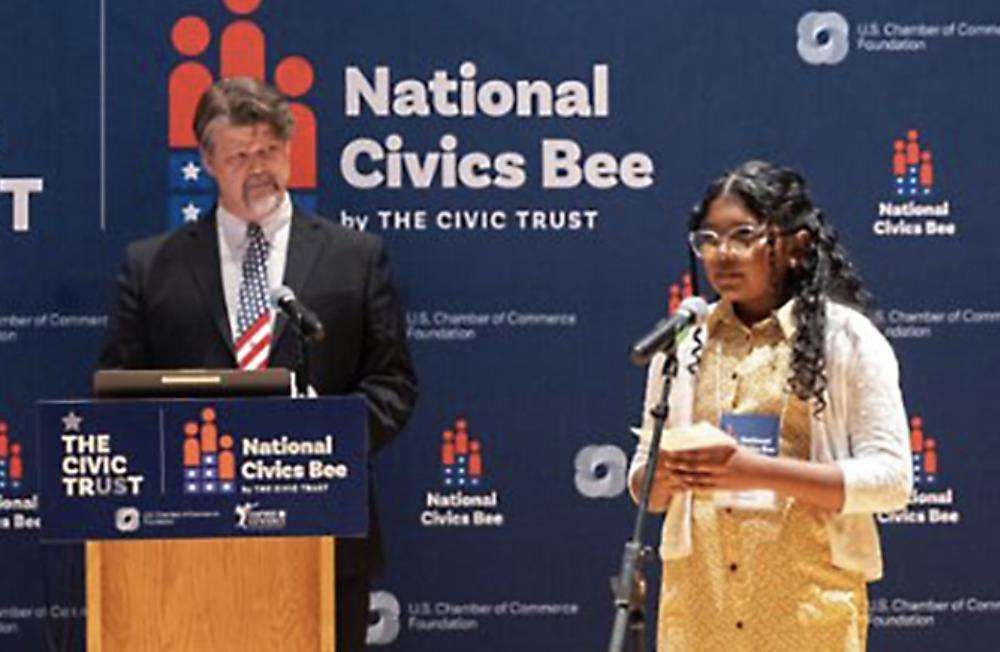
What is the National Civics Bee?
If you haven't heard of the National Civics Bee, it's because it hasn't been around very long.
The competition started in 2022 in select places, but 2026 marks its first year in all 50 states.
The competition grew out of The Civic Trust initiative, which aims to strengthen civics education across the country. The goal is to help students better understand how government works and why civic engagement matters — not just in school, but in everyday life.
By encouraging students to think critically about real issues in their communities, the National Civics Bee helps turn classroom learning into real-world action.
Who can enter?
Students in grades 6-8 are eligible to apply. The competition is open to students from public, private, charter and home schools.
If your child or a student you know enjoys writing essays, learning about current issues or speaking up about things they care about, this could be a strong fit.
How it works
The National Civics Bee asks students to respond to a four-question essay prompt that helps them propose ideas for improving their communities.
From there, a panel of judges selects finalists to advance to regional competitions, where they compete for trophies, prizes and other forms of recognition. These competitions take place between late March and late May.
Next, the top three winners from each regional competition advance to the state finals sometime from early June to July.
Finally, one finalist from each state will have the opportunity to travel to the national championship in Washington, D.C. to compete for bigger prizes – including a chance to win $100,000.
Why this competition matters
Civics education matters because it helps young people prepare to be better leaders and citizens in the future. Yet many Americans struggle with basic civic knowledge.
According to the U.S. Chamber Foundation's Civic and Economic Literacy Survey, 58% of Americans fail a basic civics test, even though 74% of them believe they could explain how government works.
That gap shows why programs like the National Civics Bee are needed.
"The National Civics Bee meets a real need — and that need extends to every community in the country," Michael Carney, president of the U.S. Chamber Foundation, said. "We're calling on communities everywhere to host a competition in 2026, so more students can practice civics and fulfill the promise of American democracy."
The benefit of entering
Even if your child doesn't walk away with a prize, simply entering the competition can be a reward in itself.
"I feel more educated about what's happening in my community," Aarit K., the first-place finisher of the Ohio State Finals in 2023 says. "Now I can finally understand what they are saying on the news...I feel like I can make a big impact, and I can be a better citizen after knowing all of this."

Resources to help students prepare
If this sounds like something your child would be interested in, the U.S. Chamber of Commerce Foundation has resources to help them prepare.
They can use the essay guide to see the essay prompt, judging rubric and other materials that can help them craft their essays.
If they advance to the live quiz portion of the competition, they'll get a study guide and free access to Khanmigo, which is Khan Academy's AI-powered tutor.
You can find more info about these resources here.
What's the submission deadline?
Applications are open now and close Feb. 3. 2026 at 11:59 p.m. Hawaii Standard Time. There is no fee to apply, so students can participate at no cost.
Find out more
The National Civics Bee helps students build confidence, find their voice and learn how to make a difference in their communities.
If you're a parent, teacher or mentor, encourage a middle school student to apply. A short essay could spark a lifelong interest in civic engagement — and lead to scholarships and national recognition.
Applications close Feb. 3, 2026. Click here to apply, or visit the Utah Chamber website to learn more.