'%3e%3cpath%20d='M34.1406%205.85938C30.3906%202.10547%2025.3047%200%2020%200C14.6953%200%209.60938%202.10547%205.85938%205.85938C2.10938%209.61328%200%2014.6953%200%2020C0%2025.3047%202.10547%2030.3906%205.85938%2034.1406C9.61328%2037.8906%2014.6953%2040%2020%2040C25.3047%2040%2030.3906%2037.8945%2034.1406%2034.1406C37.8906%2030.3906%2040%2025.3047%2040%2020C40%2014.6953%2037.8945%209.60938%2034.1406%205.85938ZM37.0117%2023.543H31.1602V13.5391H27.6328V19.9414C28.1211%2020.6914%2028.3711%2021.582%2028.3711%2022.5625V22.625C28.3711%2023.668%2028.1172%2024.6055%2027.6328%2025.4297V26.6094H36.082C33.4883%2032.9375%2027.2891%2037.3789%2020.0039%2037.3789C10.3711%2037.3789%202.62109%2029.6289%202.62109%2020C2.62109%2010.3711%2010.3711%202.62109%2020%202.62109C29.6289%202.62109%2037.3789%2010.3711%2037.3789%2020C37.3789%2021.1484%2037.2617%2022.2656%2037.0508%2023.3477C37.0391%2023.4141%2037.0234%2023.4766%2037.0117%2023.543Z'%20fill='white'/%3e%3cpath%20d='M22.3086%2018.5352C20.4336%2018.125%2019.9531%2017.8398%2019.9766%2017.1836V17.1406C19.9766%2016.6992%2020.3477%2016.2148%2021.4023%2016.2148C22.582%2016.2148%2023.8867%2016.6797%2025.0781%2017.4766L26.8516%2015.0195C25.4453%2013.8906%2023.707%2013.3398%2021.5547%2013.3398C18.5195%2013.3398%2016.4375%2015%2016.4063%2017.4766V17.5352C16.3633%2020.2617%2018.5859%2020.9805%2021.293%2021.6016C23.0391%2021.9766%2023.5703%2022.3164%2023.5703%2022.9609L23.5469%2022.9766C23.5469%2023.3906%2023.2578%2023.7031%2022.7852%2023.8359C22.5742%2023.9062%2022.1289%2023.9727%2021.5156%2023.9727C20.7617%2023.9727%2019.7539%2023.8633%2018.6328%2023.4844C18.0898%2023.2891%2017.4727%2023.0039%2016.8047%2022.6133L20.1406%2026.625C20.2813%2026.6602%2021.0977%2026.8516%2021.7734%2026.8516C25.0039%2026.8516%2027.0859%2025.2461%2027.1094%2022.6328V22.5703C27.1602%2020.1133%2025.2148%2019.1719%2022.3086%2018.5352Z'%20fill='white'/%3e%3cpath%20d='M5.24219%2013.5664V26.6133H8.75391V23.7578L10.2969%2021.9531L14.2031%2026.6133H18.3867L12.3555%2019.5195L17.4023%2013.5664H13.4531L8.75391%2019.0586V13.5664H5.24219Z'%20fill='white'/%3e%3c/g%3e%3cdefs%3e%3cclipPath%20id='clip0_97_2430'%3e%3crect%20width='40'%20height='40'%20fill='white'/%3e%3c/clipPath%3e%3c/defs%3e%3c/svg%3e)


Estimated read time: 3-4 minutes
New data from Alpha Energy Laboratories shows that 48.3% of Utah homes tested for radon between 2015 and 2025 had levels high enough to warrant a radon mitigation system.
Radon is often referred to as the silent killer because it cannot be seen, smelled, or tasted, yet prolonged exposure is the leading cause of lung cancer among non-smokers.
Because radon exposure occurs primarily indoors, many Utah families unknowingly live with elevated levels for years before discovering a problem.
Utah residents can learn how to test their home for radon and request a free test kit here.
What is radon?
Radon is a naturally occurring radioactive gas produced when uranium in soil and rock breaks down.
Utah geology contains higher concentrations of uranium than many other states, making radon especially common throughout the region.
Outdoors, radon disperses quickly and is generally harmless. Indoors, however, radon can build to dangerous levels, particularly in basements and lower living areas, where it accumulates.
A common misconception is that radon only affects older homes or homes with visible foundation cracks. In reality, radon can enter homes through tiny pores and joints in concrete, and newer energy-efficient homes may actually trap radon more effectively due to tighter construction.
Because radon cannot be detected by human senses, most people do not know their home has elevated levels unless they test for it.
Radon is the leading cause of lung cancer among non-smokers and is responsible for an estimated 21,000 lung cancer deaths each year in the United States, according to the Environmental Protection Agency.
What is considered a high radon level?
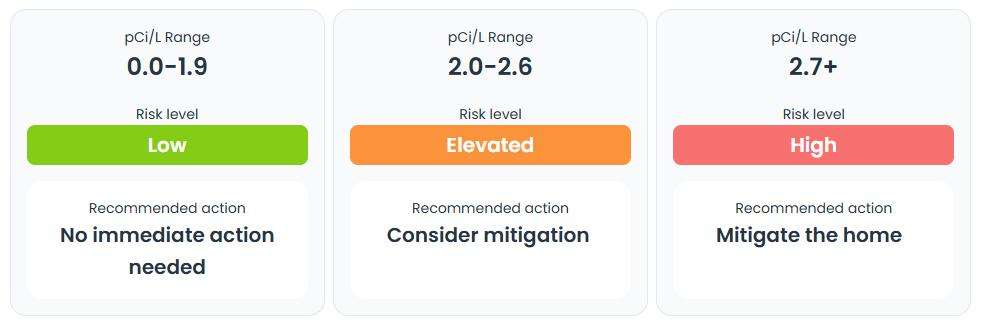
While there is no safe level of exposure to radon, the World Health Organization recommends installing a radon mitigation system if the average radon levels exceed 2.7 picocuries per liter of air (pCi/L).
The EPA recommends "considering mitigation" at 2.0 pCi/L, depending on the time spent in the lowest level of the home.
A certified radon professional can help homeowners determine when mitigation is appropriate.
Where are radon levels highest in Utah?
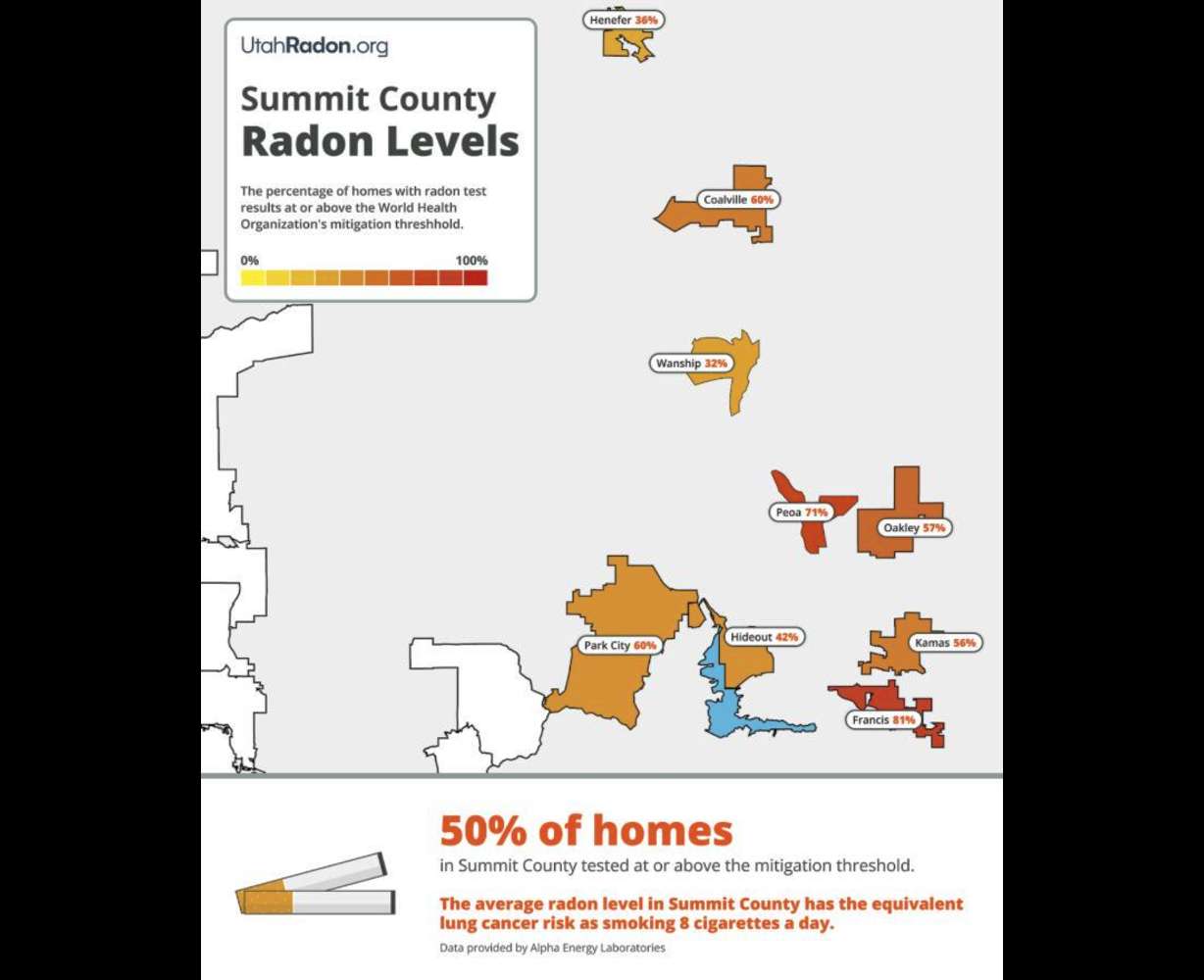
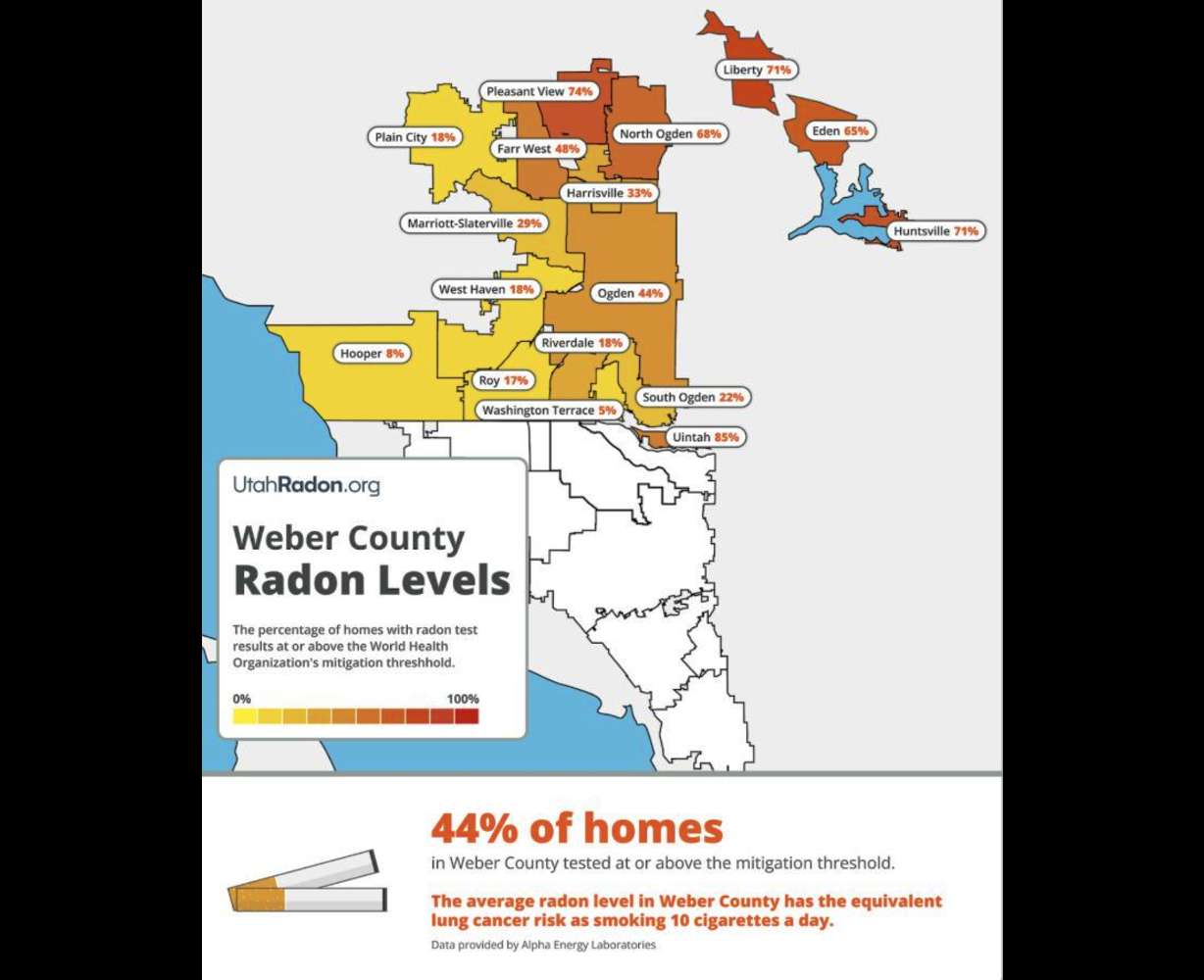
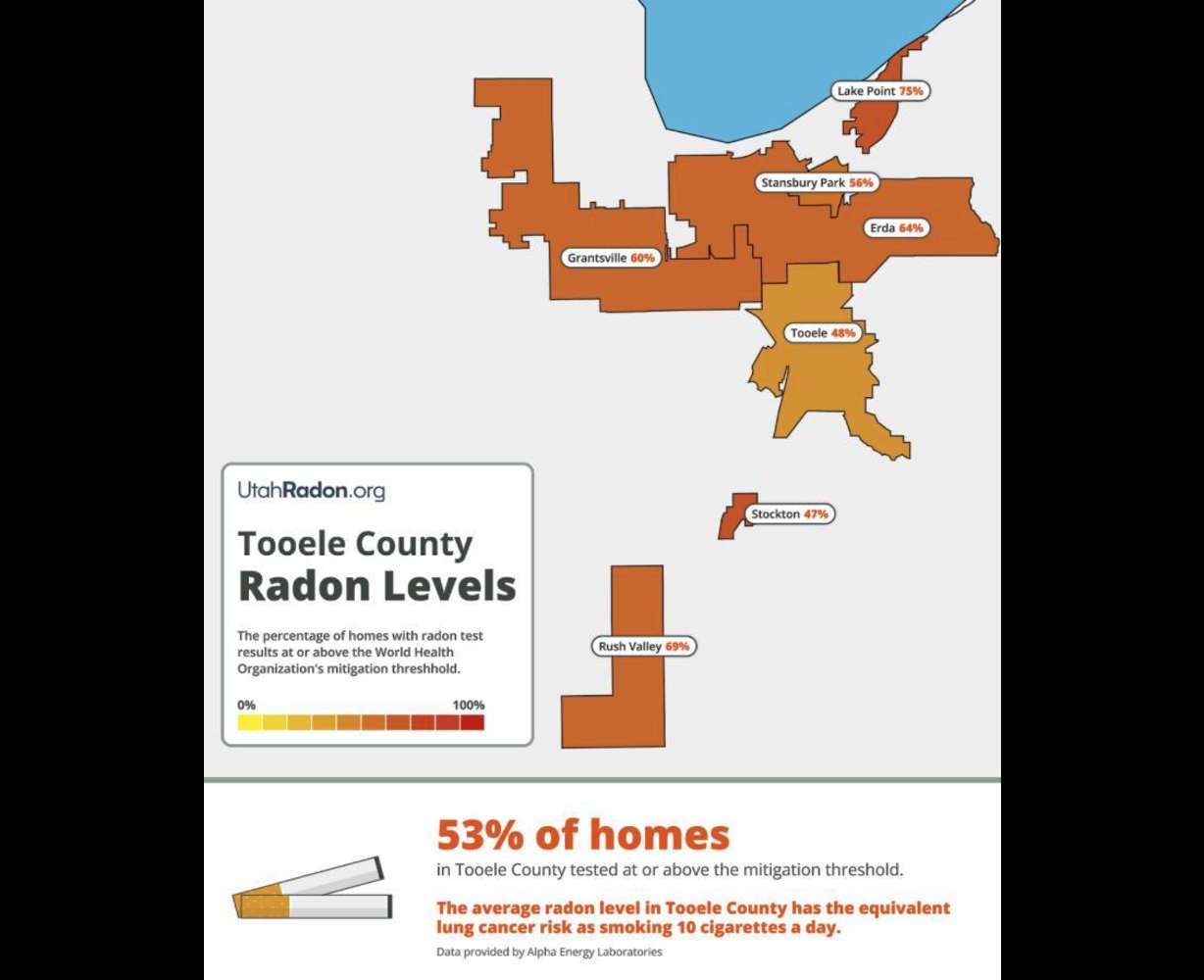
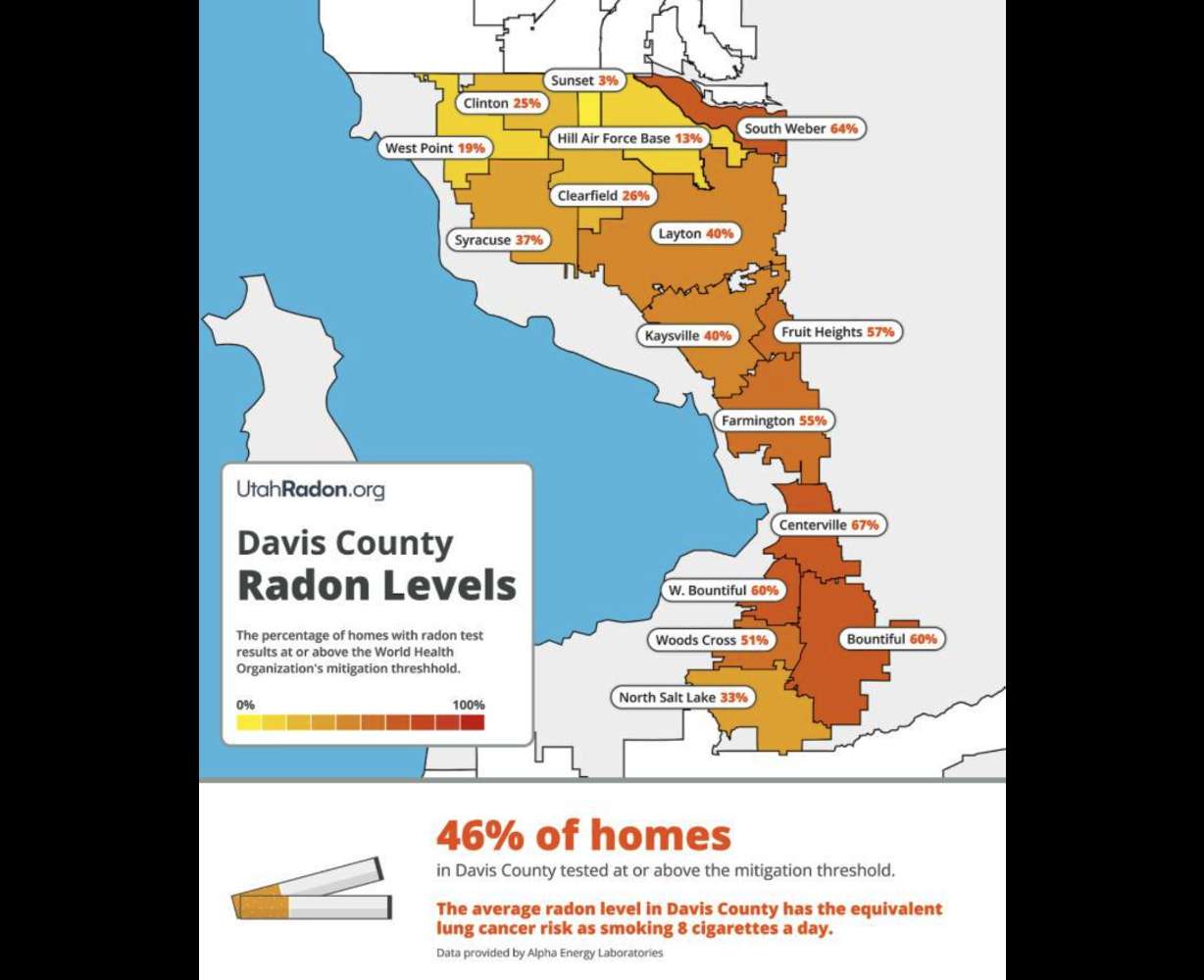
To better understand how radon levels vary across the state, UtahRadon.org analyzed 115,601 radon test results from Alpha Energy Laboratories and mapped the percentage of homes testing at or above the World Health Organization mitigation threshold.
The numbers depict the averages of all homes tested, with the numbers exceeding 2.7 picocuries per liter of air (pCi/L) considered dangerous.
Cities with the highest pCi/L average radon levels (with 1,000+ tests)
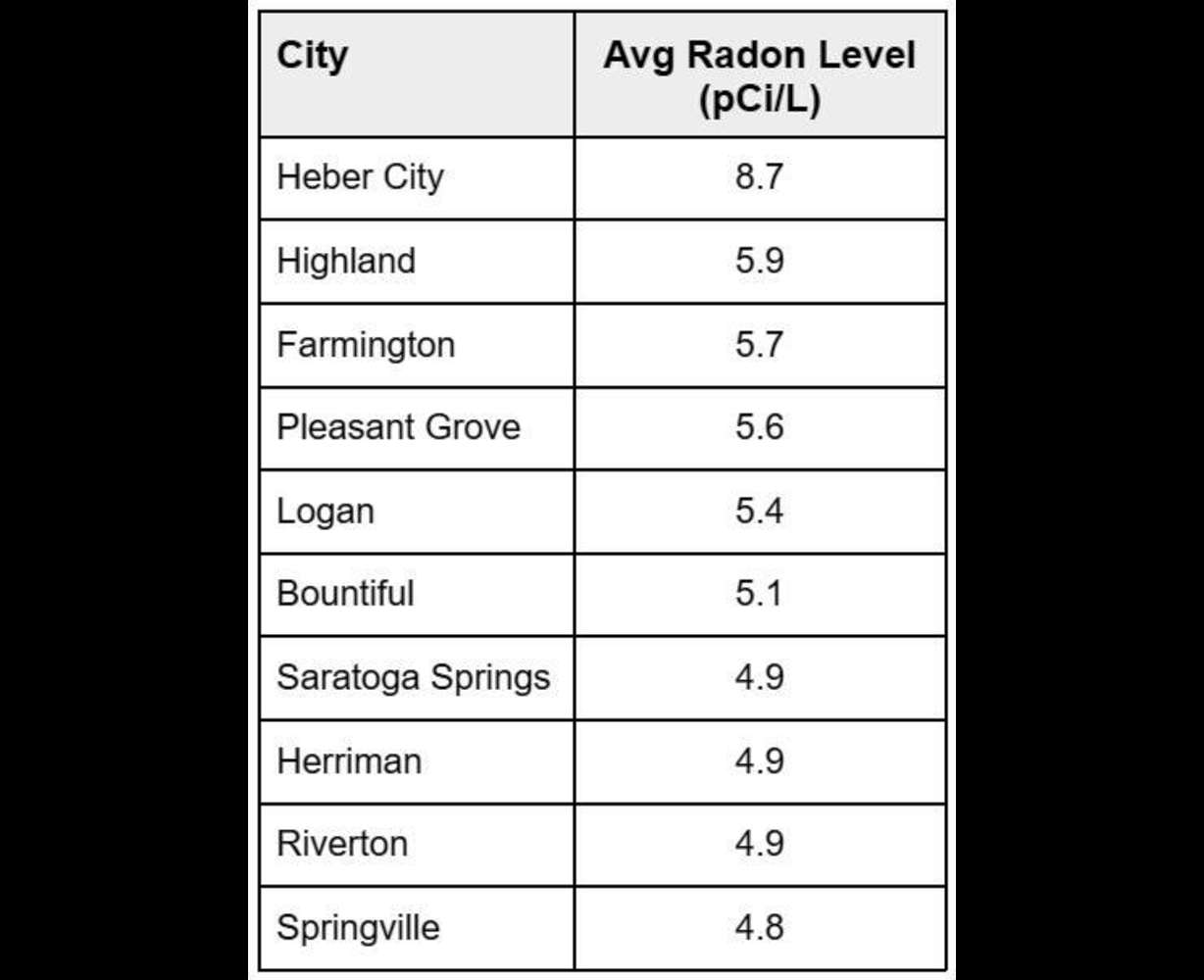
Don't see your city listed? Radon levels can vary significantly between neighboring homes, even on the same street. Learn how to test your home and request a free radon test kit here
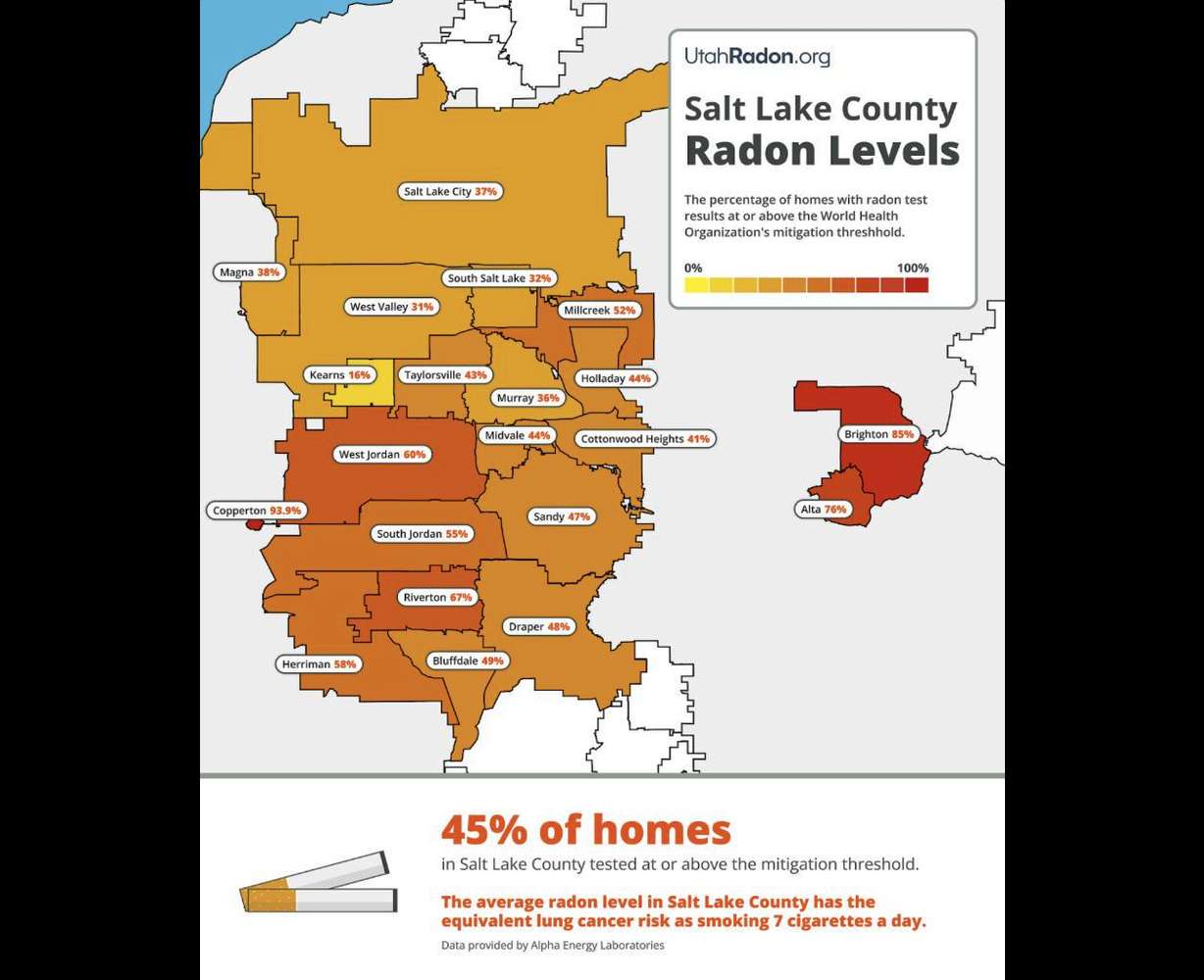
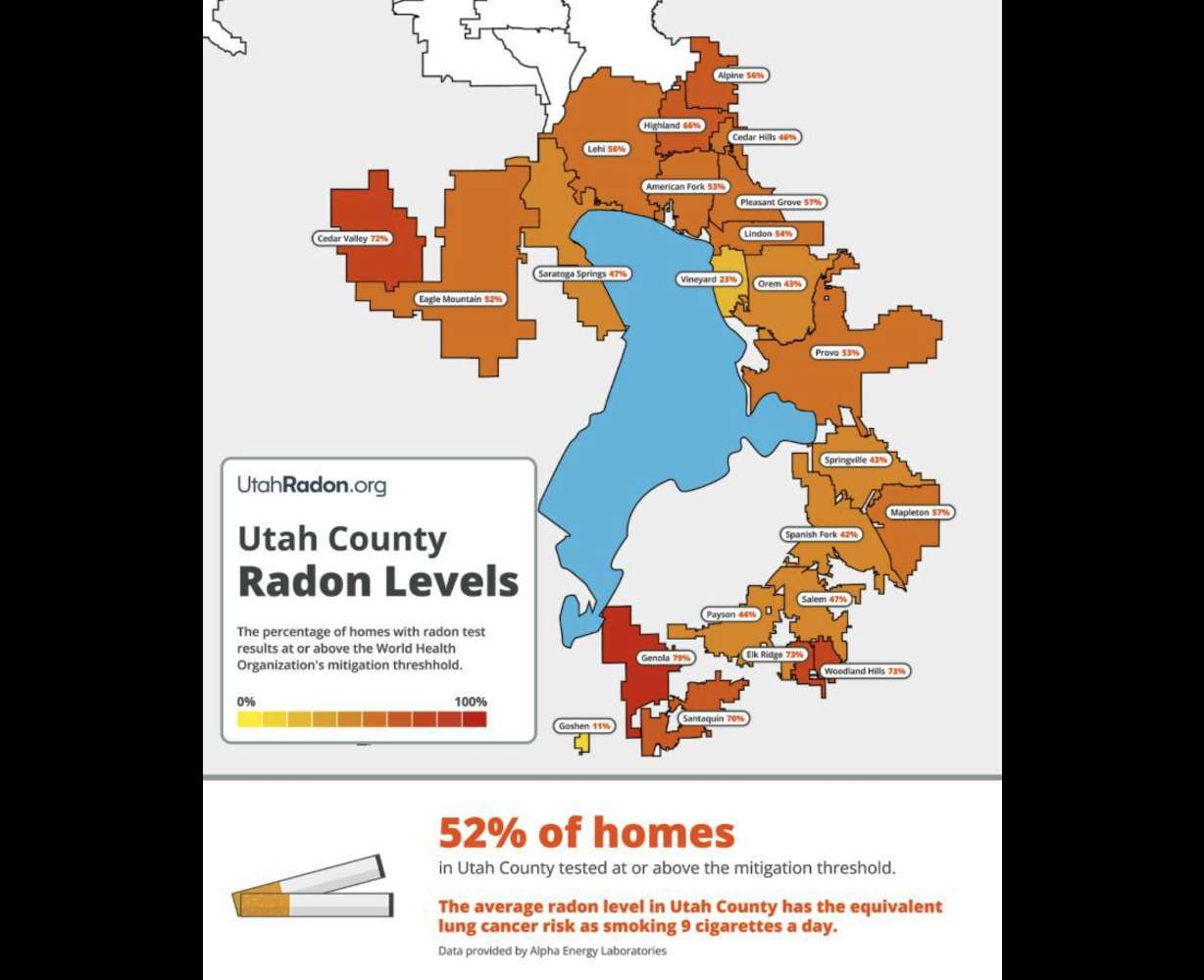
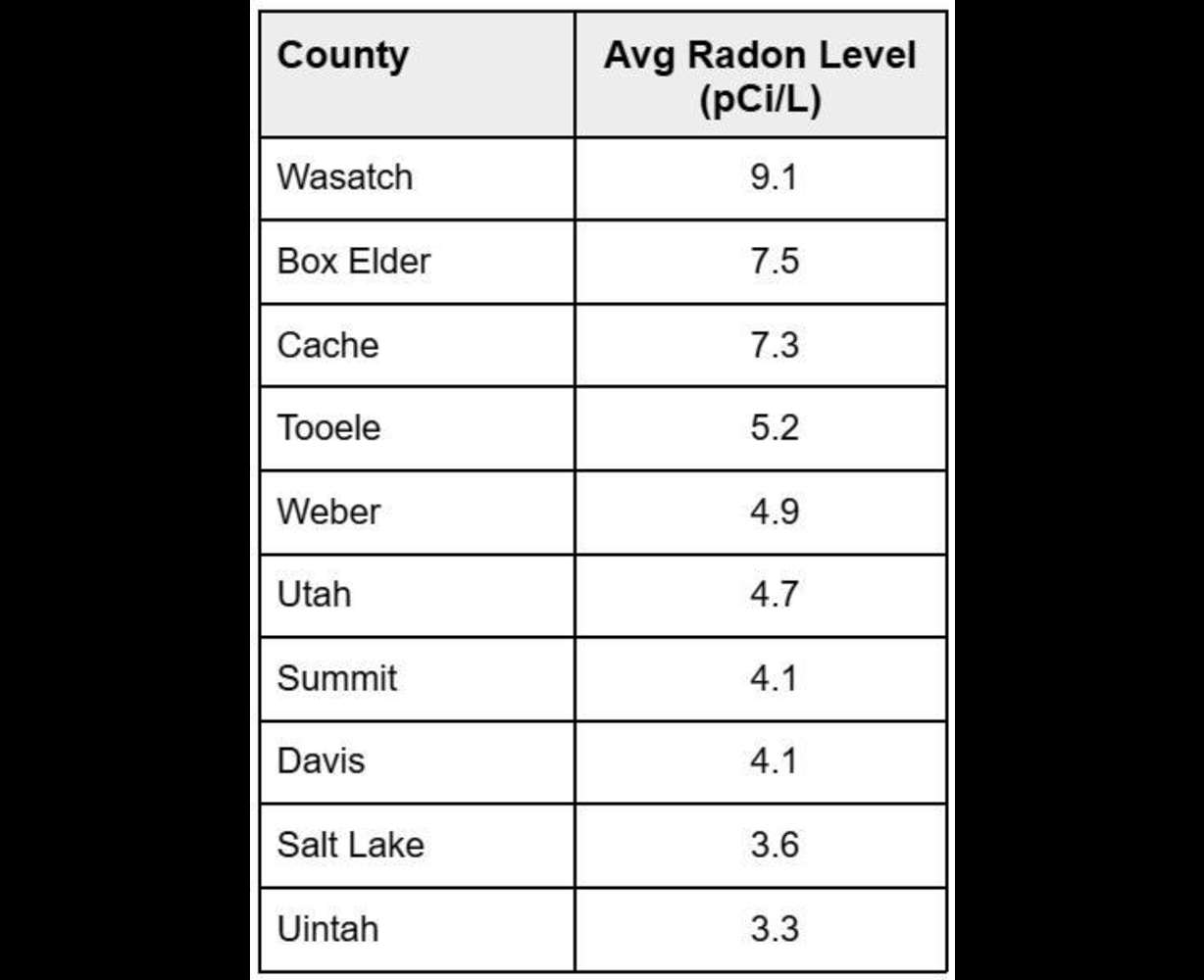
Counties with the highest average pCi/L radon levels (with 1,000+ tests)
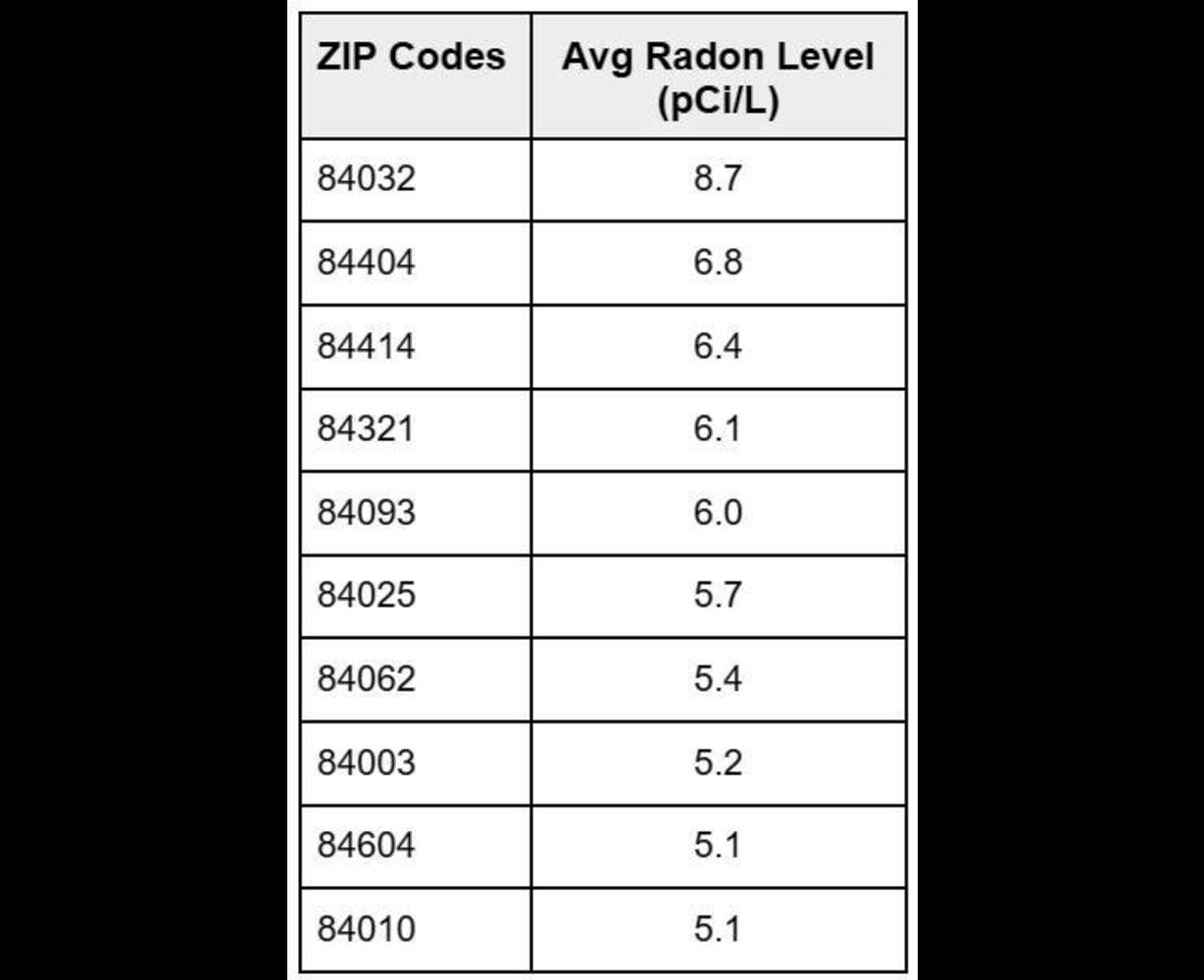
ZIP codes with the highest average pCi/L radon levels (with 1,000+ tests)
What does this data mean for homeowners?
No matter where you live in Utah, health experts recommend testing your home for radon every two years.
Radon levels are typically highest during the winter months when homes are sealed more tightly, making now an especially important time to test.
Even homes located in lower-risk areas can have elevated radon levels. In fact, radon can vary significantly between neighboring houses.
Testing is the only way to know your home's radon level. If elevated levels are found, a radon mitigation system can be installed to significantly reduce indoor radon concentrations.
Utah residents can request a free radon test kit through UtahRadon.org.