'%3e%3cpath%20d='M34.1406%205.85938C30.3906%202.10547%2025.3047%200%2020%200C14.6953%200%209.60938%202.10547%205.85938%205.85938C2.10938%209.61328%200%2014.6953%200%2020C0%2025.3047%202.10547%2030.3906%205.85938%2034.1406C9.61328%2037.8906%2014.6953%2040%2020%2040C25.3047%2040%2030.3906%2037.8945%2034.1406%2034.1406C37.8906%2030.3906%2040%2025.3047%2040%2020C40%2014.6953%2037.8945%209.60938%2034.1406%205.85938ZM37.0117%2023.543H31.1602V13.5391H27.6328V19.9414C28.1211%2020.6914%2028.3711%2021.582%2028.3711%2022.5625V22.625C28.3711%2023.668%2028.1172%2024.6055%2027.6328%2025.4297V26.6094H36.082C33.4883%2032.9375%2027.2891%2037.3789%2020.0039%2037.3789C10.3711%2037.3789%202.62109%2029.6289%202.62109%2020C2.62109%2010.3711%2010.3711%202.62109%2020%202.62109C29.6289%202.62109%2037.3789%2010.3711%2037.3789%2020C37.3789%2021.1484%2037.2617%2022.2656%2037.0508%2023.3477C37.0391%2023.4141%2037.0234%2023.4766%2037.0117%2023.543Z'%20fill='white'/%3e%3cpath%20d='M22.3086%2018.5352C20.4336%2018.125%2019.9531%2017.8398%2019.9766%2017.1836V17.1406C19.9766%2016.6992%2020.3477%2016.2148%2021.4023%2016.2148C22.582%2016.2148%2023.8867%2016.6797%2025.0781%2017.4766L26.8516%2015.0195C25.4453%2013.8906%2023.707%2013.3398%2021.5547%2013.3398C18.5195%2013.3398%2016.4375%2015%2016.4063%2017.4766V17.5352C16.3633%2020.2617%2018.5859%2020.9805%2021.293%2021.6016C23.0391%2021.9766%2023.5703%2022.3164%2023.5703%2022.9609L23.5469%2022.9766C23.5469%2023.3906%2023.2578%2023.7031%2022.7852%2023.8359C22.5742%2023.9062%2022.1289%2023.9727%2021.5156%2023.9727C20.7617%2023.9727%2019.7539%2023.8633%2018.6328%2023.4844C18.0898%2023.2891%2017.4727%2023.0039%2016.8047%2022.6133L20.1406%2026.625C20.2813%2026.6602%2021.0977%2026.8516%2021.7734%2026.8516C25.0039%2026.8516%2027.0859%2025.2461%2027.1094%2022.6328V22.5703C27.1602%2020.1133%2025.2148%2019.1719%2022.3086%2018.5352Z'%20fill='white'/%3e%3cpath%20d='M5.24219%2013.5664V26.6133H8.75391V23.7578L10.2969%2021.9531L14.2031%2026.6133H18.3867L12.3555%2019.5195L17.4023%2013.5664H13.4531L8.75391%2019.0586V13.5664H5.24219Z'%20fill='white'/%3e%3c/g%3e%3cdefs%3e%3cclipPath%20id='clip0_97_2430'%3e%3crect%20width='40'%20height='40'%20fill='white'/%3e%3c/clipPath%3e%3c/defs%3e%3c/svg%3e)




- Utah's football team faced criticism for opting against field goals vs. BYU.
- Coach Whittingham cited analytics and personal judgment for fourth-down decisions.
- Freshman kicker Dillon Curtis' inconsistency influenced the choice to avoid field goals.
SALT LAKE CITY — A mere 6 points would have changed the game Saturday.
It's a statement that doesn't take an understanding of all the complicated concepts of football to know that Utah needed — and had ample opportunities — to attempt field goals against rival BYU in a close contest.
Instead, Utah's coaching staff — namely Kyle Whittingham — opted to go for it on fourth down several times, only to come up short.
Whittingham quickly defended the decisions after the game, citing analytics as a reason for why Utah avoided the field goal tries.
On Monday, Whittingham doubled down on the analytics conversation, saying "if you think you're smarter than analytics, you're not." Though, he added, there's an "asterisk" to that at times, but the team pays "close attention to analytics, but not exclusive attention."
"We could have kicked it," he said. "Are we going to make it for certain? I mean, that's not a guarantee. And touchdowns are so much more valuable than field goals. That's why analytics is so heavily in favor of fourth-down conversions in the red zone, because a field goal is actually a loss in the red zone.
"That means you've moved the ball and you've got within striking distance, but you're bogged down," he added. "And so we try to do everything we can to score touchdowns, as does everyone in the country. And that was the reason for that, is the analytics and my own personal opinion were aligned."
While Utah's first fourth-down attempt was one that was universally accepted, the one that drew the most ire was a fourth-and-7 situation in which Utah originally lined up to kick a field goal from BYU's 28-yard line.
As Utah attempted to snap the ball, BYU called a timeout, but not before freshman placekicker Dillon Curtis could get a practice kick off. The attempt sailed wide right and was nowhere close to being a successful field goal, so Utah altered its decision.
Whittingham said the analytics were "on the cusp," with 45% saying kick a field goal and 43% saying to go for it. But the missed attempt pushed the coaching staff over the edge toward going for it.
"Well, it caused a change of heart," Whittingham admitted. "We were going to kick it, obviously, but we have struggled at that exact distance this year — the 45-, 46-yard range."
Utah quarterback Devon Dampier attempted a 10-yard pass to receiver Tobias Merriweather that went incomplete and served as Utah's second turnover on downs of the night in the first two quarters. Another failed attempt.
"People that say, 'Well, if you'd kick the field goal, you'd add 3 points to the score. This is what it would have been.' No, that's entirely false," Whittingham said. "When you kick, the score changes, people's tactics change and the play-calling changes based on the situation. So you can't just say at the end of the game, well, if you'd have done this, this would have been the score, because that's not — that's ludicrous to think that way."

Devon Dampier 'got beat up,' opening door for Byrd Ficklin to possibly get first start
Utah starting quarterback Devon Dampier was clearly hobbled late Saturday night.But field goals would have altered the makeup of the game and the play-calling (and so would have converting fourth downs).
So that begs the question: Has Whittingham and the coaching staff lost faith in their freshman kicker?
The short answer is no, but it's not a guarantee they'll turn to him, either, in similar situations. For the freshman, it's all about needing to show more consistency — in practice and game settings.
Special teams coordinator Sharrieff Shah said the team expected to have a "roller coaster" season with a true freshman (anyone remember how a true freshman went through an up-and-down season at the QB position last year?).
"Anytime you have a talented freshman that comes in, especially as a kicker — a freshman at any position — there are so few opportunities to come in and show your coaches that I can perform under an immense amount of pressure — 3 points, we need these 3 points right now," Shah said.
"And so for every kick that was unsuccessfully made, we continue to tell him, 'Look, that is not — that doesn't define you. I want to see your practice kicks become much more consistent.' Because invariably, who you are in practice will be exactly who you'll be in the game."
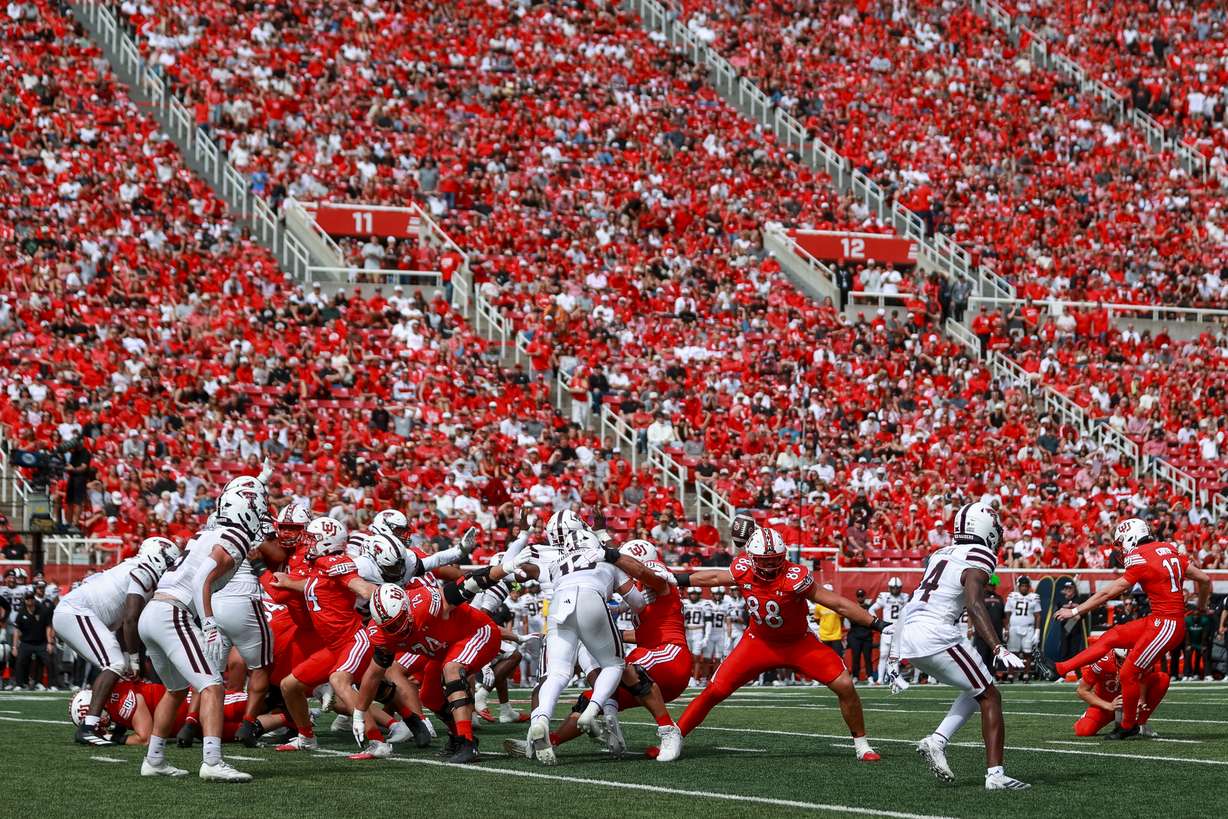
As such, the coaching staff continues to give Curtis numerous opportunities in practice to find that consistency. And it's not until that consistency takes shape that the coaching staff can have more belief that a field goal is the correct answer — even when 3 points would seemingly be the easiest approach.
"When my head coach comes to me and says, 'Hey, listen, what do we look like at field goal? I want to be able to tell him, 'Coach, we're incredibly solid because we have a solid week of practice.' I can show you that," Shah said. "But if we're all over the place in practice, no one has any confidence in me to tell my head coach, 'Coach, let's go for it now on the field goal.'
"So it's continuing to build Dillon up, making sure that he never loses confidence in himself, because we at no point have lost confidence in him, and making him a good practice player, giving him practice situations to kick intermediate balls. ... We will not stop believing in Dillon Curtis; we love him. He's just a freshman, and it's a part of the process."
And part of that process is simply learning that a field goal is not a guarantee, so there will be more of an insistence to go for it on fourth downs over the chance at 3 points. Given Utah's success on fourth downs up to the BYU game, that answer paid off more times than not.
"Like I said after the game, a bad result doesn't necessarily mean it was a bad decision going into it," Whittingham said.